It seems like we are increasingly bombarded with news about artificial intelligence and how it is becoming more a part of our lives. For me, it can be mind boggling and overwhelming how fast AI is growing in capabilities, both useful and downright creepy. Without going too deep into this subject—where there appears to be no bottom—I want to share some news about some useful data collection is being done in the field of fishery management with AI used as a tool.
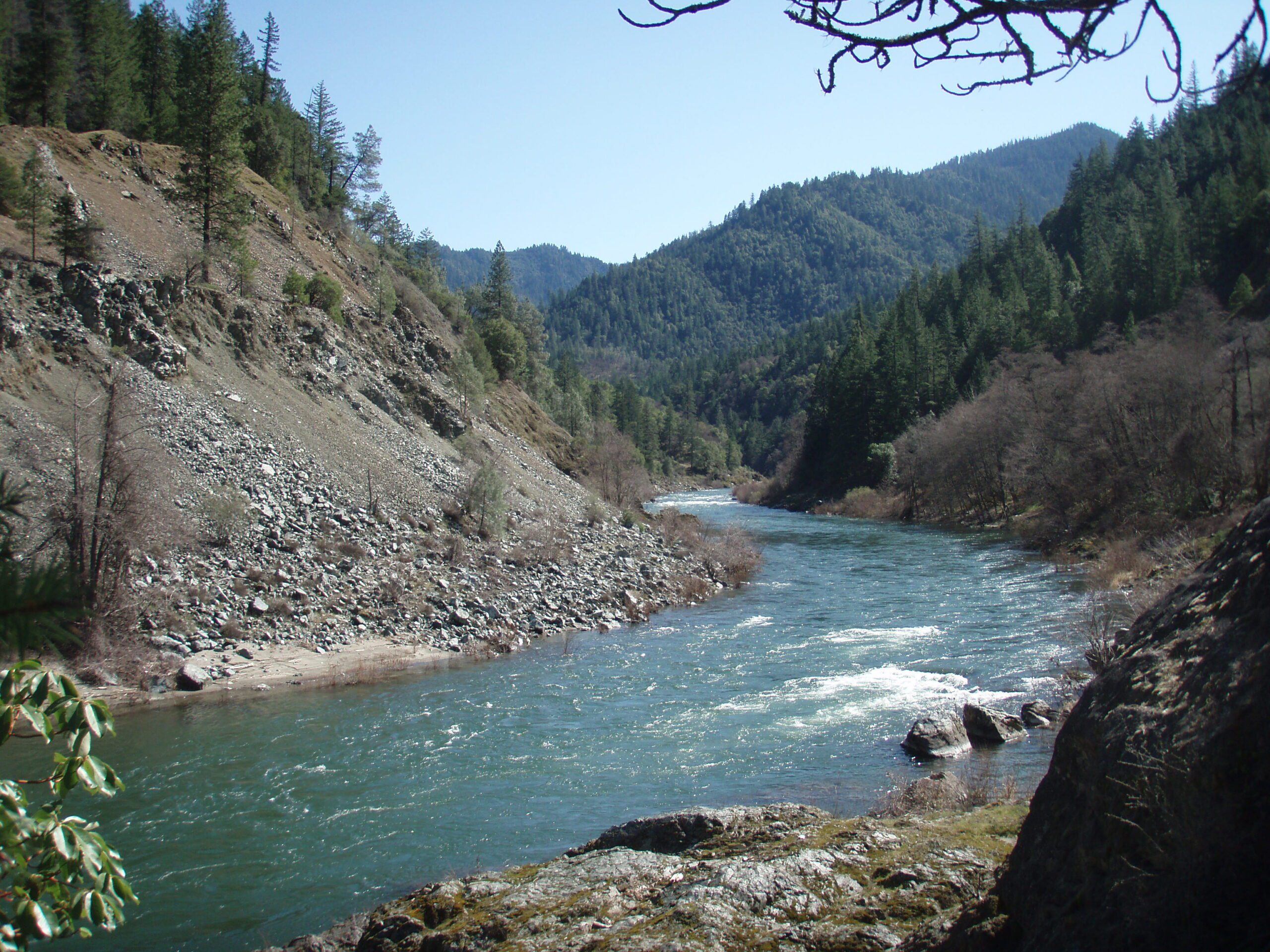
Klamath River
It’s been about a year and a half since the last dam was opened up to remove barriers to fish passage from the Pacific Ocean to the headwaters above Klamath Lake in Oregon. As part of the comprehensive plan, one of the ongoing efforts is to monitor and measure fish migration in the watershed. To achieve that objective, a diverse group of tribes, CalTrout, California and Oregon Departments of Fish and Wildlife, university scientists , and nonprofits have collaborated to collect data to measure the effects of the dam removal and to help them make decisions on adjustments to their plan as they move forward. Of primary interest of course is information on fish species, numbers, size, and when they pass a given location on the river. CalTrout and members of the Fisheye Project (a group of scientists from Caltech, MIT, and UMass Amherst) are collaborating to use sonar to continuously capture movie-like recordings that are analyzed with the power of AI to produce more accurate data at a faster rate. The Fisheye Project is leveraging off the Visipedia project which was part of the photo ID aspect of the Merlin application that is used to identify birds. The power of the use of AI on this project thus far is to do the manual work which is reviewed by experts in the field. As the machine learning aspect keeps refining, the results are improving where best case accuracy is over 98% and processing speed is about 2 times faster than other methods. In the future the team aims to expand its capabilities to include estimate fish length so they can distinguish between Chinook, Coho and steelhead/rainbow trout. They also are working to achieve real-time updates remotely and improving accuracy.
During the 2025 fall run, over 10,000 fish over two feet in length passed a checkpoint at the former Iron Gate Dam site—a 30% increase from the previous year. While this is just one facet of a complex effort to restore a massive watershed to a free-flowing river, it is a crucial part of the process. One of the vital partners in this effort is CaTrout, which Santa Cruz Fly Fishing supports with annual contributions. SCFF would not be able to do this without all our member support. Thank you for helping revive and protect our precious waters.
Photo credit: Summer Burdick, USGS
Article source and related information:
https://caltrout.org/news/klamath-dam-monitoring-december-2025/
https://wildlife.ca.gov/News/Archive/salmon-everywhere-one-year-after-klamath-dam-removal
Posted on February 25th, 2026