Why the Roadless Rule Still Matters — And Why It’s Under Threat Again
If you’ve ever stood in a river fed by an intact, old-growth watershed, you already understand what’s at stake in a fight most anglers have never heard of: the Roadless Rule.
Established in 2001, the Roadless Area Conservation Rule protects roughly 58 million acres of national forest — including the Tongass in Southeast Alaska — from new road construction and the industrial-scale logging that roads enable. It has been repealed, reinstated, and litigated more times than most of us can keep straight. In January 2023, the USDA formally restored full protections to the Tongass after the Trump administration had exempted it in 2020. That restoration is now, again, on the chopping block: this August, USDA officially filed a proposal to rescind the rule nationwide, with public comments open through September 21, 2026.
For fly anglers, this isn’t an abstract land-use debate. It’s a fish story.
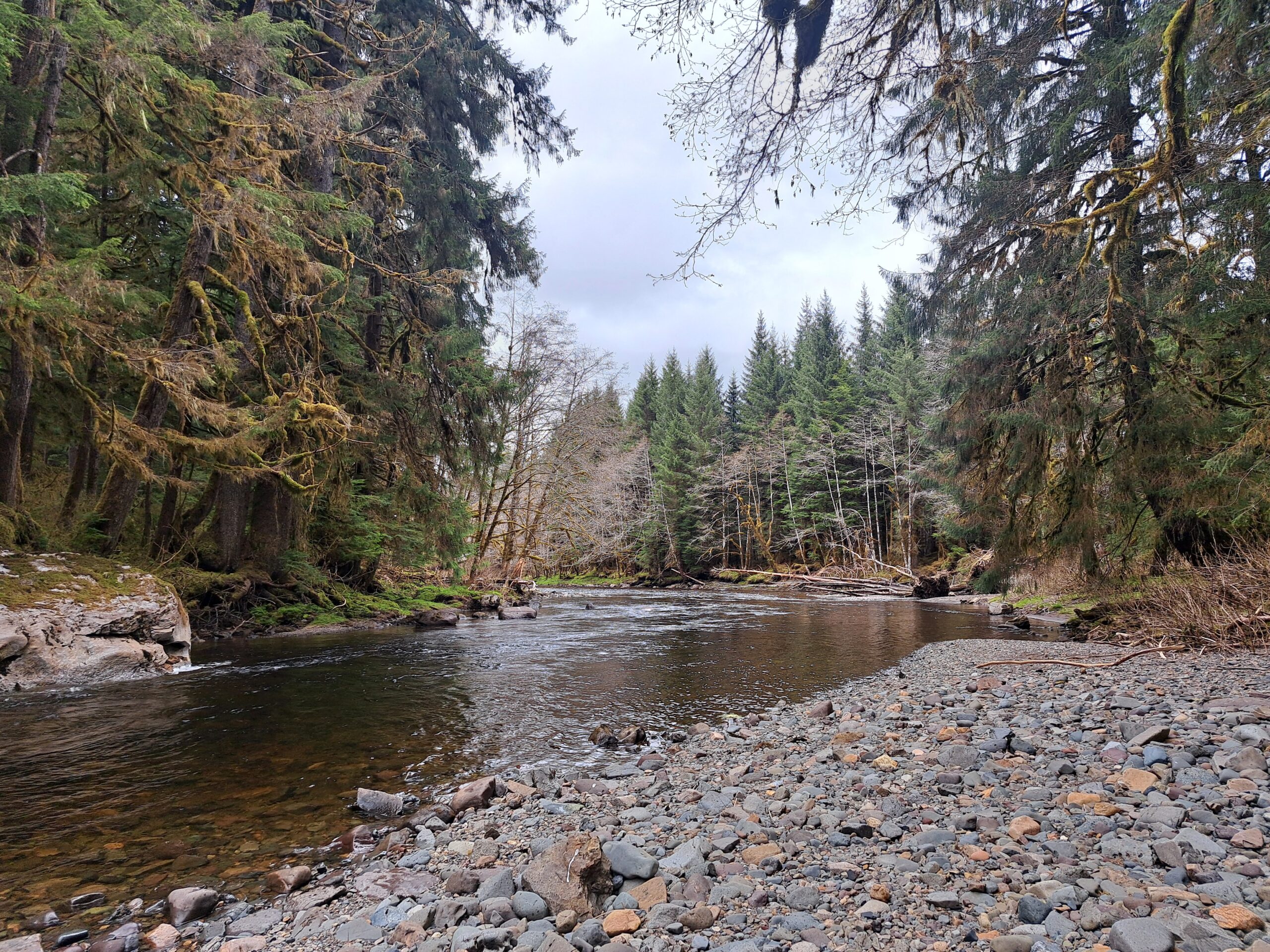
The Tongass is a salmon machine. At 16.7 million acres, it’s the largest national forest in the country, and its old-growth watersheds produce roughly two-thirds of the pink salmon and three-quarters of the coho salmon caught commercially in Southeast Alaska waters each year. Unroaded, undisturbed forest means intact riparian buffers, stable streambanks, cool water temperatures, and clean gravel for spawning. Roads mean the opposite: sediment runoff that smothers redds, fragmented habitat, and the kind of clear-cut erosion that gutted salmon runs across the Pacific Northwest in the 20th century. We don’t have to guess what road-building does to a salmon forest — the Lower 48 already ran that experiment, and lost.
The economics don’t favor logging, either. Timber harvest in the Tongass has cost taxpayers an estimated $1.7 billion over the past 40 years in subsidies, while supporting a shrinking handful of jobs. Meanwhile, the roadless backcountry underwrites a fishing, hunting, and tourism economy worth far more, year after year, without ever being logged. The Roadless Rule itself is estimated to have saved billions in avoided road-building and maintenance costs across the system. Rescission isn’t a cost-saving measure; it’s a subsidy in the other direction.
The stated rationale doesn’t hold up in Alaska. USDA’s rescission push leans heavily on wildfire risk reduction. But the Tongass is a temperate rainforest — some areas receive over 200 inches of rain a year. It bears no resemblance to the dry interior forests where fire risk arguments actually apply. Applying a one-size-fits-all rationale to a rainforest is a tell that the real driver is resource extraction, not forest health.
Old growth is also carbon storage. The Tongass is one of the most significant carbon sinks in the entire National Forest System. Protecting it isn’t just a fisheries issue — it’s a climate one, and a “no-regrets” move under any administration’s stated priorities.
None of this means roads are never appropriate, or that every acre of national forest should be permanently off-limits to any use. The Roadless Rule already carves out exceptions for things like public safety and existing infrastructure. What it prevents is the wholesale opening of the last large, intact salmon strongholds in North America to industrial logging — for a fraction of the economic return the standing forest already provides.
The comment period is open now. If you fish for wild salmon or steelhead anywhere on the West Coast, the fate of the Tongass isn’t someone else’s fight — it’s the upstream end of the same river system we’re all trying to protect.
Comments on the proposed rescission can be submitted through the Federal Register through September 21, 2026.
How to Submit a Public Comment
Making your voice heard takes about five minutes:
- Go to Regulations.gov. Visit www.regulations.gov and search for docket number FS-2025-0001 (the proposal is also identified by RIN 0596-AD66).
- Find the comment button. On the docket page, click “Comment” to open the submission form.
- Write your comment. Keep it specific and personal — mention that you fish for wild salmon or steelhead, note which watersheds matter to you, and speak to habitat, water quality, or the local economy rather than general opposition. Comments that reference specific sections of the proposed rule and explain your reasoning tend to carry more weight than form-letter submissions.
- Submit before the deadline. Comments must be received by September 21, 2026.
If you’d rather mail a comment, hardcopy letters can be sent to: Director, Ecosystem Management Coordination, USDA Forest Service, 201 14th Street SW, Mailstop 1108, Washington, DC 20250-1124. Electronic submission through Regulations.gov is preferred and faster to process.
Posted on August 27th, 2026