Posted on

June 2026 Newsletter

June 3 6:30 pm at Aptos Grange: Erin Loury of The Coastal Watershed Council: Creating a Thriving San Lorenzo River / Ben Harris of MBSTP: 50 Years of Salmon & Steelhead Conservation

My Turn:…………………………………
  Trout in the Classroom Project
Fishing Partners………………………
  Women’s Fly Fishing Event at the Los Gatos Casting Ponds
Fly Tying…………………………………
  June Fly Tying Class: The Extraordinary Woolly Bugger
  Fly of the Month: Woolly Worm
Conservation Concerns………………
  Turning Anglers into Scientists: The Work of The Conservation Angler
Membership Notes………………………
  SCFF Welcomes 32 New Members Since Jan. 2026
  Club Activities – June thru August
Gearing Up ……………………
  Fishout Schedule
Cartoon ……………………
  Fly Jewelry

Date:  June 3

Time:  6:30 PM

Place:  Aptos Grange

Posted on

Erin Loury of The Coastal Watershed Council: Creating a Thriving San Lorenzo River / Ben Harris of MBSTP: 50 Years of Salmon & Steelhead Conservation

Jun 03 6:30 PM at the Aptos Grange (Zoom Presentation)

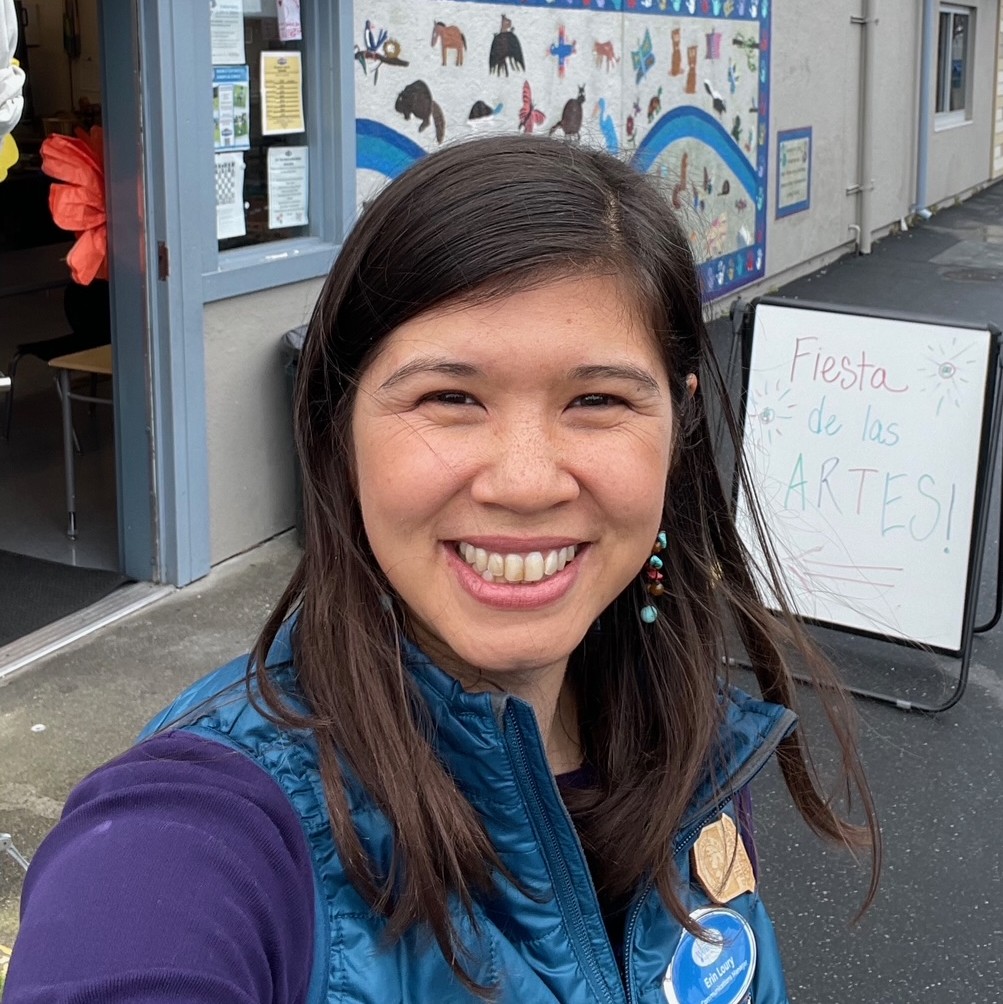
Erin Loury is the Communications Manager at the Coastal Watershed Council, where she helps tell the stories of the San Lorenzo River, the species that depend on it, and the people who interact with it. Prior to joining CWC, she worked for ten years as the Communications Director and a fish biologist for the fisheries consulting company FISHBIO, where she worked to study and conserve freshwater fishes in California and Southeast Asia. Erin has a master’s degree in Marine Science from Moss Landing Marine Laboratories, where she studied ichthyology, and is a graduate of the Science Communication program at UC Santa Cruz.

For more than 30 years, the Coastal Watershed Council has worked to preserve and protect coastal watersheds through community stewardship, education, and monitoring. Since 2013, our nonprofit has focused on transforming the lower San Lorenzo River in downtown Santa Cruz into a thriving urban riverfront and community destination. We do this by inspiring people to explore, enhance, and protect this critical natural resource. Learn more at coastal-watershed.org.


The Monterey Bay Salmon & Trout Project (MBSTP) has been working to conserve and recover the native salmon and steelhead of the Monterey Bay region for the past 50 years. MBSTP’s programs include a captive broodstock program for critically-endangered coho salmon, ocean salmon fisheries enhancement releases, watershed science education & outreach programs, and steelhead stranding rescues throughout the region. Ben Harris has served as Executive Director of MBSTP since 2018. Ben earned his Bachelor’s degree in Fisheries Biology from Humboldt State University and a Master’s Degree in Fisheries & Wildlife Resources from West Virginia University. Ben has extensive experience studying and working toward the recovery of native salmon & trout throughout the US. Ben’s prior work experience includes positions within the National Marine Fisheries Service, CA Dept. of Fish & Game, and Pacific States Marine Fisheries Commission. In his free time, Ben enjoys fly fishing, reading, and cooking.


NOTE: Prior to the start of the General Meeting at 6:30 pm, we will be conducting a short Crew26 Introductory clinic to help our those new to the sport. Please look at the Club Activities article in the Newsletter for more information.


Posted on Leave a comment

Trout In The Classroom Project

by by Board Member David South

Trout In The Classroom Project

Are you looking for a chance to be a SCFF volunteer? Would you like to impart some of your knowledge about trout to 4th graders? If so, this program is for you.

Scott Kitayama and I both signed up for the program this year, and I was assigned to Bradley Elementary school in Corralitos and teacher Jen. SCFF members Michael Sherwood & Kaydin Carlsen helped with casting practice at Loch Lomond on fish release day.

Early one morning in February, Joely (a UCSC student volunteer) and I drove up to the Berkeley Marina to pick up the trout eggs for our county. We were met by 300 wild turkeys who hang out there, and a parking lot of full of other fly fishing club members from around Northern CA ( Santa Cruz Co. was the least represented). We met with CA Fish and Game and were given our little pouch of eggs to be kept on ice until distributed to others in our county.

Teacher Jen already had her aquarium up and running for two weeks at the right temp and aeration levels. When Joely and I delivered the eggs some of the kids got to gently place the eggs in the aquarium. Joely and I led the kids through a coloring book that showed the stages of development: spawn, eggs, alevin, fry, to adulthood, and tried to answer all their questions.

The full program set up by SCMBAS (the local chapter of American Fisheries Society) includes, over a period of about 6 weeks, how the classroom can imitate nature: life cycles of trout and other Salmonids, anatomy, diet, habitat, etc.

Mid-April we got the call that the fry were hungry and big enough to release, so I met Jen, her classroom of about 25 fourth graders and some of their parents at Loch Lomond Lake. After a brief talk from the Park Ranger and instructions from Jen, the kids in pairs released a fry in the lake (only about 25 of the original 50 eggs survived to release.).

The children spent the rest of their day having lunch, and a scavenger hunt for other things in nature like birds, banana slugs, insects, reptiles, etc.

If interested, next January/February look for notices in our club newsletter for volunteers, or contact the program directors:

Abigail Ward, Ecology & Evolutionary Biology Dept., UCSC.abeward@ucsc.edu or Sara Hocevar, NOAA QEST Research Fellow. shocevar@ucsc.edu

David South, Board Member

Posted on Leave a comment

Women’s Fly Fishing Event at the Los Gatos Casting Ponds

The San Jose Flycasters’ womens group “FlyGals” is inviting SCFF women members to join them for a day of fun and celebrate women in fly fishing. Several of our members went in 2025 and had a great time. See the flyer below to register for the event

Women's Fly Fishing day 2026

Download flyer

Date:  June 10 2026

Time:  6:30PM

Place:  Aptos Grange

Posted on

June Fly Tying Class: The Extraordinary Woolly Bugger

by Tom Eckert


The Extraordinary Woolly Bugger

Jun 10 6:30 PM @ Aptos Grange

“A must for your fly box!!”

Woolly Buggers are one of the most popular stillwater fly patterns!!
They mimic a variety of aquatic lifeforms (leeches, nymphs, baitfish.
Fish them for trout, black bass, and bluegill.
They can be fished with a variety of floating or sinking fly lines.
The fly can also be weighted with lead wire or metal beads to get to fish level.

Sign-ups are at the monthly meeting first Wednesday of the month as usual – there will be a sign-up sheet.
You can also contact Tom/Carolyn at 831-818-3801 to sign up


Future tying classes. Dates and subject may change, please go to Fly Name to see more information.

Date Fly Excerpt
The Extraordinary Woolly BuggerJun 10 6:30 pm - 8:30 pmThe Extraordinary Woolly Bugger

The extraordinary woolly bugger, a must for your fly box!!

Posted on Leave a comment

Woolly worm

by Elaine Cook – fly tying chairman

As promised, here is another easy fly to tie. Our focus remains such for several months for you beginners. This fly was originally designed to be fished on the surface for large mouth bass and bluegill. If you add weight, it can be used sub surface for a variety of fish.

HOOK: TMC 5262. sizes 8 to 14.  Crimp barb.

THREAD: Black 6/0 or 8/0 depending on the size of the hook. Attach one eye length behind hook eye. Touching wraps to above hook tip.

TAIL: Red yarn.  Place strand on top of shank with butt end at thread tie in. Tie in place up to butt end and back again to above hook point.

HACKLE: Grizzly (Barbs slightly longer than hook gap). Cut off fuzzy end,/Barbs and butt and against the grain, cut 4 to 5 bars, short on each side of the stem (Forms a crew cut). Lay crew cut on top of tied down yarn, dark side upward, tip to rear. Tie crew cut in place.

BODY: Medium sized chenille, Black or yellow. Pull fibers off end exposing about 1/4 inch of threads. With chenille extending to the rear, tie in exposed threads on top of Crew Cut. Advanced thread to one eye length behind eye.  around shank with touching wraps up to hanging thread. Tie off, cut excess. Spiral wrap hackle forward 6-8 times. Tie off, cut excess.

HEAD: Holding barbs back, tie a small thread head. Tie off ,cut excess, Apply small amount of glue to head.

Posted on Leave a comment

Turning Anglers into Scientists: The Work of The Conservation Angler

by Bob Garbarino

For many of us who have had the opportunity, a day on the water chasing steelhead is measured in memories — the arc of a spey cast at first light, the electric jolt of a grab, the brief, shimmering moment before a wild fish slides back into the river. But what if that encounter could mean something more? What if every fish you touched could become part of a living scientific record helping to protect wild steelhead for generations to come?
That’s the animating idea behind The Conservation Angler (TCA), a nonprofit organization building the science that wild steelhead conservation has always needed — and doing it by putting anglers and guides to work as trained field researchers.
The Problem with Traditional Monitoring
Wild steelhead are an indicator species for the health of entire Pacific Rim watershed systems. But monitoring them at the scale they require has always been beyond what traditional science programs can sustain. Many of the rivers these fish depend on are too remote, too vast, or too lightly resourced to monitor through conventional means. The data gaps that result aren’t just inconvenient — they leave managers and conservationists making critical decisions without the biological evidence they need.
TCA’s answer is to close those gaps by leveraging the people who are already there: the guides, outfitters, and passionate anglers who spend season after season on these rivers and know them as well as anyone alive.
Angler Science in Practice
The key to TCA’s model is that it doesn’t ask anglers to change how they fish. When anglers and guides encounter wild steelhead on partner rivers, trained guides record length, condition, and sex, and collect scale samples for age and life-history data along with DNA clips for population genetics. All sampling is non-invasive, standardized, and consistent across every river in the network. Those samples travel from streamside to laboratory, where scientists analyze them and share findings with agencies, tribes, and resource managers across the Pacific Rim.
Every fish sampled feeds four distinct streams of biological data. Size and condition measurements track growth rates and health trends over time. Scale samples, read like tree rings, reveal how many years a fish spent in freshwater before migrating and how many seasons it logged at sea — a life-history record that documents the structural diversity that makes populations resilient. Genetic samples identify population structure and the mixed-stock risks that can undermine management decisions. And standardized location and timing data reveal how fish are responding to warming rivers, shifting ocean conditions, and altered flow regimes.
Thirty Years of Proof
TCA’s model was built and proven over thirty years and thousands of fish on the intact rivers of Russia’s Kamchatka Peninsula, one of the last places on earth where wild steelhead populations remain largely intact. There, TCA observed that overharvest could overwhelm even the best rivers — but also watched recovery take hold when scientists, guides, and anglers worked together, gathering the long-term data that proved conservation efforts were actually working. The lesson was clear: rigorous science and people on the water, working in partnership, can achieve what neither can accomplish alone.
The Northern Crown
That proven framework now powers TCA’s flagship initiative, the Northern Crown — a coordinated monitoring network spanning wild steelhead strongholds from California to Kamchatka, transforming fishing lodges into research stations and guides into field technicians, creating a permanent scientific presence on rivers that no traditional science program alone could sustain at scale.
The Northern Crown also addresses what TCA calls the “black box problem” in conservation funding. Habitat restoration, barrier removal, and watershed investment require enormous resources and genuine commitment — but without independent biological monitoring, there is no way to verify whether those investments are actually moving the needle for wild fish. TCA provides that audit, translating well-intentioned conservation spending into measurable, documented results.
How You Can Be Part of It
Participation in TCA’s network is open to lodges, guides, and individual anglers at every level. Lodges and outfitters can become official research stations, hosting field kits and contributing to a permanent scientific record for their home river. Guides can enroll in TCA’s field technician training program — no science background required. And anglers can simply book a trip with a partner lodge, fish with purpose, and sign up for TCA’s field data newsletter to follow the science as it unfolds each season.
The next time you feel that unmistakable pull on the end of your line, it could be more than a moment. It could be a data point in a thirty-year story about the survival of one of the most extraordinary fish on the planet.
Santa Cruz Fly Fishing club supports The Conservation Angler and by extension, journal known as The Osprey. Information for this article came from theconservationangler.org. If you know of any steelhead lodges, guides or anglers, pass this on to them.

To learn more or get involved, visit theconservationangler.org.

Posted on Leave a comment

SCFF welcomes 32 new members since Jan. 2026

Since Jan 1 membership has grown by 32 new member for a total members of 219 paid current members.  We welcome all the new members below since Jan 1 and hope that they can participate in our future activities in the months ahead.

Jan:        M. Zigman, M. Dettle, G. Romo, C. Del Core, C. McConnell, M. Ford, T. Moore, T. McCart, S. Valencia, M. Crosby, M. Vandermeer, C. Badger, K. Lineberry, Jack Thomas, Jake Thomas

Feb:       C. Wong, J. Bowe, C. Hall, S. Smith, L. Wendell, T. McClintock, R. Lloyd, C. Nguyen

Mar: M. Salas, T. Sciarrilli

April:      G. Prince, C. Leonard, A. Aliganga, J. Ziganti

May: T. Voss, E. Holmes, F. Goldman

Posted on Leave a comment

Fishout Schedule – June

Jun 2026

Pyramid Lake Floatie Fishout - June 2026 - UPDATED April 16

Pyramid Lake Floatie Fishout - June 2026 - UPDATED April 16

Jun 06 - Jun 08    
Fishmaster: Frank Gombos (Salinas Fly Club) Update April 15 - Due to low response, we have canceled the SCFF only fishout and will join the [...]
Beer Can Beach Surf Fishing & Breakfast

Beer Can Beach Surf Fishing & Breakfast

Jun 06    
5:20 am - 10:00 am
Date: Saturday, June 6, 2026 at 5:20 am. Location: Beer Can Beach (AKA Summer Beach) - Staircase at 1191 Via Palo Alto, Aptos (no bathrooms) Fish Master: Peter Soderstrom / petertsoderstrom@gmail.com
Yuba River Private Water - UC Davis Property

Yuba River Private Water - UC Davis Property

Santa Cruz Fly Fishing Club (SCFFC)Lower Yuba Private Water Camp & Fishout June 19th-21st 2026 (Date subject to change due to weather and flows) The [...]
Lake Almanor/Hex Hatch - Jun 20th - 27th 2026

Lake Almanor/Hex Hatch - Jun 20th - 27th 2026

Jun 20 - Jun 27    
12:00 am
The Lake Almanor Fishout is scheduled for June 20th thru 27th, 2026. This time period is, hopefully, the peak of the annual Hexagenia hatch that [...]

Jul 2026

10 Jul

CANCELED - Burney & Around

Jul 10 - Jul 12    
Due to unforeseen circumstances, this Fishout has been canceled. Please stay tuned as there is a chance for rescheduling. Fishmaster: Alex Ferber Location: Lakes, rivers [...]
Beer Can Beach Surf Fishing

Beer Can Beach Surf Fishing

Jul 11    
5:20 am - 10:00 am
Date: Saturday, July 11, 2026 at 5:20 am. Location: Beer Can Beach (AKA Summer Beach) - Staircase at 1191 Via Palo Alto, Aptos (no bathrooms) Fish Master: Scott Kitayama / scottkitayama@gmail.com Species: Surf Perch, Striped Bass Meet at 5:20AM. Sunrise is at 5:53 and we are fishing a 3-foot tidal crest, high tide being 8: 55AM. Breakfast at Mike Lovejoy’s house, 115 Driftwood Ct, Aptos, please RSVP by July 3rd to mikelovejoy94@gmail.com.  Coffee at 8:00am and breakfast served 8:30-9:30. Park on the street.  Hot water available for hand wash.  Hose available for rinsing equipment.

Aug 2026

Palm Beach Surf Fishout With The Delta Fly Fishers

Palm Beach Surf Fishout With The Delta Fly Fishers

Aug 01    
5:50 am - 10:00 am
Target Species: Surf Perch and Stripers

Sep 2026

Alaska Kenai Peninsula Fly Fishing

Alaska Kenai Peninsula Fly Fishing

Sep 08 - Sep 15    
This Fishout’s final date is still TBD and subject to river flows as we get closer to spring. The upper Sac. has excellent access via. Hwy 5 and by walking the railway tracks. Euro/High Stick/Indicator Nymphing is the go to.
Mammoth Fishout -Sept. 19-Oct. 3rd 2026

Mammoth Fishout -Sept. 19-Oct. 3rd 2026

Sep 19 - Oct 03    
APR Update: We have one space open in the first week and one space open in the second week. If you want to go or get more info, contact Scott Kitayama or Randy Saar.

Oct 2026

Lower Sacramento River Group Float - Hosted by the Delta Fly Fishers

Lower Sacramento River Group Float - Hosted by the Delta Fly Fishers

Oct 10    
5:00 am - 5:00 pm
Greetings, The Delta Fly Fishers have offered the Santa Cruz Fly Fishing Club the opportunity to join them on their annual guided float trip on [...]
O'Neill Forebay 'Stosh' Memorial Fishout October 15-18th

O'Neill Forebay 'Stosh' Memorial Fishout October 15-18th

Camping and striped bass fishing at the O'Neil Forebay.

Nov 2026

Trinity River Fishout

Trinity River Fishout

Nov 13 - Nov 15    
12:00 am
Target: Steelhead and trout.  Contact Alex Ferber if you are interested in going on the trip, text Alex at (831) 419-0564  or alex.ferber74@gmail.com.