Like many of you, I have been fishing all my life—in streams, lakes, and the ocean. Every minute I fish is pure joy, even if I don’t catch a thing. About 25 years ago, I purchased a fly rod and reel while visiting friends in Michigan. A friend at work gave me a book and a video cassette (this was before the internet!) to help me learn how to cast. I fiddled around with it, but I never really had the time or patience to learn to cast properly, so the rod went into the fishing cabinet to collect dust.
I was fortunate enough to retire in 2019, and one of the things on my bucket list was to finally learn how to fly fish. It always looked so peaceful and majestic. Now that I had the time, I saw an announcement in the Sentinel for the monthly Santa Cruz Fly Fishing Club meeting and decided to attend. I wasn’t quite sure what to expect, but I was impressed by how friendly everyone was, how well the meeting was run, the interesting presentations, and how fun the raffles were. I even won some great items!
Shortly after that, I attended casting classes sponsored by the club. In a short time, I gained the skill and confidence to cast. I began bringing a fly rod on camping trips and was soon able to catch fish! I also started attending fly-tying classes. What a mistake that was! I enjoyed it so much that I began gathering tools to tie at home. Materials came together slowly, but thanks to club members bringing items to meetings to give away, my collection grew. I can now follow recipes on YouTube and tie what I want. It’s incredibly gratifying to catch a fish on a fly I tied myself. These days, I even find myself tying flies specifically for upcoming trips.
After getting so much from the club, I decided it was time to give back. I was asked to join the board and took on the role of Facilities Director before later transitioning to Secretary. I’ve built many great relationships with my fellow board members and truly enjoy our board meetings.
My next venture will be hosting my first club fishout at Lake Nacimiento. Last year, a group of us had a successful trip there, and I’m hoping for the same this year. We’ll be camping at the Pine Knoll campground. Reservations shouldn’t be necessary, as the campground was wide open last year with hardly anyone there. Access to the Nacimiento River is by boat and takes about an hour to reach. I can accommodate a maximum of six people in my boat, so spots are limited unless someone else would like to bring a boat. If you’re interested, please see the details in the newsletter.
As I write this on January 26, I’m wrapping up work and looking out at clear skies, hoping for more rain. The San Lorenzo has been steadily dropping in flow, and for the sake of the steelhead, I’m wishing for storms that will bring the river back to healthy levels so these fish can reach their spawning grounds. Just as seasonal changes renew the watershed and bring new runs of fish, our club is experiencing some changes of its own. I’d like to take a moment to share where we’re headed in 2026. The first big change is that we have a new president — me. I know I have big shoes to fill in Scott Kitiyama’s absence. Over the past three years, Scott led this club with dedication, enthusiasm, and a hands‑on presence in nearly every facet of our operations: fishouts, fly tying, and so much more. Scott, thank you for everything you’ve done. I hope we’ll continue to see you around.
You may also have noticed that we haven’t been holding our usual raffles at monthly meetings. In short, we’re working through the paperwork required to align our nonprofit status with state regulations so we can legally run raffles again. We’re optimistic that raffles will return later this year, but we can’t guarantee timing quite yet. In the meantime, please hang in there with us. At our annual fundraiser, instead of raffles, we’re offering some great door prizes and expanding our silent auction — and we think you’ll really enjoy what we’ve put together.
One of my goals as president is to encourage more member engagement. In my opinion, fishouts are the heart of this club and the spark that keeps people involved. When I joined in 2021, I attended only a couple of meetings and didn’t feel very connected at first. That changed when I signed up for the 2022 Lake Almanor fishout — I’d always been curious about the Hex hatch and decided to give it a try. I ended up sharing a cabin with Jeff Goyert, Michael Sherwood, Bob Garbarino, and Kevin Murdock, and we had an incredible time. That weekend turned me from a ghost member into an active one.
If you’ve ever felt hesitant to show up because you don’t know many people, trust me — I’ve been there. A fishout is the best way to break the ice, get involved, and make new friends. In 2024 we held 18 fishouts, in 2025 we bumped that up to 22, and in 2026 we plan to top that.
I’m also passionate about making semi‑exotic fishing opportunities both accessible and affordable. This September, Rick Chace and I are hosting two weeks of fishouts on the Kenai Peninsula — giving members the chance to fish world‑class trout, steelhead, and salmon waters for a fraction of lodge prices. My hope is to make Alaska an annual trip that continues even if I’m not able to attend someday. I’d also love to eventually add DIY trips to British Columbia and winter steelhead trips to the Olympic Peninsula. The more engaged members we have, the more adventures we can offer. The sky is the limit, but we need you to bring your fishing experience and skillset forward to make the opportunities possible. If you have a bucket list destination and would like to organize a trip, please let us know, we are happy to help you make that vision a reality.
Last year, Justin Ice did a fantastic job organizing the Fly Fishing Film Tour at Woodhouse Brewery. We filled the place with more than 120 people and added six new members that night. We plan to host the event again this year and are looking into expanding to the International Fly Fishing Film Tour as well. We’re also exploring a monthly fly swap and fly‑tying meetup at Woodhouse. If you tie — or want to learn — we’d love your ideas and involvement.
Another area I’m excited about is updating our club logo. A great brand starts with great imagery, and I think it’s time for a refresh that reflects who we are today while honoring our roots. We’ll develop several options and put the final decision to a club vote. Strong visual branding on our merchandise will help represent the club in the best possible light.
My overarching goal is to celebrate the club’s history and tradition while fostering growth, engagement, and connection. I’m passionate about providing meaningful fishing opportunities for all of you, and I truly believe that time outdoors — fresh air, movement, and camaraderie — is some of the best medicine there is. I hope you’ll join me in making 2026 another outstanding year for our club.
Every fly fishing journey begins the same way—with curiosity, a bit of uncertainty, and the excitement of learning something new. To better support members who are just getting started, the Santa Cruz Fly Fishing Club is launching a new group within the club: Crew26.
Crew26 is designed to be a welcoming “tribe” for those who are beginning their fly fishing journey. Whether you’re brand new to fly fishing or still finding your footing, Crew26 is a place to ask questions, learn together, and connect with other members who are at a similar stage.
What Crew26 Is About
Crew26 will use a mix of informal tools and gatherings—a WhatsApp group, ad-hoc meetups, and occasional Zoom calls—to share information, encouragement, and real-world experience. Topics we hope to explore throughout the year include:
Basic equipment without breaking the bank – what you actually need to get started
Where to find good online instruction – trusted videos, courses, and learning resources
Water safety tips – staying safe while wading and fishing
Beginner-friendly club fishouts – what to expect and how to prepare
Recommendations of places to fish – local and regional spots suitable for beginners
Good catch-and-release practices – caring for the fish and the resource
How to take a good fish photo without hurting the fish
Recommendations of guides that club members have personally used
And anything else the group wants to discuss
This is meant to be a flexible, member-driven space—if there’s a question, challenge, or success you want to share, Crew26 is the place for it.
How to Get Involved
If Crew26 sounds like a good fit for you, here are two easy ways to jump in:
Join the WhatsApp group Scan the QR code included with this article to join the WhatsApp group called “Santa Cruz Fly Fishing Crew26.”
Attend the New Member Orientation Join us on February 4 at the Aptos Grange for the New Member Orientation meeting. It’s a great opportunity to meet other Crew26 members and learn more about what’s ahead.
More Than Just Fish
Learning how to fly fish—and catching that first (or fiftieth) fish—is often what brings us to the club. But over time, most of us discover that the biggest gift the Santa Cruz Fly Fishing Club offers is to find great fishing buddies and a welcoming community.
Crew26 is about building those connections early—learning together, supporting each other, and finding your place within the club. We hope you’ll join us and become part of the Crew.
As I close out my third year as President, I’ve been reflecting on what has mattered most during my time in this role. What stands out above everything else is fellowship.
Our club isn’t just about flies, gear, or techniques. It’s about people—learning together, supporting one another, and creating a community where new friendships form naturally. Over these past years, we have worked hard to make sure our activities and events reflect that sense of connection. All we’ve ever asked of you is simply to participate, and you have responded with enthusiasm and generosity.
Your involvement shows in what we’ve accomplished. In 2023, we donated $6,250 in Scholarships and Conservation. This year, we reached $9,800—a 57% increase in just two years. That growth is a direct reflection of the commitment and goodwill of our members.
Our Annual Fundraiser is another example. After returning from a three-year hiatus in 2023 with a renewed format at the Aptos Grange, we moved the event to the Pajaro Valley Rod and Gun Club in 2024 and 2025 and completely sold out—nearly 180 attendees each year. These gatherings were full of connection, conversation, and a very visible sense of shared purpose.
We continued expanding our presence through events like the Fly Fishing Film Tour. In 2025, hosting the F3T at Woodward Brewery brought nearly 100 people out on a weeknight, many of whom were not yet members but were clearly part of the greater fly-fishing community in Santa Cruz.
This year we also had a booth at the Pleasanton Fly Show for the first time, staffed by club members all weekend. It allowed us to meet people across the industry, reconnect with past members, and introduce the club to anglers who hadn’t known we existed.
Membership has grown steadily: 175 members in 2023 → 254 in 2025. Our social reach has grown as well, with our Instagram following now over 1,000.
We’ve also strengthened relationships beyond our own club. Working with other California clubs, we’ve shared knowledge, attended each other’s fishouts, and exchanged experiences that enrich everyone involved. Partnerships with Project Healing Waters, Trout Unlimited, and Sisters on the Fly continue to build bridges within the broader community—connections that could bring future members to SCFF.
As I look back, I’m proud of the path we’ve taken. Yet most of these accomplishments were carried by the dedication of our Board and volunteers. I have been fortunate to work with a stable, committed leadership group that guided us through the challenges of Covid and into a reimagined club.
My sincere thanks to those finishing their service: Tommy Polito (Programs), Kevin Murdock (VP), Tom Hogye (Past President), Jim Tolonen (Treasurer), Jeff Goyert (Raffle), and Bob Peterson (Membership). Your work will continue to shape the club for years to come.
MY TURN TO LOOK FORWARD
As we look ahead to 2026, we welcome new Board members who bring fresh ideas, energy, and the same commitment to service that has kept the club strong. While I am stepping out of the President role, I’m not stepping away from my purpose. My focus from the beginning has been fellowship, and that remains the heart of what I want to continue building.
This year I’ll be taking on the Membership role, with the goal of reimagining how we welcome and support members.
Improving the Membership Experience Through Technology
For 2026, membership renewals will be handled directly through the club’s website. You should already have received your login information. The new member portal will allow you to update your contact information, manage auto-renewal, and indicate volunteer interests. It will streamline communication and help us stay better connected.
Creating a First-Year Program for New Members
The first year in any organization is pivotal. I want to ensure new members feel connected, supported, and included from the moment they join. To do this, I plan to create a first-year cohort—Crew’26—a group of new members who will attend meetings, clinics, and fishouts together. The goal is to help new members build relationships early, learn alongside each other, and feel at home in the club.
Ultimately, the greatest gift our club offers is the opportunity to find community. To find people who share your interests, your curiosity, and your appreciation for the outdoors. If we can help new members form those connections, they will stay with the club for years to come.
Serving as your President has been an honor and a privilege. When I joined, Santa Cruz Fly Fishing was already a wonderful club; I hope that together we have made it even stronger.
It was my 27th straight day guiding on the Kenai, and I’d just finished washing down my drift boat, backing it into its spot at the top of the hill. My hands were raw, calloused, and aching, but the fatigue felt lighter knowing tomorrow was my first day off in nearly a month.
On the Kenai, kings were everything. During king season, you fished—no exceptions. Guiding then was grueling, especially in a drift boat. The river itself is a beast: born from glacial melt pouring out of the Kenai Mountains, it swells through summer, peaking in July as rising temps accelerate the melt. It’s a broad, fast-moving torrent of turquoise blue, unlike anything in the Lower 48.
Fly fishing for kings is nearly impossible here, except in a few choice locations, so we run gear rods with line counters. These fish run deep. We back troll plugs or bait—usually cured salmon eggs behind a cheater or a qwik-fish with a sardine wrap—and row against 18,000 cfs of current, using divers to reach the channels and buckets where kings hold. The harder you row, the deeper and slower you fish. The harder you work, the better your odds of hooking one of these giants.
I’d just settled into my cabin, peeled off my waders, and cracked a warm Miller High Life when a quad kicked up dust out front. Jimmy, our mechanic, grinned his usual mischievous grin and asked if I wanted a drink at his place. Never one to turn down a pour, I grabbed my tackle box—because prepping gear was a never-ending chore—and hopped on the back.
We spent the next few hours trading pulls from a bottle of Wild Turkey and watching the river shift. The Kenai had turned from aquamarine to a bluish-tinged coffee beige. No rain all week, but southeast winds had rapidly warmed the glaciers, causing the lower Killey River—a tributary—to dump muddy torrents of glacial silt into the Kenai in just hours. I felt lucky to have the next day off. Tomorrow was the annual king salmon derby, and over 400 boats would hit the river at dawn. The thought of guiding behind that fleet in chocolate brown water made me shudder. A guide’s worst nightmare.
My mind drifted to my tackle box. What would I even use in those conditions? I picked up an oversized orange cheater and spun it between my fingers. It was an egg-shaped piece of foam with a hole down the center, painted in wild color combos, with two holographic mylar wings. You would rig that above twin stainless steel hooks loaded with cured eggs. Back-trolled behind a diver, they were deadly on kings.
I pulled out a Sharpie and blacked out one wing. In murky water, contrast matters—black creates a silhouette, and paired with flash, it might just trigger a strike. I tucked it back in the box, hoping I would never need it.
The next morning, I slept in until 8 a.m.—pure luxury. After breakfast, I suited up, grabbed my switch rod, and wandered down to the river to swing for sockeye. I’d been stocking my freezer with vacuum-sealed fillets to ship home, and finally had time to fish for myself.
Our camp sat at the confluence of the Kenai and Moose Rivers. The 400 yards of river frontage beyond the lodge was prime water—slower, clearer, and warmer—where salmon paused to rest and clear their gills of glacial silt. Step, swing. Step, swing. The rhythm, the sunshine, the solitude—it was bliss.
Then I saw Andrew, our lodge manager, walking toward me from the office cabin. My stomach dropped. Something about his gait told me my peaceful morning was about to end.
“Hey Jesse,” he said. “I’ve got a huge favor to ask. The clients who were supposed to arrive tonight got rerouted from Russia. They just landed and they want to fish. We need all hands on deck. Jeremy, Mark, and Dave are geared up with the powerboats, but we’ve got three more guests and need you to take them out.”
He paused.
“Oh, and we’re not totally sure what they do. Might be Russian mafia. Most of them are already drunk. You should be fine, but… just FYI.”
Just like that, my day off vanished. I trudged up the hill, rigged my gear, hauled my boat down, and dropped it in. The three powerboats lined up beside my drift boat—me, about to be rowing into a muddy maelstrom with a crew of mystery Russians.
I’m double-checking everything in my boat, contemplating the depths of my misfortune, when I hear loud laughter and guttural cries—expletives, I assume, in a Slavic tongue. I look up.
Stomping down the lodge’s long staircase are fifteen men in their thirties and forties, covered in tattoos and wearing speedos. Each clutches a half-empty bottle of Jack Daniels. Apparently, they’d demanded the shuttle driver stop at the liquor store on the way from the airport and arrived half-blitzed.
My brain can’t immediately register what I am seeing. The only thought I can process is: it’s gonna be a long day. They swarm the boats, quickly realizing only three of the four have motors. All fifteen bum-rush the powerboats. The powerboat guides point to my drift boat and demand three men offload. Part of me is holding out hope the Russians will stubbornly demand these accommodations and that the three overloaded powerboats will head off downstream leaving me to enjoy the rest of my day off.
A stalemate brews until Kent John, the owner’s son, steps in. A seasoned guide and smooth negotiator, he promises the three who switch to my boat that they’ll never have to ride a drift boat again the rest of the week. After a begrudging agreement, three men approach my vessel. One circles it, throws his hands in the air, and bellows, “Where is the motor?! It is not possible to catch kings with no motor!”
That comment strikes a chord in me, I’m going to prove these knuckleheads wrong I think to myself.
We launch. I give a quick safety debrief and start handing out rods. I’m running a 20-foot Willie, with my clients seated right, center, and left. Center is Vlad—the drunkest and most vocal about the lack of motor. He’s going to be a problem. Dmitri, on the right, is the most reasonable. He had the foresight to wear a tracksuit over his speedo and listens intently as I explain our techniques. Aleksandr, on the left, interrupts me mid-demo, pulling out a chrome spoon from home.
“This is what we use in Kamchatka!” he exclaims.
I clip it on without protest and return to coaching Dmitri. He’s my only hope. I open my tackle box and see the orange cheater gleaming in the sun—like it was made for this moment. Dmitri gets the lucky cheater.
We pass through the no-fishing zone and let our lines out—55 feet on the side, 70 down the center. Dmitri translates for Vlad. Aleksandr is on his own program, casting his spoon across the river and ripping it back through the murk.
Dig and pull. Dig and pull. I settle into the rhythm, fishing hard. In a drift boat, every run counts—there’s no going back upstream. Powerboats zip past, on their way to cherry pick prime spots and hammer them repeatedly. I can’t think about that. I stay in the zone. I made a choice: fish as hard as I possibly can, for as long as I can.
Jeremy, Mark, and Dave with the rest of the Russian crew plane past us, and Vlad, still bitter, pulls out his phone. No interpreter needed—he’s chewing out his travel agent, animatedly describing the disaster. He hangs up and glares at me.
The cold sets in. Vlad and Aleksandr start shivering. I offer them Grunden coveralls from my seatbox. We settle into an uneasy truce.
Dig and pull. Dig and pull. I am determined to get my divers to the bottom of this raging torrent and scour every run I possibly can.
Dmitri’s locked in and watching every pulse his rod tip makes. By God, I’m going to get him a fish. We hook the occasional 20+ inch rainbow—wrong species—but the action is enough to entice Aleksandr to run a diver rig too.
And just like that, we’re fishing. All three rods are out and now I’m starting to feel a little better. Watching the lines and how they intersect the swirling currents helps me read the water and I settle into a comfortable rhythm as the river bank moves slowly by.
I work downstream diligently, re-baiting fresh egg clusters every 20 minutes. I’m burning through bait, but I want this to happen. Checking my phone—5:45 p.m. We’ve got 15 minutes left before rods up. ADF&G regulations shut down guide boats at 6 p.m. sharp.
Morgan’s Landing comes into view—a beautiful stretch of fishy water on river right, a series of buckets ending at a big rock that’s produced many kings for me over the years. My plan: run through the buckets, keep lines in, then scoot left and fish the swift hydraulics that wrap around the rock and into the boulder field below. Risky, but no time to reset lines. It’s now or never.
5:57 p.m. We’re rounding the rock. The run above didn’t produce. My hopes are fading.
Suddenly, I can’t see the right-side line. The rod is buried so deep I think we’ve snagged a diver. The boat’s drifting over it, hydraulics raging, and I’m pulling hard on the oars to slow us down before the rod snaps under the hull.
“Dmitri, reel up I think you’re snagged” I shout.
He stands, reels tight, and throws a heavy hook set.
“Is it a fish?” I ask, half in disbelief.
“No—it’s a friggin’ crocodile!” he yells.
And then, ten feet from the boat, a chrome-bright king explodes from the water, head-shaking in the sun and raining droplets of water down on us.
“Everyone, lines in!” I shout, digging into the oars and pushing the boat downstream, trying to keep pace with the fish and steer us clear of the boulder field. A wave of sweet relief washes over me—but there’s no time to celebrate. I HAVE TO LAND THIS FISH.
About fifty yards downstream, the current softens and a gravel shelf stretches off the bank. I slide the boat over, drop anchor, and leap out with my landing net. The king is thrashing at the surface, and I’m sprinting full speed down the shoreline. I reach the spot where it last broke water and plunge the net deep.
It goes tight.
I lift, and the shimmering beast rises into the air to the roar of my Russian crew. They’re high-fiving, passing around slugs of whiskey, shouting in triumph while I stand there catching my breath—net in hand, heart pounding, safe on the gravel shoal.
I can’t describe the flood of emotion—disbelief, relief, shock. What a day.
Across the river, the three powerboats have stopped mid-channel, idling. The guides stare silently, their bundled-up Russian passengers watching from behind fogged sunglasses. I raise a hand in salute. One by one, the boats throttle up, plane out, and head back toward the lodge.
We don’t have that luxury. We’ve got two more river miles to go before we reach our take-out spot north of Soldotna. We spend the rest of the drift swapping fishing stories and passing around their whiskey bottles. “What do you think that fish weighs?” Vlad asks in broken English, “Twenty kilos?”
I check my phone for the conversion—about 45 pounds. “Yeah, twenty kilos at least,” I nod.
For the first time all day, I feel not just tolerated, but truly accepted. Their beaming approval and newfound respect for my lowly drift boat craft is unmistakable.
Back at the lodge, I drop them off at the top of the hill to rejoin their crew at happy hour. I head down to the fillet tables to clean my rig and process their catch.
All eyes are on me—mine was the only boat that needed the fillet table that day. I can hear their cheers echoing from the deck above and soak in every bit of it as I prep their filets, the king shimmering in the afternoon light.
Rig cleaned and gear stowed, I make my way up to the main lodge. The boisterous group of Russians is holding court on the deck, and when they spot me, they erupt in a raucous cheer. Vlad grabs me by the shoulders and pulls me to their table.
He announces to the group—loud and proud—that I was the only guide to bring in a fish that day, and the only one who did it without a motor. The crew hands me a shot of vodka, and we toast together, one big celebratory clink.
After ten minutes of handshakes, back slaps, and more shots, I leave them to their revelry and walk up the steps to the lodge. At the top stands Lawrence, the lodge owner—a retired NHL player who looks like Santa Claus if he’d spent his youth throwing elbows on the ice.
Normally stoic, today he’s grinning ear to ear. He extends a hand, slaps me on the back, and says, “Atta boy!”
Even 13 years later I think a lot about that day. I would like to think it was my determination, fishing prowess, or my lucky orange cheater, that brought me success. Who knows. All I know is that if you fish long enough, sometimes magic just happens. It’s the moments of sheer ecstasy in between the long days and drudgery that has kept me coming back all these years. Thanks for sharing this moment with me and I hope one day soon we get to share a little magic.
Some people who don’t fish think that fishing is lazy or boring. But it is just the complete opposite. There are multitudes of little decisions to be made for each situation. Variables to be considered. And you are never quite sure what choices will make the difference.
Did I cast too high or too long, too far to the right or to the left? Did I retrieve the subsurface fly too slowly or too quickly? Is the color of the dry fly too bright or too dull, is the size too big or too small? Do I stay “here”, or should I go over “there”?
And you know hooking a fish is not just luck, but you do not know by how much. That is why I fish.
It is never exactly the same. Success requires constant readjusting, reevaluation. Because I am never disappointed in the outdoors. Because I don’t expect anything. Because anything is possible, I can be hopeful out there, even if I don’t succeed. Because I know if I just go over there behind that rock or next to that log jam or wade out into that water just a little further it might make a difference. Something might be different. Something I change might lend itself to success.
And if I catch a fish the reward of success gives me great joy, a deep sense of accomplishment, and gratitude for the experience.
I first joined SCFF club in July 2008 after I had retired and was looking forward to expanding my fishing experience from a spinning rod and reel to fly fishing, in not only California, but in other States and eventually Alaska and other areas, as well as meeting other like minded fishing partners who shared similar interest. I would have to say that my 17 years in the club has far exceeded my expectations, including the following trips and experiences:
4 trips to Alaska with John and Pat Steele catching more Salmon in a week and still had 50lbs to take back on the flight home.
5 trips also with John and Pat with Ed Lawrence Guides to Bozeman, Montana on the Yellowstone, Madison, Missouri, and additional trips on the Green River in Utah and Antelope Valley Reservoir.
3 trips to Mcloud Preserve in Northern California with Tom Donovan.
12 trips to the Mammoth fishout with John and Elaine Cook which is always my favorite annual trip since I have been going to June Lake since 1955 with my family to fish the June Lake loop and Crowley with favorite memories of visiting Bodie, 4th of July fireworks on Mono Lake, and waterskiing on Mono Lake.
5 trips to to Pyramid Lake standing on a ladder with 20 other members waiting for the next bite before the wind and waves got too big. And my best picture is of my daughter catching a Pyramid fish bigger than her net.
I only mention these trips since these are experiences and memories that make the Club something more than just a monthly meeting or an annual BBQ. In 2016, I volunteered to be Membership Chair to help the then President Jim Black with membership since he was doing two jobs as Membership and newly elected President. Since then I have seen the club grow from 120 members to 240 members on the current Roster. It’s been a good run, but it is time for me to step down and have let someone else take the responsibility of club membership.
Membership Chair involves the following tasks and responsibilities:
Primary duty is to update the current Roster with member information and updates. This has been made easier by moving from an excel spreadsheet to an online membership database where members can input membership data and in the following months will be able to access the current club Roster with other club members’ contact information and other club information with a secure ID and password for members only.
Collect annual membership dues in Nov. and Dec. this has also been made easier with the use of Square/Visa and in 2026 automatic dues renewal.
Attending monthly meeting to respond to member questions and sign up any new members attending the meeting for the first time.
Attending monthly Board meetings for any updates on membership information or changes.
Monitor SCFF Google groups – the Club’s go-to email forum for club activities and member questions.
The above only highlights recent changes in the Club since 2008 when memberships dues were either paid by check , or in cash, and monthly newsletters were printed and mailed out (and before that they were mimeographed for those who can still remember). I hope that the above comments may help members understand a little more about the Membership Chair and for those that have the time and interest to think about expanding your club experience by contacting me or any Board member by email or text.
The last week of April 2025, my wife, Linda, and I had the pleasure of hosting a Club Fishout week with the Santa Cruz Fly Fishing Club at the Green River. Below Flaming Gorge Reservoir Utah, the Green River offers stunning scenery, jaw-dropping views, moments of wonder, combined with trophy trout. Known as one of America’s most scenic trophy trout destinations, the Green River was not a disappointment. Located in the remote northeast corner of Utah, the Green River is one of the premier tailwaters in the country. The river flows from Flaming Gorge Reservoir through towering red rock canyons and holds upwards of 12,000 fish per mile. Whether you’re a seasoned angler or new to fly fishing, it’s hard to have a bad day here. The Green is best fished from a drift boat, but wade fisherman can also equally enjoy the river from its banks. The Green is divided into three main sections:
Section A (7 miles): A true tailwater with cold, clear water and consistently strong fishing. Section B (11 miles): Slightly slower water, less crowded, and known for bigger fish. Section C (14 miles): Meanders through Browns Park National Wildlife Refuge and into Colorado- home to some truly massive brown trout.
The river fishes with midges, Baetis and caddis as the primary insects, as well as terrestrials in the summer. Resident fish are Rainbow, Brown, and Cutthroat, and Flaming Gorge reservoir holds Lake Trout, Rainbow and bass. Most of our group of 10 anglers used Trout Creek Outfitter Guides, a longtime partner of our club. Many will remember Denny Breer, the shop’s founder, who used to present at our club meetings back in the 1980’s, and generously donated float trips to our annual fundraiser. For this trip we were able to secure a four bedroom home that could accommodate 14 anglers. We had two last minute emergency cancellations. Our food coordinator was unfortunately in a car accident on his way out of town and could not attend the trip. The home was a great match for our group of 10. A fun fact we learned was that the home was previously owned by Denny!
The fishing and the catching were excellent. On our very first evening, Club President Scott received a tip from a Trout Creek Creek guide that Lake Trout were actively spawning along the banks of Flaming Gorge Reservoir. Scott ventured down on a solo mission and returned triumphantly with photo of himself with a beautiful 5 pound Laker! I know some of the other in the group fished the lake, but to my knowledge Scott was the only that managed to land a Lake Trout .
Over the next week all of the club anglers returned from the Green with daily fish counts in the mid-twenties. I believe the high count for the week came from Steve Pappas, who netted 34 fish floating section A and B of the river. We ate like kings each evening, with club members taking turns at cooking and cleanup. We also had the pleasure of watching the last few games with the Warriors in the playoffs on the two big screen TVs. The Fishout indeed was a great success, with many anglers expressing interest in returning for next year’s trip.
The club currently has a hold at the same property for the same week, April 25- May 2, 2026. The outing is to be Fish Mastered by Scott Anderson, who will be accepting trip commitments. For more information contact Scott at his Email: scott.a.andersen@gmail.com
Each will receive a $600 a scholarship which is the most we have ever given due to the generosity of our members and donations in honor of our good friend, Gil Santos.
Aptos HS: Charlotte Morgan, Univ. of Hawaii Manoa, Environmental Science
Harbor HS: Serena Manildi, Cal Poly SLO, Marine Biology/Science
Fly fishers are at particular risk for sun damaged skin (PD/photo-damage) , eye damage and ultraviolet (UVL) induced skin cancer, some of which are life threatening. This is due to our sport requiring prolonged exposure to sunlight and it’s reflection off of water and sand.
UVL damage is cumulative and responsible for 90% of aging, which appears as thin, easily bruised and torn, wrinkled skin. UVL is associated with cataracts and numerous eye disorders. The annual cost of treating UVL induced skin cancer in the U.S. is around 10 Billion dollars. Protection is the key to avoid these adverse effects of sunlight.
The best sun protection is opaque clothing: hats without mesh, sun-gloves, “Buff” bandanas for face and neck, quality sunglasses, recently popular sun “hoodies,” and long sleeved shirts and pants. The density of the thread count is most important….a $10 KMart shirt that you can’t see light through when held up to strong light is equal/better in protection than a $90 one impregnated with sun protective factor (SPF) chemical. Some clothing like a white T-shirt become worthless when soaking wet. Don’t forget umbrellas where practical.
Sunscreen is the next best protection. They are rated in SPF (generally the higher number the better) and they are classified “organic” (meaning chemical) or ‘inorganic’ (meaning physical or mineral components). Of the dozen or more US approved ingredients, organic Avobenzone is considered the the safest and most effective. Oxybenzone the most likely to cause allergic reactions. Of the inorganic ingredients, micronized titanium dioxide & zinc oxide are the most commonly found. In addition, there may be pigments or antioxidants added for additional protection. When using any of these products remember to use them liberally, and re- apply through out the day. The inorganic group tend to be messy/greasy and wash of easily, so they definitely need to be re-applied more often than the chemical types.
Sunscreens have repeatedly been shown to prevent most common skin cancers and about 50% of malignant melanomas. They have recently come under scrutiny and controversy regarding THEORETICAL effect on human hormone production, bleaching of coral reefs, effect on algae in still waters, and presence of “nanoparticles” in the bloodstream. To date there is NO EVIDENCE of harm due to sunscreen in any of these areas.
The supposed “bad ingredients suspected are Benzophenone, Homosalicalate , and Octinoxate. Sunscreens thought to be “safer” are the mineral type…..but these have negative aspects as listed above.
“Safe “brands include: Think Sport, All Good Sport, Thrive Bodyshield, Banana Boat Light as Air, Badge Adventure Mineral, Hello Bello, Purely Simple & Sun Burn.
Thankfully, as fly fishers, if properly clothed, we only need a small dab of sunscreen on ears, nose, lips and possibly hands, so we don’t need to sweat safety issues…..feel free to use something cheap, highly effective and hard to wash off like Coppertone Sport 50 or 75 SPF! The best selection of sunscreen lip balms are found at “ski” shops.
Welcome readers. This month’s “Presidents Letter” is brought to you by Jim Tolonen, SCFF Treasurer. To help spread Scott’s president duties, each of us Board Members has taken over one month’s president’s letter. This month is my turn.
I am going to summarize the “ins and the outs” of our finances; then for anyone who makes it through that, I will also share a couple “good read” paragraphs from a fly-fishing book I recently read. The SCFF was formed in 1980, and so we are a 44-year-old club, (which is an amazing accomplishment for any organization). We were formed as an IRS section “501- C- 4” fishing club. As such, we are a non-profit organization, but not a charity; so, contributions to our club are not tax-deductible, but generally we file a simple tax return, and we owe no taxes whether we make or lose small amounts of money each year. We have four major sources of Revenue: Membership Dues (42%), Donations (16%), Annual Fund Raiser Dinner (28%), and all else (14%).
Membership dues are currently running about $9,000 per year, (225 members at $40 plus/minus for Family and honorary).
Donations have been running about $3,500 per year, although the past two years this number has been much higher due to extra donations from the passing of Steve Rudzinski, John Steele and Gil Santos.
The Annual Fund Raiser Dinner generally sells out for $7,400 (185 tickets at $40 each), Auction/Raffle for about $4,100, and Silent auction items for about $1,500. But we have big expenses of Hall rent, $800, Food and supplies $3,200, Raffle and door Prizes $3,000. So, net we bring in about $6,000 for the event.
All else miscellaneous revenue includes; monthly meeting fund raisers net of costs, BBQ and Swap meet events, Film tour net of costs, Yuba fishing trip net of costs, sales of logo-ware (now outsourced so just close-out this year), Sam Bishop’s donated stripping basket sales, etc. Although each year varies, these have generally brought in approximately $3,000 per year.
The net of all the above revenues runs about $21,500 per year, but can vary a lot, (as mentioned, more due to donations the past two years).
We try to run the club so that our expenses run just under this amount. Biggest recurring expense items typically are Aptos Grange rent $2,500 (club, fly tying, board meetings each month), Speakers costs $2,500, web site and newsletter consulting and fees $1,500, Roster/Printing postage PO Box and Supplies $1,500, FFFI Dues and Insurance $1,000, All Other $2,500 (Steele award, Fly tying supplies, computer and Zoom supplies, BBQ supplies, etc.) totaling about $11,500, but these also vary significantly each year.
The revenues less these recurring expenses leaves about $10,000 which we have been choosing to donate for Conservation contributions, $4,000 and scholarships $4,000. (Although this year 2025, due to the large increase in donations the past two years, we plan to increase Scholarships to $5,000 and Conservation Contributions to $5.000). We also expect to incur several thousand dollars in consulting costs to begin moving us onto a computerized accounting system, (we are still all manual and spreadsheet.)
That about does it. Any questions? Give me a text or email. Want to help out? Bill Seaman is stepping up as Treasurer for next year and perhaps sharing the load with a couple of Assistant Treasurers. Let Scott, Bill or me know if you have interest and can help.
Since I have heard that many fly fishers can read, we might consider book reports as a more regular item in the newsletter?
Now for a few good words, taken from the book “River Songs – moments of wild wonder in fly fishing” by Steve Duda (c) 2024:
“Fly Fishing teaches us a few things about a few things. We know which way is north and which direction the winds blows when the weather’s about to turn. We can stop the bleeding, patch the leaks, and always have duct tape handy. We know a few good knots, a few good jokes, and can curse in a handful of languages. We can pitch a tent in the dark and point to a few constellations. We know how to ford a river, build a fire and brew a cup of coffee. We can open a beer with almost anything. We’re good sports and gracious winners who are used to long odds and making friends with failure. We are blessed with a vast reservoir of hope, and we trust that better outcomes and brighter prospects – the next cast, the next run, the next day – are around the next bend. We’re a family of enthusiastic activists, weirdos, obsessives, and odd balls exploring the peculiar back alleys, sidetracks, and secret rooms of our sport. Fly fishing isn’t just one thing: it’s a whirling ball of bamboo rods, blue-lining, and bass. It’s poetry, permit, and plotting to bring down dead-beat dams. It’s tarpon, tenkara, and the alchemy of old fishing caps. It’s carp, conservation, and keeping a cigar lit in a sideways gully washer. It’s steelhead, shore lunches, and the beauty of native fish. It’s strange and beautiful – beautifully strange – and it’s what we do. Most of all, this is a family that understands and appreciates the enormity wildness and wonder of the outdoors. Together, we stand in its light with humility, appreciation, and the determination not to lose what we love.”
Currently in 2025 the club has roughly 18 Fishouts on the calendar from still water to the surf.
A primary reason I joined the club was to participate in the Fishouts. We are fortunate to have members here who are and have been willing to share some of their favorite places with those in the club. We have members that have been hosting the same trip for over 15 years and every year they sell out with a waiting list. As a club we have the unique opportunity to utilize the vast experiences and knowledge those in the club share. This goes with out saying that with larger groups we are able negotiate better pricing for most of these trips making them much more affordable and accessible to those who might not be able to make such trips a reality. As an example take a look at Rich Hughett’s Loreto trip in Mexico coming up in July. This is a smoking deal with almost all expenses paid with your buy in. All one has to do there after is save the date. Here you join group of anglers that have visited the same location for over 20 years and they are more than willing to share their advise and help getting you to their honey hole.
I recently hosted my first Fishout. The Yuba River Private Water trip. For those of you who were on the originally scheduled date and those of you who were able to attend, you know that this was a trip 3 years in the making! Due to high waters and weather we had to postpone the trip and reschedule, but it happened and it was a blast. Granted the fishing was not great, but it was my first camping trip of the year and I am grateful for that alone. Besides that, I was able hang out and talk with folks from the club that during meetings or online has been fleeting at best. During the Fishout there is no hurry or expectations share a drink or a meal and you really get to know your fellow club members.
When I first took on the position of Fishout Committee Chair my predecessor John Cook would advise me to make sure I let everyone know that the Fishouts are the best way to meet new friends, get to know others in the club in a relaxed environment and that there is no better ice breaker than sharing a beer and talking about “the skunk that followed you around all day”.
I personally have always considered myself an introvert. I fish and camp alone or with my dog and or maybe a friend. Taking on the Fishout was a step out of my comfort zone, but I am glad I did it and plan on organizing another soon.
I hope this article inspires some of you to join a Fishout, offer to host one or even offer suggestions on a great location for a Fishout. New to the sport or a salty dog, you can’t catch a fish if you don’t get your line wet.
For this month’s “My Turn” article I’m going to focus on what we as fly anglers can do to make a positive impact on fish and the environment they inhabit. From my own journey in fishing, it wasn’t until I began fly fishing that I started to became increasingly aware of the challenges in improving, sustaining and enhancing native and wild fish populations. During my time with many of you, my fly fishing friends, I’ve been inspired by your awareness and passion for a better future in this sport. And we’ve seen some encouraging signs of hope with coming out of collaboration between many of the conservation organizations we support. The Klamath dam removal project is a shining example. The Carmel River Steelhead Association is a local group dedicated and fighting for their native fish. However, as I write this, I’ve become increasingly concerned that the headwinds facing our fisheries are growing stronger in the face of a number of politically motivated decisions. It’s becoming more urgent that we become stronger voices for fish and their habitats. So, what can we do? Many of us practice conservation already to some degree. Here’s a few suggestions of what we can do on and off the water. Most of my suggestions apply to cold water fish such as trout and salmon, but can be used for other species as well.
Catch and Release
Lee Wulff said in 1938 that “gamefish are too valuable to be caught only once.” If that was true back then, it certainly is now. There are exceptions like put-and-take fisheries, invasive species and others, depending on your point of view. But the rule of thumb approach is to release fish after catching them, handling them with care to minimize stress and ensure their survival.
Proper Fish Handling
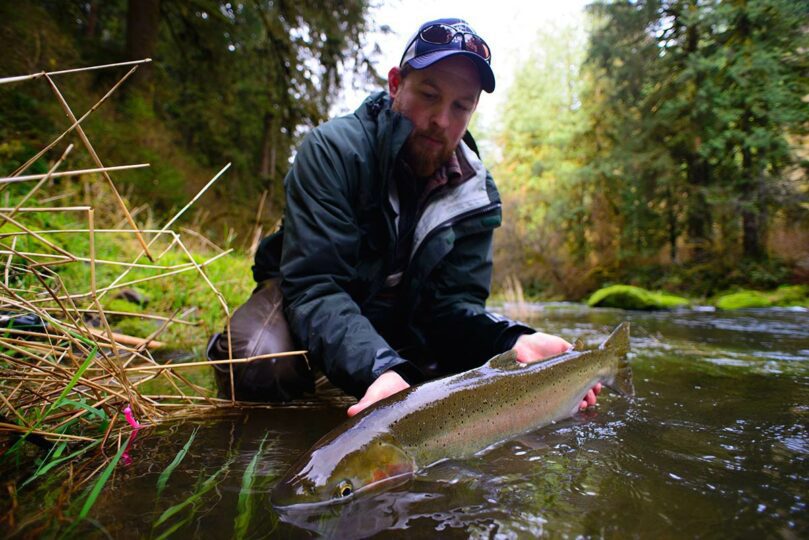
This dovetails with catch and release. Try to land the fish without playing it too long. An exhausted fish is less likely to survive—especially in warmer water. Minimize the time fish are out of the water. I find that in many situations, using a landing net (with the soft plastic material) speeds up the time to release the fish. The net also allows you to keep it under control in the water. Before handling the fish, wet your hands and for larger fish, support its body with both hands. If the fly gets swallowed deep, cut the tippet off and leave the fly in the fish. If you plan on taking a photo, keep the fish under water until the photographer is ready. I’ve seen some great photos of fish in the water, so consider that. If the fish is sluggish and not ready to take off, gently hold it facing upstream until it’s ready to swim off. If in a lake, move the fish slowly to get some water moving through its gills.
Be Aware of Water Temperature
According to many sources, when the water temperature approaches 68 degrees Farenheit most trout become stressed to the point where their survival rate becomes much diminished after being released. In fact a recent study done suggests the 68 degree threshold is too high. For more on this subject, see the link below. https://news.orvis.com/fly-fishing/are-we-wrong-about-safe-temperatures-for-trout-fishing
Another practice that is being recommended or enforced is the so-called “hoot owl” restrictions where anglers are to not fish after a set time in the day as the water temperature increases. So, bring a thermometer with you and use it to determine when to stop fishing. Look for the current best practices in the area you are fishing. If the water is too warm, look for colder water (like headwaters) or find a fishery that bass or carp inhabit as they can tolerate warmer temperatures.
Follow Regulations
Understand and abide by all local fishing laws including size limits, seasonal restrictions and protected species regulations. For fishing streams on our south central coast during steelhead season, a useful phone number with updates on flow restrictions is 831-649-2886.
Use Barbless Hooks
Practice using barbless hooks to facilitate easier release of fish. In many trout waters they are a requirement. The added benefit is it’s much easier to remove a barbless hook from your body and clothes. I can attest to that!
Minimize Environmental Impact
Avoid littering, access waterways carefully to minimize shoreline damage, and clean up any debris found on the water. If you see litter, pack it out if you can. If you are fishing during a spawn, learn to identify redds so you can avoid trampling them.
Support Conservation Organizations
Join and donate to groups like Cal Trout, Trout Unlimited and Fly Fishers International that actively work to protect fish habitats. Join (encourage your friends too) and support SCFF because we donate $4,000 annually to 15 organizations including Trout Unlimited, Cal Trout, Friends of the Eel River and very local Coastal Watershed Council, Monterey Bay Salmon and Trout Project and Carmel River Steelhead Association. Participate in volunteer efforts to restore degraded stream banks, plant native vegetation, and remove invasive species. Our members have volunteered with Coastal Watershed Council, Monterey Bay Salmon and Trout Project, Carmel River Steelhead Association, Trout Unlimited, Trout In the Classroom. We have also organized our own San Lorenzo River trash cleanup.
Educate Others
Share your knowledge about conservation practices with fellow anglers and the wider community. This includes helping and encouraging younger generations to develop an appreciation for conservation and a passion for fly fishing. It’s extremely gratifying to help pass on some helpful tips to a receptive angler on their journey. Another famous quote by Lee Wulff which is right on the mark: “When we teach a person to fly fish, we just created a conservationist”. Support those seeking careers that help protect the environment. One way SCFF does this is by providing scholarships to local high school students that are pursuing higher education in environmental science related studies.
Advocate for Policy Change
In California, many decisions that impact how our water is managed puts fish survival at risk. Show your support for sound legislation that protects aquatic ecosystems and promotes responsible fishing practices. Call or write your representatives and decision makers to voice your support policies that help protect and improve our fisheries responsibly. As we’ve seen with the Klamath River and now what is about to happen (we hope) with the Eel River, conservation minded individuals and organizations can help make changes when they work together with other stakeholders.
Learn about Local Ecosystems
Understand the unique fish species and environmental conditions in the areas you fish to make informed decisions about your angling practices. Not only will you learn how to practice conservation in you fishery, but it will likely make you a better angler.
I hope you find some of these suggestions helpful in your quest to be a responsible steward of our sport of fly fishing. If any of you have an idea for organizing a group of our members in a conservation activity, contact me or another board member. Thank you SCFF conservationists!
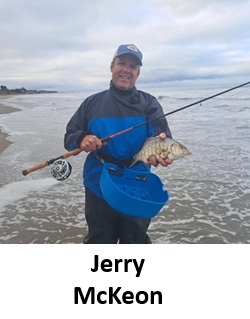
by Jerry McKeon - Instagram administrator and SCFF board member
When I joined the club about 4 years ago my intention was to attend the monthly meetings and learn from our guest speakers. All I really wanted back then was to get out the house and learn more about fly fishing. After several meetings I got inspired to fish locally and to do so with other club members but I found it challenging to make those connections. Today I have a handful of friends I’m comfortable calling or texting who I fish with regularly. I consider this group my primary tribe. When I look back on how I became part of this network of fishing buddies, it comes down to two basic factors. Leveraging club resources and putting myself out there socially is how I made my connections.
Club Resources:
Google Groups: This email based form of communication reaches all club members that use this feature. This a good place to start up dialogue around anything fly fishing. It’s fairly common for people to post upcoming trip info to the O’Neill Forebay, Pyramid lake and other fishing destinations.
WhatsApp: A text based app you can put on your smart phone or device to message people within a particular interest group. Currently the club has one WhatsApp group and that is for local surf fishing. Folks ask questions, post invites to hit the beach and sometimes offer fishing reports when they’re finished fishing. If you seek information or fellowship fishing the beach, this a worthwhile app to put on your phone. If you would like to start a page for a different type of fishing, the opportunity is yours.
Club Meetings: A lot of members show up early for club meetings and are willing to engage with fellow anglers. You might have to introduce yourself and kick start the conversation but our members are always welcoming and happy to talk fishing.
Casting Practice: Work on your cast while building your social circle. Check the website for dates and times.
Fly Tying Classes: Every second Wednesday (the Weds after the General Meeting) the club offers free fly tying. After the initial instruction there is plenty of opportunity to strike up conversation and talk fishing while everyone is tying.
Instagram/Facebook: These social media accounts we support are a yet another way to see what’s happening in the club and put some faces to the names of our members. For both mediums just search SantaCruzFlyFishing.
Fish Outs: These club organized fishing trips are probably the most organic way to find your tribe. Not only are you fishing with like minded folks, there are usually post trip opportunities to socialize. Breakfast, campfire hangouts, meeting up for a beer, etc.
Putting yourself out there:
Go fish and let others know.
A great way to find your tribe is to simply plan your own trip and invite others to join. The advantage here is you choose the date, time, place, etc that works for you. A possible disadvantage is you might not get any takers but you will if you keep at it. I’ll add that when you consistently invite others to fish or simply update them with your results, they will often return the favor.
Know your fishing opportunities and improve them. If you’re fairly competent with the fundamentals you’re more likely to find people that will want to fish with you. Sure we have members who will help beginners but not everyone wants to spend their time teaching a novice how to cast or how to tie on a fly. If you can get yourself proficient in the fundamentals you’re more likely to find your tribe. While fishing the surf my first time, it was obvious my double haul needed work. The anglers getting the most hook ups could throw their flies 70-90’ consistently over the waves. I practiced my double haul at the local soccer field for several months until I was satisfied with my distance. When I rejoined the club for a few summer fish outs the fishing was more second nature allowing me to focus more on having fun with other members.
Volunteer!
The club is run entirely on volunteer service. There are lots of opportunities to support your club with your time. In addition to personal satisfaction, volunteering exposes you to a lot of engaged and very knowledgeable members and anglers. My time on the board, working a service project or leading a tying class has expedited my ability to meet members and be included on fishing outings. To learn about club opportunities check the website, newsletter or talk to board member. We’d love to have your help!
Joining an established club with 250 members can make finding your tribe challenging but if you leverage the club’s resources and push yourself socially you should find success. Next time you see me at a club event, say hi. Maybe we can go fishing sometime.
The holidays zipped by, and here we are in 2025! Before diving into the hustle of the new year, take a moment to think about a few things you’d like to explore on your fly fishing journey this year. I prefer the word “journey” over “goal” because fly fishing offers endless chances to learn new skills and embrace fresh experiences.
For our club, the journey is about fostering fellowship among members through education, promotion, and the enjoyment of fly fishing. We’re kicking things off with an exciting dinner event on February 1—I hope it’s on your calendar! Be sure to grab your tickets soon; we’ve already sold half of them, and they’re going fast. Throughout the year, we’re aiming to adapt and create more events that help members connect, meet new people, and find others with similar interests. These include gatherings at general meetings, fly-tying sessions, or fishing outings. If you have suggestions for ways to encourage socialization, please let us know.
On a personal note, my fly fishing journey this year includes visiting my brother in Hawaii and catching a bonefish. I’ve heard that bonefishing in Hawaii is particularly challenging, so I plan to ease into it. First, I’ll fish for bonefish in a location known for easier success, and before that, I’ll practice sight fishing for carp to sharpen my skills. This step-by-step journey is not just about fishing; it’s about learning, discovering new places, and connecting with other people along the way. I can’t wait to see where it leads.
NOTE: In 2025, the column “President’s Line” is changing to “My Turn” where each month a member of the Board of Directors can share his/her thoughts.
Since “a picture is worth a thousand words”, I’ll just let the pictures tell the story of 2024. I hope that you have a wonderful holiday season and start thinking about where your fly fishing journey will take you in 2025.
Scott Kitayama
Speakers
MAR – David GregoryAPR – Steve SchallaMAY – Jesse CollinsJUN – Matt GilliganJUN – TU special meetingSEP – Mark RockwellOCT – Surf FishingNOV – Geoff Malloway
Fly Tying
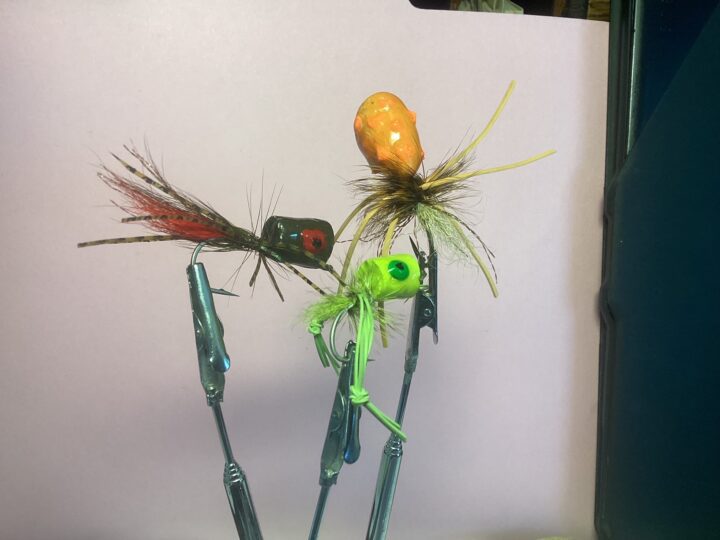
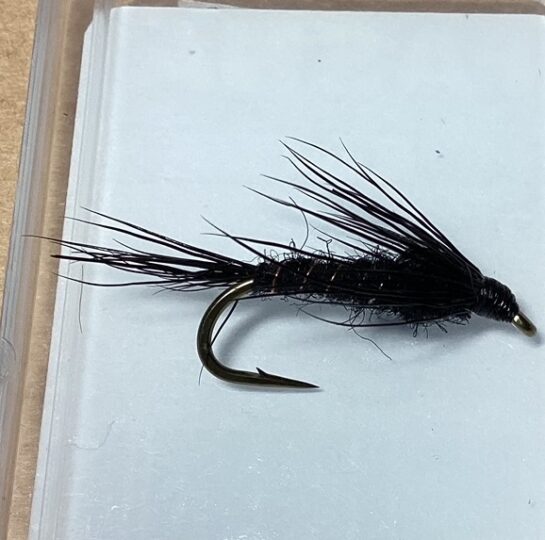
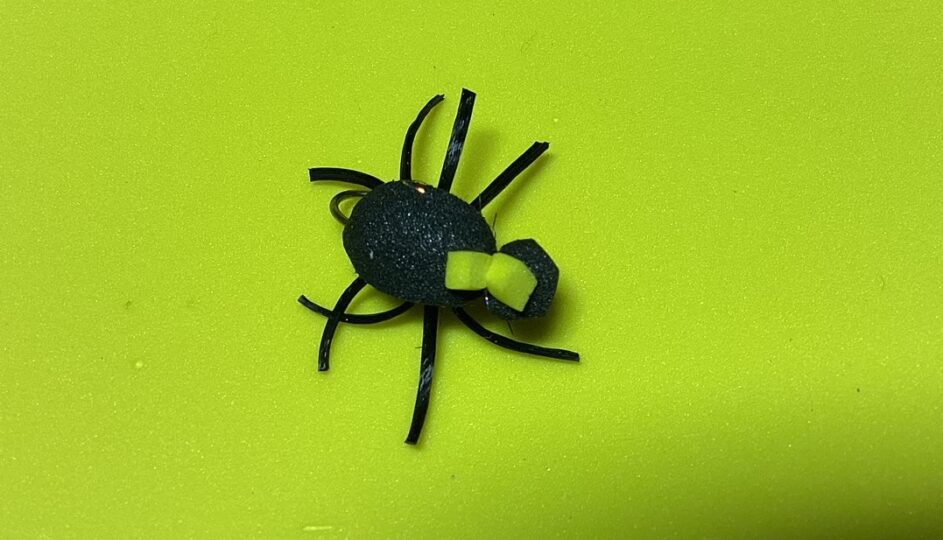
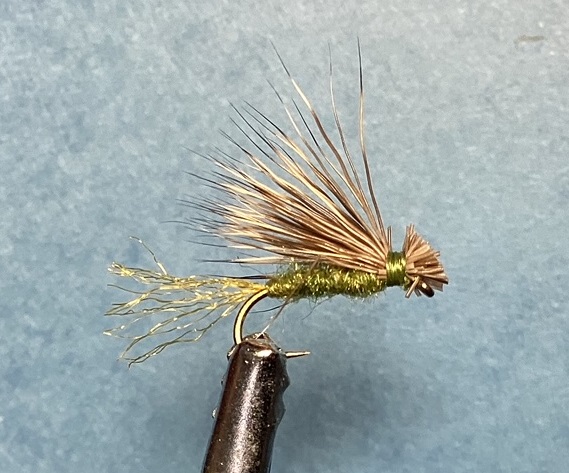
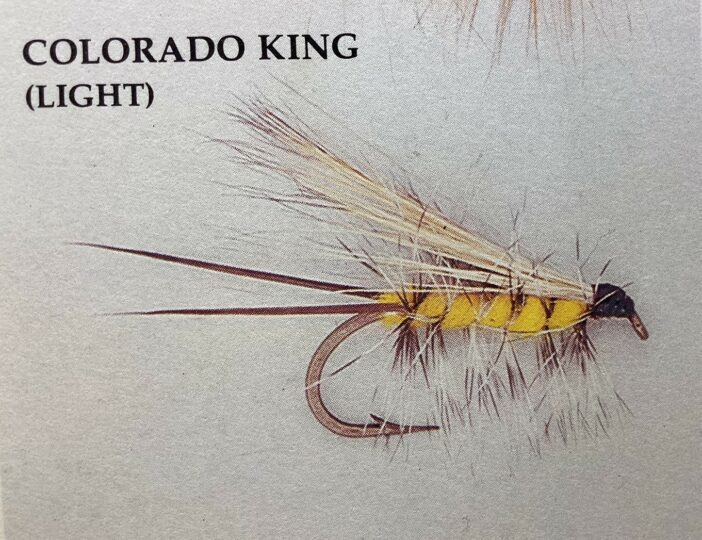
JAN – Trout NuggetFEB – Booby FlyMAR – Poppers!APR – AP NymphgMAY – Foam BeetleJUN – X-CaddisJUL – CDC jig nymphAUG – Sierra Bright DotSEP – Punk PerchOCT – Blurple ClouserNOV – Colorado King
Conservation Profiles
This year, we donated $3,600 to worthy conservation groups and we highlighted some in the newsletters. But our conservation efforts didn’t just stop with handing out money. Club members rolled up their sleeves and put in the work to help. This included volunteering at the MBS&T hatchery, Save our Shores, fish transfer with the Carmel River Steelhead Assoc., cleaning up the Arthur River with Trout Unlimited, cleaning the Salinas River with SVFF club and doing our own river cleanup on the San Lorenzo.
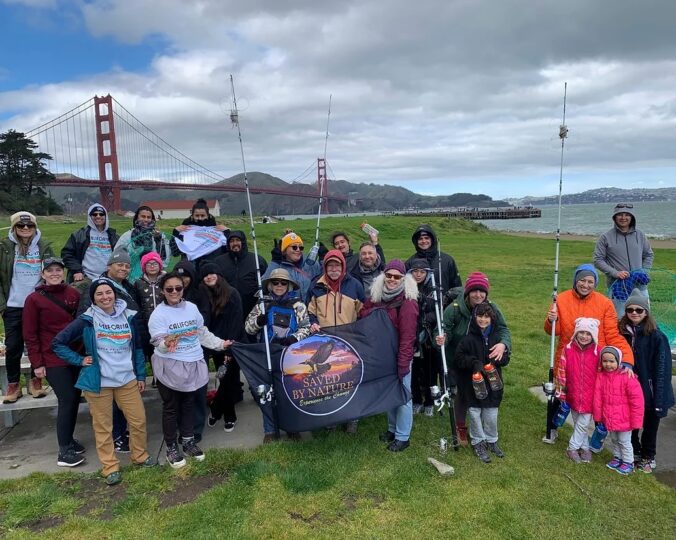
Wild Steelheaders UnitedRestore the DeltaSaved By NatureEastern Sierra Land Trust
Fishouts
In 2024, the club had 19 fishouts on the calendar with 15 of them hosted. Plus innumerable ad hoc trips to the surf, forebay, local streams and lakes. We hope to have more than that in 2025!
Pyramid LakeLos Padres DamThe SurfKelly LakeFall RiverCrowley Lake / MammothO’Neil ForebayTrinity River
2025 Annual Fundraiser is on Saturday, Feb 1, 2025: I know, I know, it seems so far away, but it is really just round the corner! Tickets are now on sale on our website and we will be sold out before the end of January. Also, you may get a phone call from one of our board members recruiting volunteers for the event. Please be nice to them, they have lots of roles to fill and please try and find a role where you can help.
Review a quick tutorial on SCFF Event Calendar: A few months ago, we improved the Events Calendar on the website and made it easier to quickly see what events are happening, ways to sign up for future events and how to add future club events to your personal calendar. It is only 4 minutes long and will help you get more out of the club website.
Sign up to volunteer for the San Lorenzo Cleanup on November 16th!: If this sounds interesting to you and wonder how to sing up, then scroll back up and watch the tutorial. Ha! Jesse Collins will be leading the cleanup and it gives us a chance to help our local waters before the rains come.
Also our neighbors, Salinas Valley Fly Fishers will be doing their annual Salinas River cleanup on Sunday, November 24th.
Partnership with Project Healing Waters Fly Fishing: Please take a look at the article regarding our new relationship with the Monterey chapter of Project Healing Waters Fly Fishing. I think this is going to be a good union for both PHWFF and SCFF and I have seen the enthusiasm from our volunteers such as Jesse Collins, Alex Ferber, and Wilson Taguinod. If you are interested in volunteering with their monthly activities or are a an injured veteran who would like participate in the program, I strongly encourage you to send an introductory email to Brian Steckler at Brian.Steckler@projecthealingwaters.org. Brian is the head of the organization and is looking to significantly expand it in 2025.
A couple of weeks ago, I had the pleasure of fishing the Fall River with club members Alex Ferber and Wilson Taguinod. Having previously fished this big, slow-moving spring creek, we thought it would be a good opportunity to try our hand at dry flies. With Alex guiding on the river, Wilson and I felt confident in our technique. However, when it comes to achieving the perfect downstream drift with a size 20 fly on an 18-foot leader, things can get tricky!
While we managed to catch a few fish by stripping some bugs, we couldn’t land a single one on a dry fly. Later, as we discussed the day, it became clear: if we wanted to improve our chances of success, we needed to practice and refine our techniques.
Upon returning to Santa Cruz, I attended a fly casting clinic to work on my presentation skills. Here’s the truth I’m learning: regardless of your skill level, fly fishing can be a challenge if you want it to be. It involves solving many little puzzles—finding the right location, determining what the fish are eating, and figuring out how to present the fly. It’s crucial to gauge how much challenge you want without letting frustration lead you to give up.
Looking ahead to 2025, the Santa Cruz club is excited to offer more educational and fishing opportunities. We have some new volunteers on board who will help us broaden our offerings, catering to novices and providing challenges for experts alike.
Over the past five months, Alex Ferber has been instrumental in our casting clinic, and I’m pleased to announce that he has been voted onto the SCFF Board as our casting instructor. Alex’s passion for teaching is evident—whether casting on the grass, practicing with yarn on the San Lorenzo, or fishing rivers up north, he is dedicated to helping you improve. In 2025, Alex will design casting classes that culminate in fishing trips. For instance, his current spey casting clinic will conclude with a steelhead outing on the Trinity River.
Another valuable addition to our team is Jesse Collins. Jesse previously gave a presentation about his experiences as a professional guide in Alaska. In late August, he, Bob Garbarino, and Kevin Murdock ventured to Alaska to fish. Jesse will join the board in 2025 and is already planning advanced fly tying sessions, adventure trips to Alaska, and greater outreach to the fishing community in Santa Cruz.
Do you remember this quote from JFK?
“We choose to go to the moon in this decade and do the other things, not because they are easy, but because they are hard…”
I choose to fly fish and explore different techniques, species, and situations because it is a challenge—and because it’s hard. I’m grateful for the club and its members who help me navigate these challenges. I hope you find similar benefits through our community.
When you go out in the morning, can you feel it? I can, it’s not a smell and it certainly isn’t the temperature because it is the hottest time of the year, but it just feels like fall. It reminds me of being a kid and waiting for a school bus. And it makes me feel like a kid because it reminds me to go fishing.
Labor Day to Thanksgiving is only about thirteen weeks long. Thirteen weeks of the best fishing of the year. So I urge you to take a few hours and plan your fall fishing. In this newsletter, there are a lot of opportunities for fall fishing.
If you are new, make sure to put the casting clinic on your schedule for a Saturday afternoon. Also, the October General Meeting will be based around members helping others learn fundamentals to improve your fishing technique and enjoyment.
For everyone, the club is offering fishouts that should meet everyone’s interest. If you are too busy for a multi-day fishing trip, stay local and fish the surf or the Forebay. For those that have the time, there are still openings for the last week of September on the Mammoth Lakes trip and a new trip has been set for the Trinity river in early November. I believe that if you don’t shoehorn the fishing trips into your calendar, the weeks will slip away and another season will be gone.
Please welcome seven new members since the beginning of July. This now brings our membership up to 251!
Join Date
Name
City
July 4
M Horn
San Carlos
July 15
S. Liess
Santa Cruz
July 25
M. Bonanno
Soquel
July 27
E. Vollset
Aptos
Aug 6
T. Suzuki
Aptos
Aug 18
B. Steckler
Carmel
Aug 23
O. Kahl
Watsonville
New member since July are covered til Dec 31st 2025 Also if members are not receiving the monthly newsletter or googlegroups, please contact me robert6367@aol.com
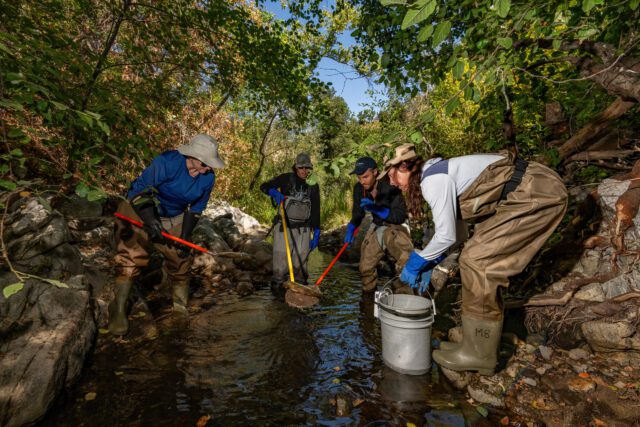
A couple of Wednesday’s ago, I caught more steelhead than ever in my life. Instead of a fly rod, an electroshock rod was put in the water and we scooped up 2 inch “Young of the Year” to move them from a “soon-to-be-dried-up-tributary” to the main section of the Carmel River. On that day, the Carmel River Steelhead Association and volunteers gave over 300 fish a chance to survive. They are doing a few rescues over the next few weeks if you want to volunteer.
image by Sage Ono, @sageonophotography on instagram
We live in the best place. On Sunday morning, my wife put on a down coat and I put on a sweater so that we could walk the beach. By noon, blue sky was starting to appear and the high temperature at my house was 68 degrees. Perfect. Earlier in the week, I was in Tahoe and was shocked that the low temperature was 68 degrees and then it got hot! Tried fishing some streams flowing into Lake Tahoe, but stopped by 10:00 am because the water was getting too warm.
I was able to attend July’s fly tying class where Jesse Collins taught a beaded nymph pattern and it was nice to see new members there. Also saw new members taking advantage of the Fly Casting clinic which was run by Alex Ferber with assistance from Sam Bishop. Relatively new to the club, both Jesse and Alex have really helped the club in teaching classes and hosting fishouts.
On August 7th, we will have the annual summer BBQ at the Aptos Grange starting at 6:00 pm. Hope to see you there!
Santa Cruz Fly Fishing has been busy the past few months and doesn’t seem to be stopping. One of the exciting areas is that we are doing more and more with other organizations n the area. Some are looking towards us for resources, others are wanting to share knowledge and try and grow both organizations. I am encouraging these types of relationships to provide opportunities for our members. I am highlighting some of the organizations with articles in this month’s newsletter:
Fishout Exchanges with the Stanislaus Fly Fishers: Fishout Committee chair, Justin Ice, continues to come up with ways to increase the number of available fishouts for the club. His latest brainstorm is to form alliances with other fly fishing clubs and do fishout exchanges. The first one is with the Stanislaus club out of Modesto and we are invited to attend their fishout on the Clarks Fork of the Stanislaus River . And in exchange, we will be providing a Zoom presentation on fishing the surf and invite them to join us for the July 6th fishout at Palm Beach .
Project Healing Waters At the last casting clinic, I was talking to club member, Derek Whitmer, about a local Project Healing Waters (PHWFF) being started in Monterey Peninsula to help disabled veterans using the magic of fly fishing. Derek became enthused and contacted the coordinators to see how what they needed. They already have veterans who have signed up to learn how to fish and go fishing, now they need volunteers. Read the article in Membership Notes to learn how to help.
Steinbeck Country Trout Unlimited: Last month, SCFF member, Kevin Morrison, contacted me to start a conversation between SCFF and our local Trout Unlimited chapter, Steinbeck Country TU. Covering an area from the San Mateo down San Louis Obispo, Trout Unlimited has thousands of local members and almost none of them know about the local chapter. The Steinbeck Country TU Board’s strategy is to leverage the fly fishing clubs within the Central Coast area to quickly build up momentum. To help them, the Santa Cruz Fly Fishing club will be hosting the TU Chapter meeting at the Aptos Grange on Wednesday, June 19th.
Profile: Wild Steelheaders United Who are the organization’s that SCFF gives conservations dollar to and why? These are the questions that Conservation Committee Chair, Bob Garbarino, is answering with “profile” series to let us know more aobut the organizations that we are financially supporting. The May 2024 newsletter highlights the work of the Wild Steelheaders United.
Profile: Carmel River Steelhead Association The June 2024 newsletter is highlighting the work of Carmel River Steelhead which member, Rich Hughett, has been supporting since the start. (see link)
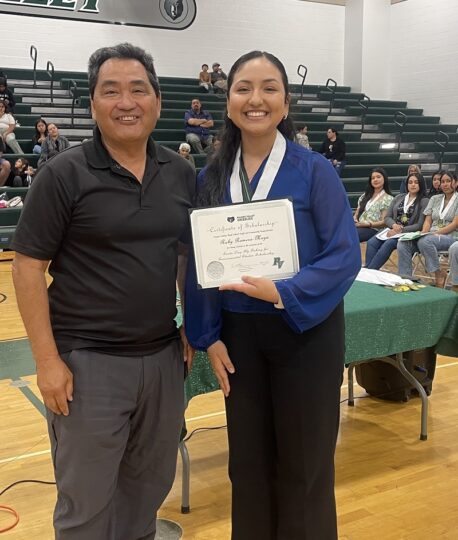
Student Scholarship: Finally by providing scholarships, our relationship with the local public high schools continues to flourish. I had the pleasure of presenting a $500 check to Ruby from Pajaro Valley High School (PVHS) who will be attending Brown University in Rhode Island and majoring in Environmental Studies. Another benefit from providing scholarships is that we get our club’s name out to the community. For example, a teacher from PVHS, Nathan Hokie, saw us presenting last year and joined the club!
As you may know, the club currently has 15 members on the Board of Directors. But did you know that we also have at least 10 others working in the background to help the club flourish? We have a lot of ideas to improve the club and we need more volunteers. Take a look and step up, We Want You!
WWYT organize and lead a fishout: We’re actively expanding our fishout opportunities and are looking for enthusiastic leaders. You don’t need extensive experience or a large group to get started; just a passion for organizing enjoyable fishing outings for our members.
WWYT publicize your business for free: As a club, we want to support our members’ businesses and services. To make this happen, we’re creating a dedicated page on our website to showcase and promote member businesses and organizations that contribute to our club’s success. Let us know about your business so we can feature it!
Facebook Group Administrator: We’re considering using a private Facebook Group to enhance member interaction and engagement. If you’re social media-savvy and passionate about fostering community within our club, volunteering as a Facebook Group Administrator could be a great fit for you. This role involves managing the group, encouraging participation, and sharing exciting updates and content.
WWYT help with the end of year slideshow: Rich Rubin has graciously volunteered to create a slideshow for our January meeting. We’re seeking a volunteer to assist in collecting digital photos from members throughout the year and coordinating with Rich from October to December to ensure a fantastic end-of-year presentation. If you have an eye for visuals and enjoy working collaboratively, this opportunity is perfect for you.
WWYT sell and attend the May 11 Swap Meet: Save the date! Our May 11 swap meet at the Aptos Grange is a fantastic opportunity to buy, sell, and connect with fellow members. Make sure to mark your calendar from 9 am to 1 pm and join us for a fun and lively event.
WWYT help us learn about our members: Understanding our members’ interests, preferences, and feedback is crucial for enhancing our club’s offerings. We’re looking for someone passionate about gathering insights, devising meaningful questions, and developing strategies to engage and serve our diverse membership better. Your input can shape the future of our club activities and initiatives.
WWYT invite your friends to join the club: Our club thrives on the enthusiasm and camaraderie of members. We’re aiming to get our membership to 260 by year-end and believe that our current members are our best advocates. Invite your friends to join us for casting lessons, fly fishing adventures, and a vibrant community of fellow fishing enthusiasts.
If any of these opportunities resonates with you or if you have any questions, please reach out. Your involvement and contributions are invaluable in making our club flourish.
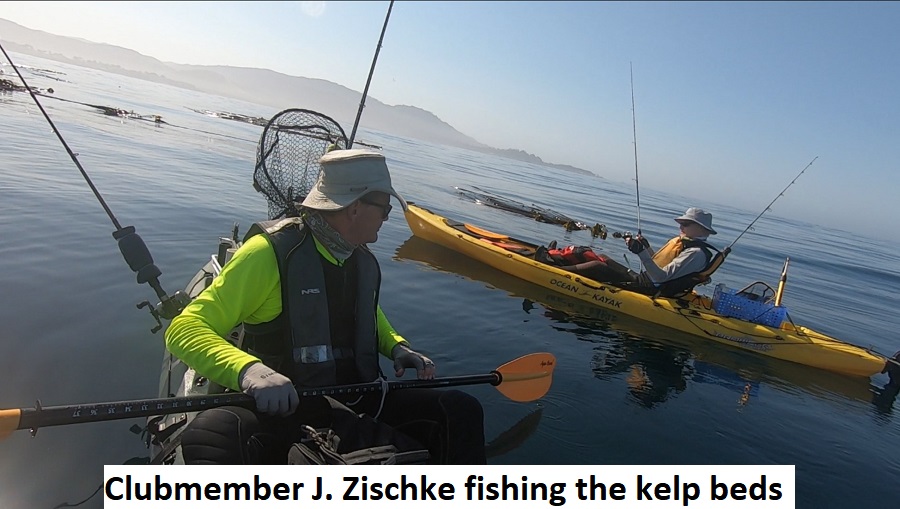
We are fortunate to call the Monterey Bay area our home, where the ocean’s health directly impacts our well-being. Recently, our club members became aware of petition 2023-33MPA, pushing for new no-fishing zones around Pleasure Point and off the coast of Natural Bridges State Beach. While protecting kelp forests is a commendable goal, the proposed fishing ban has raised concerns in our community about potential threats to our fishing rights. Personally, I joined the club because I wanted to learn how to fly fish the surf and I know a lot of club members that enjoy fishing from the beach as well as fishing the kelp beds from a kayak.
The heart of the debate revolves around assessing how fishing activities may affect kelp ecosystems in Santa Cruz. Advocates for the petition, primarily environmental groups from Southern California, argue that implementing no-fishing zones is crucial to safeguard these fragile habitats. However, opponents of the petition, including members of our club, question the necessity and effectiveness of such broad fishing bans. We argue that the conditions in Santa Cruz’s kelp forests may differ significantly from those in other regions, such as Southern California, where fishing restrictions might be more warranted. This article in Santa Cruz Local and its links give a good explanation of the issue.
During our recent Club Board meeting, we discussed the issue and decided to take a stance of patience and proactive engagement. The California Commission of Fish and Wildlife is currently handling numerous petitions, including 2023-33MPA. In solidarity with those opposing the petition, I have sent letters on behalf of SCFF to key opponents, including Supervisor Cummings, UCSC Professor Zavaleta (a member of the California Fish and Wildlife Commission), and the All Waters Protection and Access Coalition. These letters express our readiness to collaborate and provide assistance in finding sustainable solutions that balance environmental protection with community interests.
Although there is no specific deadline for the commission to decide on the petitions, we are committed to remaining informed and actively participating in the ongoing dialogue. We encourage members with experience or insights into navigating such petitions to share their expertise with the club.
The Santa Cruz club is a member of the Fly Fishing International (FFI) which provides us with well priced insurance to run the club. I thought that was all it did, but after attending a lunch meeting at the Pleasanton Fly show, I am convinced that they have a program that will be a cornerstone of our club as well as many clubs around the world. This year our club will continue to roll out the Fly Casting Skills Development program and I can imagine a time when we will have 20+ people at our casting clinics. The “aha” for me is that the program is based around Skill Assessment, not a pass/fail test and not a classroom. And the Skills Development program is for everyone, below I have pulled information about the mission and skills involved at each level.
The mission of the Fly Casting Skills Development program is to give all fly anglers a guide to learning and improving casting skills that address increasingly advanced fishing situations. It starts at the Foundation level, for true beginners to the sport who might be picking up a fly rod for the first time. It progresses through 4 levels of Foundation, Bronze, Silver, and Gold. These provide a broad, relevant range of fishing casts covering skill categories of loop control, accuracy, roll cast, presentation, change in direction and distance. Better casting skills open more fishing opportunities with less frustration. All fly anglers can benefit and should be proud of their accomplishment. There is even an opportunity for recognition of casting accomplishments with an award document and a pin at Bronze, Silver and Gold levels.
BRONZE FLY CASTING SKILL LEVEL
The Bronze Level is focused on developing or reinforcing solid beginning fly casting skills. A fly fisher with this level of proficiency can successfully fish many common fishing situations. The Bronze Level challenges are as follows: B1. Pick-Up and Lay-Down cast (PULD): 40 ft. B2. Vertical to Horizontal Casting: 40 ft. B3. Roll Cast, Dominant Side: 40 ft. B4. Roll Cast, Non-Dominant Side: 40 ft. B5. Shooting Line: Starting at 40 ft. shooting to 45+ ft. with no false casts allowed. B6. Accuracy: Hit 0, 30, and then 40-foot targets B7. Distance: Starting at 40 ft. shooting to 50+ ft.
SILVER FLY CASTING SKILL LEVEL
The Silver Level is focused on developing intermediate level fly casting skills. A fly fisher with these casting skills can successfully fish common situations and often achieve more challenging presentations.
The Silver Level challenges are as follows: S1. Vertical to Horizontal False Casts, Non-Dominant Side: 40 ft. S2. Reach Mend to Right: At 40 ft., the caster will perform a reach mend to the right. S3. Reach Mend to the Left: At 40 ft., the caster will perform a reach mend to the left. S4. Slack Line Presentation: At 40 ft., the caster will make a slack line presentation S5. Belgian style or Oval Cast: At 40 ft., the caster will perform a Belgian cast (open loop) S6. Accuracy, Non-Dominant Side: Hit 0, 30, and then 40-foot targets S7. Distance and Shooting Line: Starting t 45 ft., shooting to 60+ ft.
GOLD FLY CASTING SKILL LEVEL
The Gold Level is focused on developing advanced fly casting skills. A fly fisher with these skills can successfully fish in a wide variety of fishing situations.
The Gold Level challenges are as follows: G1. Loop Control, Non-Dominant Side: At 45 ft., the caster will perform 4 or more false casts off the non-dominant shoulder (left shoulder for a right-handed person) ending with fly hitting a 4 ft. target. Hauling is allowed. G2. Curve Casts: At 40 ft., the caster will perform a curve cast to the side of their choice with the line/leader curving around an obstacle at approximately 25 ft. The fly should land at least 45 degrees from the line layout between the caster and the obstacle. G3. Roll Cast Pick-Up: Starting at 40 ft., the caster will perform a roll cast pick-up with extension of line to 55ft. G4. Change of Direction Casts: At 40 ft., the caster will perform two different change of direction casts of their choosing with fly line and leader landing relatively straight. G5. Accuracy: Hit 20, 30, 40, and then 50-foot targets G6. Casting While Seated or Kneeling: While sitting in a chair or kneeling with one knee on the ground, start at 30 ft. and shoot to 40 ft.
G7. Backcast Presentation to a Minimum of 55 ft.:
G8. Distance and Shooting Line: Starting at 45 ft., shooting to 70+ ft.
For the second year in a row, I get to proclaim “The State of the Union Club is strong”.
Some indicators of our strength:
Our finances are strong: In November, our treasurer, Jim, reported that our bank account was about $42,000. Since then we have had additional membership renewals and an upcoming sold-out fundraising dinner which will strengthen our financial position.
Our philanthropy is strong: In 2024, we will contribution $4,000 to to Fishing and Conservancy organizations. Also, club members have been generous in volunteering work hours for local conservation programs. And in 2024, we will again provide $3,200 in total scholarships, to eight seniors from the eight Santa Cruz public high schools going on to study environmental science.
Our membership is growing: In 2021, we had 150 in the club directory, in 2023, we had 175 in the club directory and in 2024 we will have at least 210 members listed. That is a significant growth over three years!
In 2023, I tried to emphasize Fellowship as a way to improve the value that the club to each member. I hope that your interactions with the club and other members have been positive.
As we look forward, I can easily see the club getting to 250 members in the next year or two. I worry that our current structure of 16 members of the SCFF Board of Directors managing all the club activities will limit the club. We need a way to get more club members to participate in planning and running activities; we need to figure out how to scale the club.
A step in the right direction is what Bob Garbarino has done by creating Conservation Committee. Suddenly he has involved three more club members in providing insight and effort to tackle conservation issues for the club. I am hoping that we will be able to reach out and get more members involved in helping in the areas of fly fishing education, fish-outs, and technology. If you have suggestions to help grow the club, I would love to hear from you.
Now for a few notices:
There will be NO General Meeting in February. The next meeting will be March 6th.
The Fly Fishing Film Tour will be at the RIO Theater in Santa Cruz on February 10th. This is the ONLY showing of the film near the Bay Area. The next closest showing will be in Sacramento.
Please attend the Pleasanton Fly Show from February 23-25th. There are not a lot of places that you can touch products or try a fly rod in the United States. Without good attendance, the Bay Area may lose its last fly fishing show.
Thank you to those who are attending our Annual Fundraiser. The team has been working very hard at it and know that you will have a good time.
Oh yeah, Happy Valentines,
Scott Kitayama, President of the Santa Cruz Fly Fishing Club
The week before Christmas, I attended Alex Ferber’s Spey casting class. Quite a few members attended including, Mike DiCiano, Barry Burt, Mike White, Scott Anderson, Bob Garbarino, Fred Farias, Greg Finney, Ricardo Cortes, and others. What I learned at the class was that the basics are more important than learning a new fangled cast. Spey casts are used on larger rivers where the fly line is directly below you in the river and you want to roll cast about 60 degrees upstream without smacking yourself in the head. Therefore the “basics’ is to be able to roll cast and with some instruction and practice, I was able to extend my roll cast with little effort in the cast. Still working on the Spey cast, but the basic roll cast is where I am spending my time.
Post-class, I went to lunch with Alex, Bob, Fred and Tom Hogye and the discussion shifted to the plans for the upcoming 2024 casting classes. Surprisingly, despite the influx of new members, the monthly single-hand casting clinics wasn’t highly attended . Reflecting on my own sporadic participation in 2023, I recognized the missed opportunities for improving my skills. As fishing scenarios from the past year replayed in my mind, the potential for greater enjoyment became obvious:
Stream dry fly fishing would improve by tightening my loop and improved mending to make a drag free presentation.
In the surf or sitting in a float tube, a well-executed double haul ensures a faster sink, maximizing the time spent in the strike zone.
And casting the euro/mono rig? Ugh, a situation where all my bad habits get magnified and motivates me to do more than simply lob the rig into the water.
Fortunately, we have monthly clinics with fellow club members offering support and guidance for anglers at all levels. I am going to make an effort to attend them and hope to see others out there.
Another basic for 2024:
This one is hard to admit. Another goal in 2024 is to eliminate lost rigs due to pigtails. Retrieving rigs and seeing the telltale curls is really frustrating. So I am practicing my clinch knots and loop knots using a forcep. There are lots of videos on Youtube that show how to tie knots faster with a forcep and I like using the handle to cinch down on the knot to make sure it is secure.
I hope you take a few minutes and think about your fishing goals for 2024 and what you can do during the winter to help achieve them.
I have been told that the Santa Cruz Fly Fishing club has been doing an Annual Dinner and Fundraiser since way back in 1992. Last year’s lunch event was fun, but lacked the opportunity to have a sit down dinner with a lot of members of the club. Your board has been busy preparing for the February 3rd event and I just wanted to share with you some of what we are doing to make it happen and what you can do to help.
Wild Salmon Dinner
Securing a wild-caught salmon dinner has become more challenging due to the closure of the California fishery last year. However, for our upcoming dinner, dedicated members flew to a remote part of Alaska to obtain our salmon.. Below is Sam catching our dinner.
Sam catching dinner in AlaskaLakeside Organic at my family’s farm
Along with the salmon, we will be serving salad courtesy of California Grill/Lakeside Organic Gardens. The Peixoto run the largest family-owned organic farm in the US and grow most of their vegetables around Watsonville including decades at my family’s farm. Along with the fish and Salmon, Dave South has been busy sourcing the rest of the dinner from local, organic vendors around the county. And Elaine Cook is organizing a team to prepare delightful appetizers for everyone to enjoy while perusing the prizes, purchasing additional raffle tickets, and mingling with fellow attendees.
Raffle Prizes
Oh do we miss John Steele. For many, many years, John, would shop sales, fix equipment and create wonderful art work for the Annual Dinner. John had big shoes to fill, so we so we got a big man, Rick Chace, to step into the role. We are still acquiring prizes, but from what I have seen, there is going to be some nice stuff and a lot of it: at least 16 rods, 4 float tubes, tons of fly tying material, and boxes full of flies. We are hoping to get more non-fishing prizes for the raffle and welcome any donations from the membership. Maybe a gift certificate for a product or service? A piece of art? Bottle of wine? If you have any donation, please contact Rick Chace (rchase@got.net) or (831) 234-9200.
Unlike our monthly raffles, you must be present to win, ensuring that you’re only competing against others in the room. Our goal is for everyone to leave with something.
New Location
For years, the dinner has taken place at a church in Santa Cruz. Unfortunately, post-Covid, that location is no longer practical. After exploring various alternatives, we found a fantastic venue with ample space, full bar service, and a large BBQ pit for cooking the salmon. The only downside is its location at the south end of Santa Cruz county, near the Santa Cruz Fairgrounds (the location and map are available in the article about the dinner).
For those traveling from a distance, consider staying overnight nearby. The new Hampton Inn off Riverside is a suggestion. Other viable options in Watsonville include the Holiday Inn Express on Main St and the Comfort Inn near the Airport. Sunset Beach and KOA offer campsites for RVs or fancy vans. Alternatively, you could collaborate with other members to rent an Airbnb at Pajaro Dunes and enjoy some beach or Salinas River fishing the next day.
Volunteers, Volunteers, Volunteers
“Many hands make light work,” or, in the case of the fundraiser, we need many hands to make it work at all. Elaine Cook has already put in a lot of hours coordinating this event and needs volunteers. She’ll be passing around a sign-up sheet at the December and January meetings. You can also make her task easier by calling Elaine at (831) 234-6515 or email at coookin@gmail.com on how you can help at the fundraiser.
Ticket Sales and Purchase
If you want an easy way to support the fundraiser, consider purchasing your dinner and raffle tickets before the end of the year. Old-timers tell me that half of the tickets are sold a week before the event, meaning we waste time worrying about filling the room or cutting costs. Let us handle the logistics while you focus on making the event as fun and successful as possible! Dinner tickets are $40 and raffle tickets are $1.00 each. You can buy tickets at the December and January general meetings on line at https://www.santacruzflyfishing.org/product-category/annual-fundraiser/
we live in a place where we can fly fish twelve months a year.
club members are willing to volunteer for local conservation projects.
we belong to a fishing club that is filled with friendly people.
club members have shared their fishing spots with me on local streams, the Firehole in Yellowstone NP, secret ponds in Wyoming, Fall River, and tarpon fishing in Florida.
we have a dynamic club board dedicated to making the experience better for all club members.
expert volunteers spend time teaching fly tying and fly casting every month.
fishout masters are willing to set up trips for club members.
When I think of fly fishing, my mind often conjures up the iconic image from “A River Runs Through It”: the elegant overhead casting of a dry fly in the middle of a picturesque river. However, upon joining the Santa Cruz club about five years ago, I was surprised to discover that river fishouts had become a rarity. I was told that these outings used to be more common, but as time passed, the interest dwindled, and the club aged. Recently, we’ve experienced an influx of new members, and with their arrival, several new river fishouts have been organized. I’ve just returned from one on the upper Sac, and I’m reminded of the beauty and serenity of wading in a river.
Wading is good for your soul if you have good soles
Imagine my shock when I found the rocks in the upper Sac to be exceptionally slippery. For the past three years, I’ve relied on Vibram-sole wading boots for my angling adventures on rivers like the Stanislaus, Truckee, Putah, Firehole, and San Lorenzo with little trouble. However, during our upper Sac fishout, seven club members, all wearing Vibram-soled boots, took unexpected dips into the river. The following day, I replaced my Vibram soles with felt, and the difference in traction was remarkable. I was taken aback by the discrepancy, especially since fishing gear advertisements and videos often promote rubber soles as the modern choice, portraying felt soles as outdated. While there are places that ban felt soles due to environmental concerns, California isn’t one of them, and we frequently encounter slippery algae and granite here. I strongly urge you to prioritize the best traction boots available when wading. Below is a chart I sourced from Korkers’ website, illustrating the types of soles and their effectiveness on various surfaces.
Remember, traction matters, as does balance
My earliest fly fishing experiences were on streams where I could quickly move along the banks of small mountain creeks. However, the upper Sac fishout was a stark reminder that stream fishing can be more challenging than I recall. It’s not merely a lapse in memory; walking on streams becomes increasingly challenging with age. I’ve attached a graph depicting a simple balance test and its correlation with “perceived age.” As you can see, there’s a notable decline after reaching 40 years of age.
Now, I’m no expert in wade fishing, so if you require detailed information about equipment, you can seek advice from the club via Google Groups or visit a fly fishing shop for proper gear setup. However, here are some safety items I personally use: a wading belt, a wading staff, a whistle, a walkie-talkie, a cell phone, and a fishing partner.
My ultimate advice: don’t wait
This is counsel I’m personally taking to heart. My plan is to embark on more river fishing trips and maintain my physical fitness. Hopefully, I’ll continue to enjoy fishing from a boat or float tube when wading becomes more challenging. And for our younger club members, I encourage you to seize your “River Runs Through It” experience as soon as possible.
Wishing you great fishing adventures this October,
Scott Kitayama President, Santa Cruz Fly Fishing Club
Since my roles as a parent and at work have lightened, I welcome the upcoming fall season as a perfect time for fishing. With Sierra streams returning to their normal levels, cooler weather offering better conditions in local lakes, and a potentially lower risk of heat and fire hazards, the potential is high to turn this season into a wonderful opportunity for fly fishing. Now, how can we all maximize this experience?
Let’s Ignite the Enthusiasm!
We’ve all indulged in fly fishing videos on platforms like YouTube. While some are undeniably captivating, much like action films, they lack the immersive experience of sitting amidst an animated theater crowd, feeling the collective thrill and vitality. The memory may still linger of the Fly Fishing Film Tour’s past appearance at the Rio Theater in Santa Cruz. Regrettably, the tour skipped Santa Cruz in recent years and last year, its Bay Area screenings were a no-show. Yet, Justin Ice, a dedicated SCFF Board member, took it upon himself to resurrect the film’s presence in Santa Cruz. As a result, the 2023 film will grace our September and October fly fishing meetings. The decision was made to make the screening open and free for all attendees, fostering a packed house and igniting a sense of festivity and dynamism. Anticipate fantastic door prizes and an array of appealing raffle items.
Even the mere trailers of the film have me itching to head out fishing.
Following that, let’s plan our excursions
From September onwards, I’ve marked my calendar for seven out of eight consecutive weekends for fishing. Am I boasting? Well, guilty as charged. However, the noteworthy detail is that each of these trips is a part of SCFF fishouts, and among them, four are conveniently local (Beach, Beach, Kelly Lake, Forebay). A few years ago, a survey aimed at gauging the most valuable club activities for members—such as education, guest speakers, casting workshops, fly tying sessions, and fishouts—revealed that fishouts took the lead. This year, the club has significantly ramped up the number of fishouts on offer. If you haven’t yet taken part in a club fishout, I highly encourage you to do so. It’s the simplest path to acquainting yourself with fellow club members and discovering new territories or styles of fly fishing.
Share your escapades post-trip
Whether your fishing adventure yields a Personal Best or Personal Bust, your fellow club members would greatly appreciate hearing about it. If you’ve captured an impressive shot and wish to showcase it to the world, simply forward your photo to Jerry McKeon at metropolitantrout@gmail.com. Alternatively, if you’ve got an anecdote or an image to share exclusively with club members, you can submit it to info@santacruzflyfishing.com to feature it in the newsletter. Alternatively, dispatch it to santacruzflyfishing@googlegroups.com to ensure its delivery to all club members.
My sincere hope is that you leverage the meetings, the fishouts, and the insights, camaraderie, and feedback from your fellow club members to make this fall season your most memorable one yet.
Wishing you tight lines and looking forward to meeting you soon,
We are going to have the Annual BBQ and Swap meet at the Aptos Grange on Wednesday, August 2nd at 6:00 pm. I kind of think of this event as a gift from David South and Kevin Murdock to the club members. They do all of the purchase of the food, prep and cook it for us. All they want is that we show up, eat some food, and have a good time. Its that easy to make them happy.
Bucket-List Fishing
In June, I joined club members, Elaine and John Cook, Kathy Powers and Michael Sherwood as we camped and fished our way through Yellowstone NP, Cody WY and Dutch John UT. With guides costing upwards of $700 a day, it was an honor to fish and learn from fellow club members who have been fishing these waters annually for upwards of 25 years. We had lots-of-fish days and no-fish days, sunny days and God-is-going-to-blow-our-camper-two-states-east days. After two and a half weeks, I was sated; I could have fished more, but I didn’t need to fish more. And that might be the best way to end a trip.
Goodbye and thank you Emily Marriott
Just last year, Emily Marriott joined the SCFF club and the Board by volunteering for the Secretary and the Marketing positions. Without any prior experience in fly fishing, Emily learned quickly and became a regular at the fly tying classes and the surf fishouts. In August, Emily and Adam are moving to central Illinois to help care for aging parents and be closer to their daughter and grandchild. We are going to miss Emily’s smile, purple hair, and great work she did on behalf of the club. Thank you so much Emily!
Welcome Carly Blanchard to the SCFF Board
For the rest of the 2023, Carly Blanchard has stepped in to be the Secretary for the club. Carly has been helping behind the scenes with the monthly online raffle and she is going to be a real help with conservation issues as she is the Environmental Programs Manager for the San Lorenzo Valley Watershed District. You can read about one of her projects, “Fall Creek Fish Ladder”, in the conservations section of the newsletter. We are lucky to have her join the Board!
We still have an opening on the Board for Marketing and Merchandise position. If you have a creative flair, like designing and selling logo items, and want to help spread the Santa Cruz Fly Fishing brand than let’s talk!
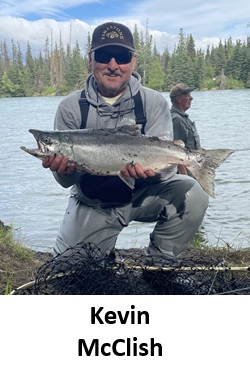 Like many of you, I have been fishing all my life—in streams, lakes, and the ocean. Every minute I fish is pure joy, even if I don’t catch a thing. About 25 years ago, I purchased a fly rod and reel while visiting friends in Michigan. A friend at work gave me a book and a video cassette (this was before the internet!) to help me learn how to cast. I fiddled around with it, but I never really had the time or patience to learn to cast properly, so the rod went into the fishing cabinet to collect dust.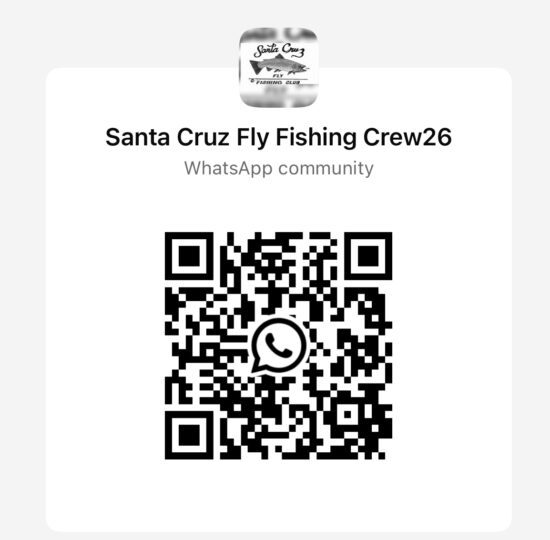
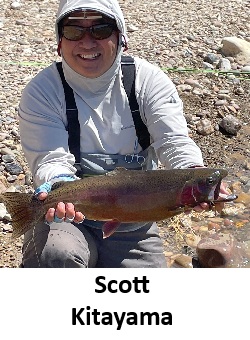
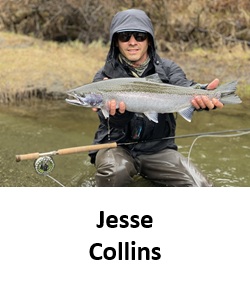
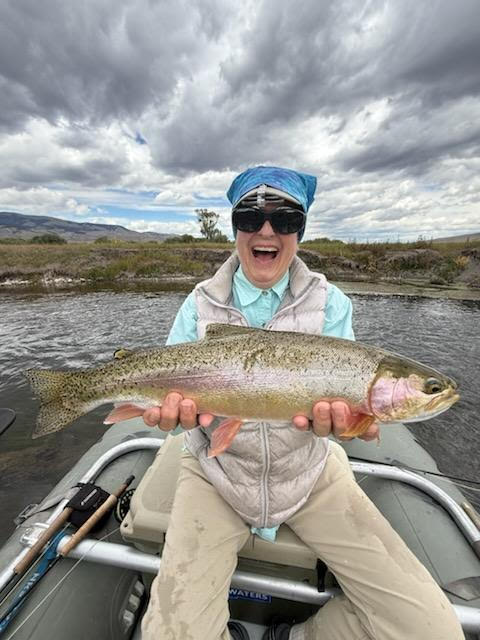
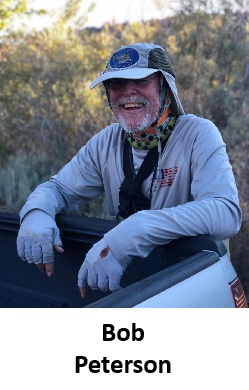
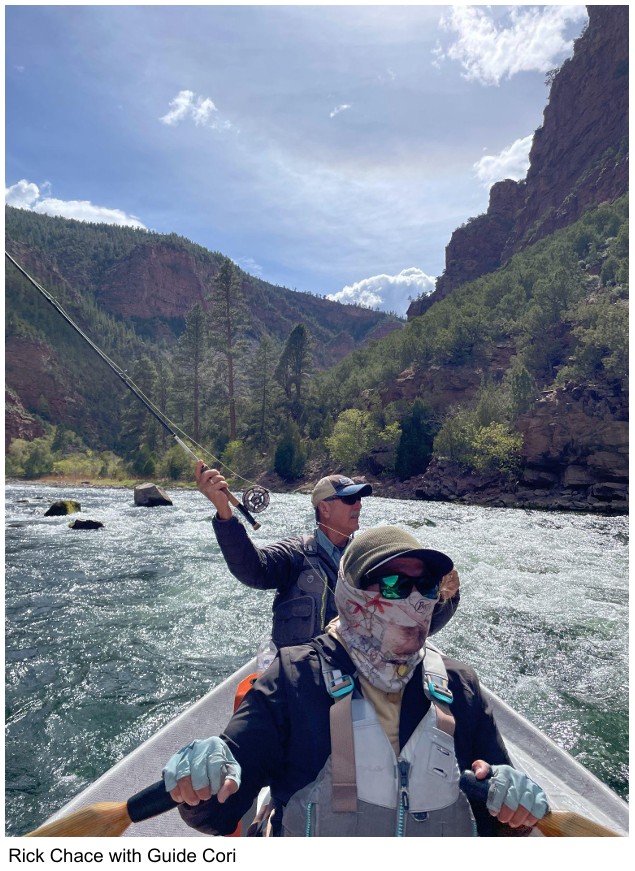
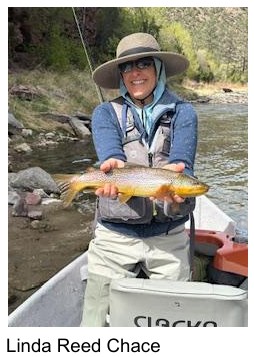
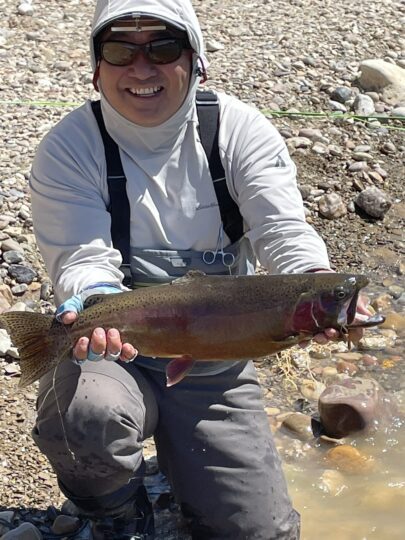
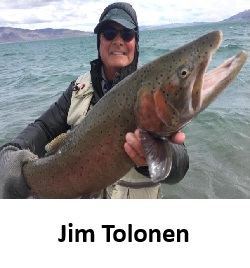
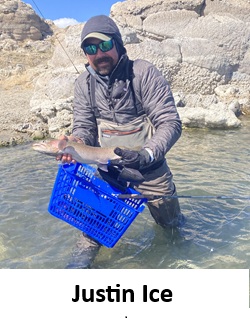 A primary reason I joined the club was to participate in the Fishouts. We are fortunate to have members here who are and have been willing to share some of their favorite places with those in the club. We have members that have been hosting the same trip for over 15 years and every year they sell out with a waiting list. As a club we have the unique opportunity to utilize the vast experiences and knowledge those in the club share. This goes with out saying that with larger groups we are able negotiate better pricing for most of these trips making them much more affordable and accessible to those who might not be able to make such trips a reality. As an example take a look at Rich Hughett’s Loreto trip in Mexico coming up in July. This is a smoking deal with almost all expenses paid with your buy in. All one has to do there after is save the date. Here you join group of anglers that have visited the same location for over 20 years and they are more than willing to share their advise and help getting you to their honey hole.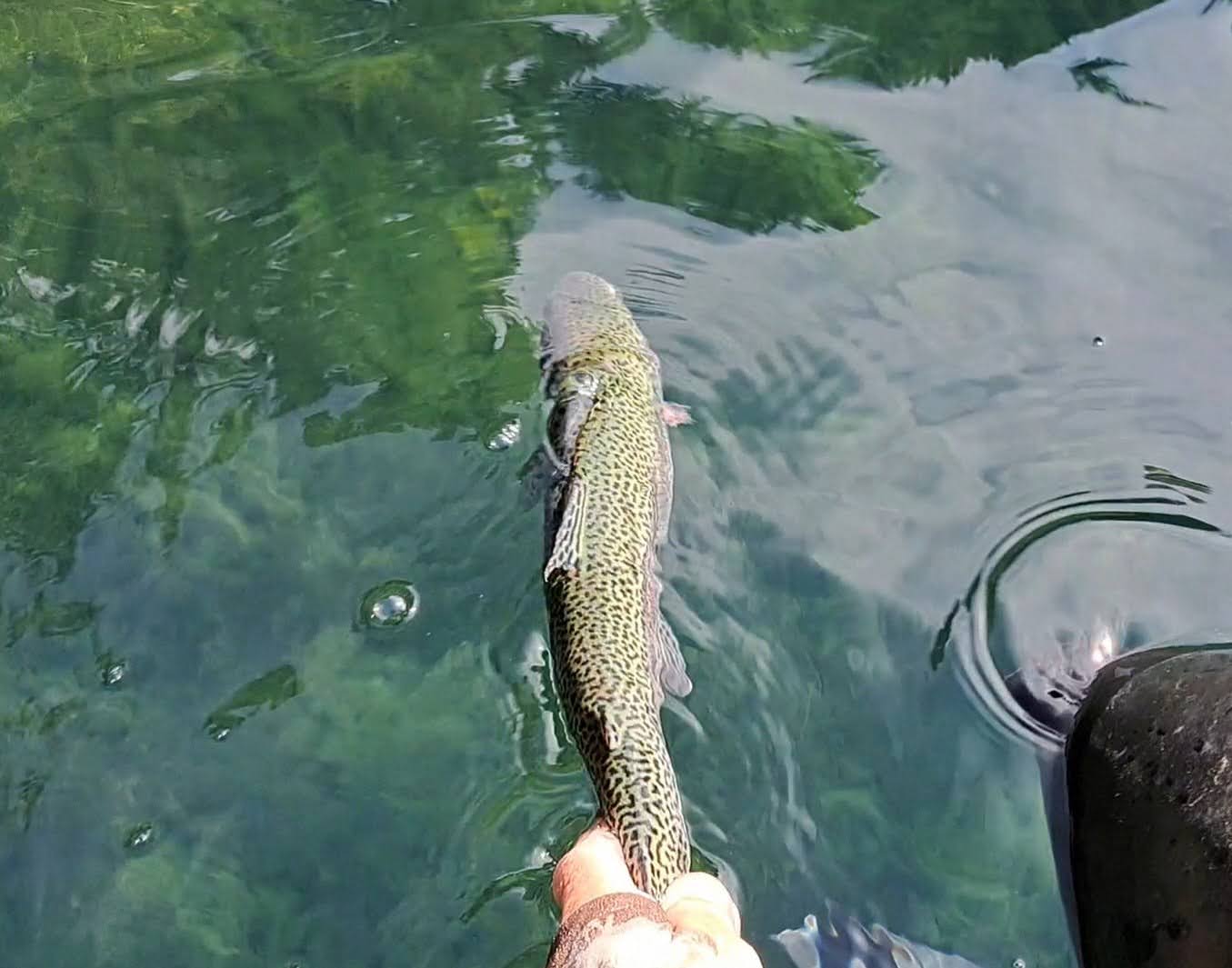
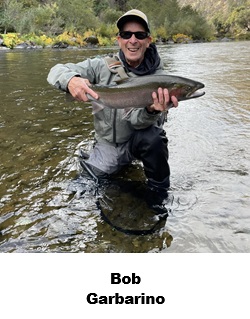 For this month’s “My Turn” article I’m going to focus on what we as fly anglers can do to make a positive impact on fish and the environment they inhabit. From my own journey in fishing, it wasn’t until I began fly fishing that I started to became increasingly aware of the challenges in improving, sustaining and enhancing native and wild fish populations. During my time with many of you, my fly fishing friends, I’ve been inspired by your awareness and passion for a better future in this sport. And we’ve seen some encouraging signs of hope with coming out of collaboration between many of the conservation organizations we support. The Klamath dam removal project is a shining example. The Carmel River Steelhead Association is a local group dedicated and fighting for their native fish. However, as I write this, I’ve become increasingly concerned that the headwinds facing our fisheries are growing stronger in the face of a number of politically motivated decisions. It’s becoming more urgent that we become stronger voices for fish and their habitats. So, what can we do? Many of us practice conservation already to some degree. Here’s a few suggestions of what we can do on and off the water. Most of my suggestions apply to cold water fish such as trout and salmon, but can be used for other species as well.