My first attempt to navigate the new system and thanking Vicki for patience and giving me an idea for a new name for my title and position with the organization.
I wanted to share the letter I got from the volunteers and friends who are working hard to save the last wild river system all the way to the headwaters where the largest open pit copper and gold mine is slated, approved and rejected and near approval again and up to Washington at this stage. Our members approved a donation to saving Bristol Bay and also honoring the name and legend of a fallen friend, guide and fisherman who lost his life in Alaska rafting a wild American Creek, he was not found and we donated his speakers fee to the charity in his name, This is for you John Squires and your wife Vicki and children and giant dog who miss him very much.
Other news is that although listed as being in our county off Laurel Glen Rd, the new 5 G tower was rejected by residents in the area I learned but calling the glass studio next door to where the tower was said to be located the owner said its not going up now. Santa Cruz County is so far opposed to the spread of 5G at this time. Nearest tower is across from SJ City Hall or Hollister. Fresno seems to have the most activity in CA at this time.
As Scoop once said at the end of all his years of alternative radio news, “If you don’t like the news, go out and make some of your own”. Peace and stay well, ‘Conservation Slim’
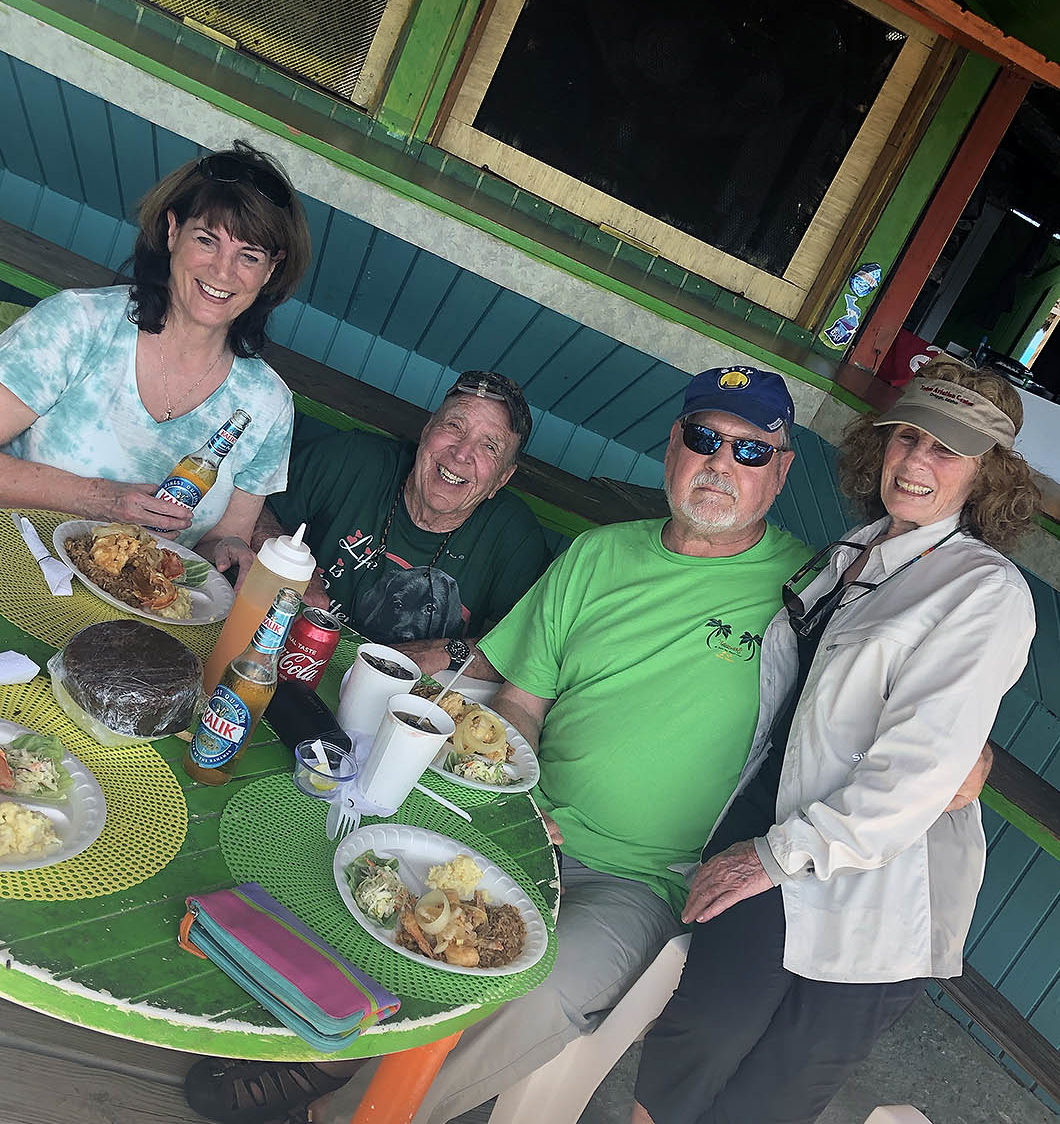
This trip was a weird one, from beginning to end. The first glitch came when I got the notice to check in. I did so, and obtained my boarding pass. I tried to get John’s pass as well, but he was not listed as a passenger on the same locator number, which was odd. No matter what search criteria I used, I could not find John. John finally resorted to calling the airline, and to his dismay, he was not ticketed, so after spending all afternoon on the phone, he finally managed to get a last-minute ticket.
We got the same flight, although not seated together, and arrived in Atlanta, spent the night as planned, and flew out to Georgetown Exuma the following morning.
We picked up a small car at the airport. We noted several scratches on the right front door of the vehicle. We stopped by a deli to get some lunch provisions, and when we came back out to the car, we noticed a big dent on the same side of the car as the scratches. John was afraid we would be held accountable for the dent, but it was rusty and had obviously happened before we rented the car. A lady saw us walking around the car, fretting, and came out. She offered to call the car rental place to tell them about the dent, as she was related to the owner of the rental agency. She squared things up with them, and we went on our way.
Tom Pelikan and Noelle Nichols had gotten to Exuma several days before us, and they reported they had had a good day’s fishing, so we anticipated something similar. That was not to be. The weather was so windy our guide, Drex Rolle, called us to cancel our first day’s fishing. We spent the first three days hunkered down, waiting for conditions to improve. We finally got to go out, John went up to bat first. Try as he might, he couldn’t seem to work line out or get any distance on his casts. Drex coached him, and finally took the rod to demonstrate, much to John’s chagrin. Drex caught a mangrove on his back cast, wiggled the line to get it loose, only to have the tip section come off the end of the rod. He carefully retrieved the rod tip, and discovered it had fractured right above the ferrule. Fortunately, we had my Orvis Helios II, which John used for the rest of the day. I only got up briefly all day. I think John got two fish, tagged a few more but did not land them. It was a pretty scanty day.
The next time we went out a couple of days later, I caught a good-sized bone fish on my second cast. We thought, hoo, boy, it’s going to be a great day if this keeps up! It didn’t. John didn’t score until after lunch. There were the few schoolies after that, but nothing to write home about.
We had a third day out, but again, the fishing was not that productive. Tom and Noelle had to leave before we were to depart, so John offered to take them to the airport. After dropping them off, he went over to the car rental agency to thank them for being so nice about the dent. No good deed goes unpunished. He backed into a post behind the car and put a sizable dent in the bumper!
We spent the rest of our time resting, reading, and watching the COVID-19 crisis unfold. We were worried we wouldn’t be able get back into the USA. It came time for us to try to fly home. We got back out to the airport, checked the car in and John settled the bumper issue with the rental agency. We got in line to check in. John suddenly discovered he did not have his passport! He ran back across the street to the car rental agency to look for it. I got out of line and piled our bags in the corner. I waited, almost in tears, not knowing what he was doing. He was gone for almost an hour, and his phone was left in my bag, so I had no idea what was going on. He finally came running back in, having found the passport back at our bungalow, on the bathroom floor. We checked in, and got aboard, and flew in to Atlanta. We were supposed to fly out to LAX and then on to SJC after clearing customs. We got aboard a nice, cushy 777, but they couldn’t start the starboard engine. They fiddled with it for over an hour before pushing us back to the gate and making us get off. The time for our connections had long since lapsed, so we had to rebook with the gate agents. They couldn’t get us home that same night, so they gave us hotel vouchers, and booked us on a morning flight straight through to SJC.
We stayed in the airport Westin in Atlanta. We left instructions for a wakeup call for 6 AM. Not only did they not call, the room clock had not been reset for EDT, so when we did arise, we only had 30 minutes to jump on the shuttle and get ourselves over to the airport, go through TSA, and get on the westbound flight. It was eerie. We were on a 737, and counting us, there were only 20 passengers on the flight.
This isn’t so much an article about fishing as it is a caveat for anyone planning any trips in the near future. We can’t fault the good people of Exuma, they took very good care of us, fed us well, and did their level best to make our vacation enjoyable. Nobody has control on fishing, nature or a pandemic. All we can do is cope, use good sense, wash our hands, stay home and pray this latest crisis resolves itself. For now, we are just happy to be home, safe and well!
Hello my fellow big stick fly line, fly tying, fly flippin enthusiasts. For what is probably the first time in the 43 year history of the SCFF, we have had to cancel our April meeting due to the Coronavirus pandemic forcing us to shelter-in place and wait out the storm.
I found this beautiful adventure of two people heading across the country to spend a summer fly-fishing in Montana. The photos and video are spectacular and include fish, fur and feather. No this is not the typical adventure that John and Elaine Cook do every summer, but it could very well be, or be you – or me – next!! I invite you to turn on your TV, grab some popcorn and a refreshment – say “youtube” and settle into your most comfortable place and enjoy this nearly 1 hour escape.
You can also visit www.tightloopsfly.com
Wishing all of you good health and looking forward to gathering again soon.
Just a little tease for the next club raffle. The big prize will be a 10 ft. 3wt Echo Carbon XL Euro Nymph rod with a Rio Euro Nymph sighted leader with tippet ring. Along with these will be the DVD by Devine Olsen on how the whole Euro Nymph thing works. If you ever thought about trying this, now is your chance.
Since lock down here in the bunker I have been ordering a lot of cool stuff, stay tuned.
In 1992 I was at the Ed Rice Fly Fishing Show with Mona. We were still practically newly-weds and had recently seen A River Runs Through It, in the movie theatre. As new comers to fly-fishing I was on overdrive soaking in everything as a guy who by today’s standards had virtually nothing in my collection of all things fly-fishing. We were taking in everything from fly-tying, gear, waders, flys, vests, hats, how I came to get my Filson cap, and guys and gals casting fly rods, like I’d just seen Brad Pitt do in the movie.
Mona and I befriended a guy at the Sage booth. At that time, I didn’t know Sage from Orvis, from R.L. Winston, Thomas & Thomas,… They were all just really expensive and really beautiful. This guy was super nice. He grabbed a couple of rods and we went outside to do some casting. It was evening, but the casting pool was lit up. Fly lines shimmering and floating in the night sky against the bright lights. We were having a blast and learning a lot, watching the line, practicing and practicing. When we asked his name, he said it was Randy Swisher. I commented, ‘Swisher?! You mean like, Doug Swisher?’
Yeah, That’s my dad.
Wow – I was hooked. When we went back inside, I asked him about the rod I was casting. It was a beautiful deep bluegreen graphite Sage SP. Mona said I did have a birthday coming up soon, and Randy offered up his employee discount and threw in the rod tube.
I’ve loved that rod and at the price you pay for a rod like that, even 28 years ago – you take care of it.
Well I broke it last summer and was crushed. I was worried that part of the rod wasn’t even available anymore. But the long and the short of it, is they did. Sage treated me like it was one of my kids. They repaired the rod and had it back to me in a few weeks.
“Social Distance”. Two words none of us have ever though of putting together before. In an unprecedented health crisis, none of us saw any of this coming. Although I did hear a 2015 TED talk with Bill Gates who warned us of just such a disaster. Wow. Anyhow, I am, like all of us, at home, working to be responsible so as to mitigate this health crisis. We are certainly going to be a different world in the future, and preparing our “kit bags” for many different things we never really thought of before, will become the new norm. Teachers will now have to prepare for their classes each year, with an online curriculum, just in case. Hospitals, government, manufacturing, finance, business in general will have to have a disaster plan that now may include some sort of crisis unforeseen. Probably all good ideas, but hard to manage now -unless you’re Walmart, Clorox, Charmin or Amazon.
It was really hard canceling the April meeting and equally hard having to cancel the board meeting.
As we are at home, I do recall one of the instructions is to “get outside”! I’ve seen more people walking their dogs, or just walking together than I’ve ever seen before. I painted the laundry room and have been fixing some fences. Went for a bike ride. I took inventory of all my fly-fishing gear. I cleaned my fly lines and rigged up some two fly leaders for surf perch/Striper fishing in the near future. I organized my fly-tying and spun up a couple of bugs for the summer I’m very much looking forward to. My rod came back! Get Outside! Okay – that’s where you can practice Social Distance Casting! The grass is green at the parks, and it’s legal/okay to go to the park. You had time to clean your line and maybe even clean up your favorite stick. A good time to get out and practice your line control, with a little dab of yarn, and do something different. If you’re in the park waving a nine foot long stick with a long colorful string on the end of it, chances are, people are gonna stay way clear of you. Much more than six feet.
Stay well my friends. Hang in there and all of us at SCFF are wishing everyone good health so we get through this together and get back to having fun together. We are going to appreciate that more than ever before.
We had a great day roaming the building to find things to buy, attending a couple power point lectures and getting the gear we want for the trip to Pyramid Lake in March.
The tailgate party actually had a tailgate, Jim brought his own smoked salmon caught off the4 Play last summer. The color and taste of local fish is the best.
We all brought sandwiches and coldbeer and snacks to share. The tuna jerky was pretty strange, we agreed later.
To miss the traffic mess home, we went to the Hopyard Brewery/restaurant for sliders andPliny the younger or elder beer. Thanks to Jeff (Yog) for designated driving Jim Tolonen’s car home,and to Sam Bishop who had us over for a cold one, he drove in his truck and therefore is not in thephoto. We saw many club members there and friends from other places. It was like a reunion feeling all day.
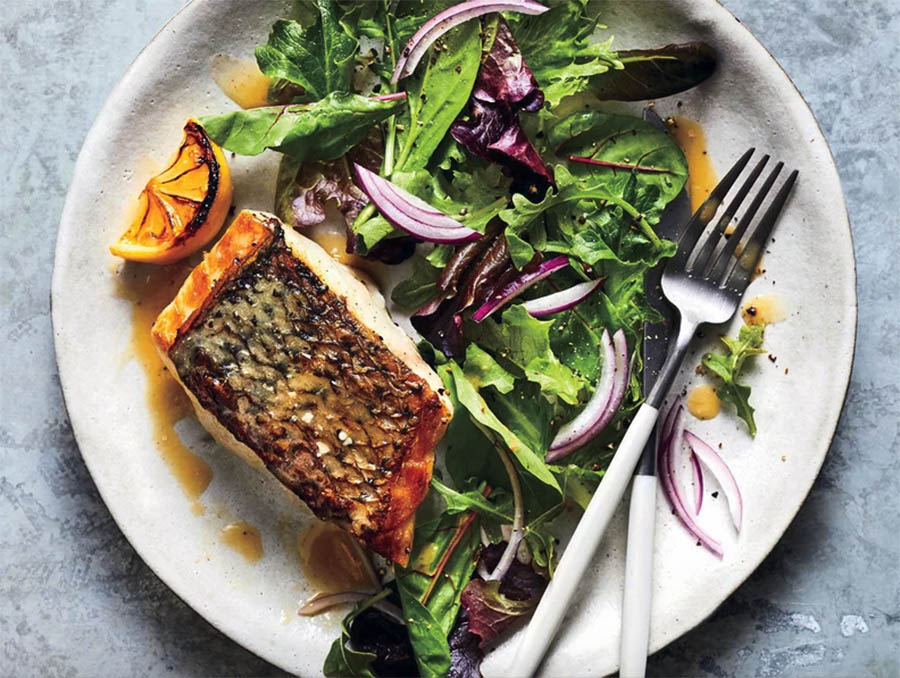
If you find sea bass to be strong-flavored, remove the pan drippings from the skillet before making the sauce for a milder final product. The wine-butter sauce is a good complement to the dish, especially with caramelized lemon notes.
Sprinkle fillets with pepper and 3/4 teaspoon salt; let stand 20 minutes.
Heat a large nonstick skillet over medium-high. Add lemons, cut sides down, and cook until lightly charred, about 5 minutes. Add olive oil, and place fillets, skin sides down, in skillet with lemon. Cook, undisturbed, until sides of skin begin to brown and fish is almost fully opaque, 5 to 7 minutes.
When the fillets appear to be approximately 90% cooked through, gently shake skillet. When cooked with patience, the fish will release itself from the pan, allowing you to flip the fillets without sticking. Flip fillets, and cook 1 minute. Transfer fish and lemons to plates. Cut each lemon half into 2 wedges. Wipe skillet clean.
Reduce heat to medium-low, and add wine, remaining 1/4 teaspoon salt, and butter. As butter melts, whisk to emulsify mixture. Spoon sauce over fillets. Sprinkle with parsley, and serve with a charred lemon wedge
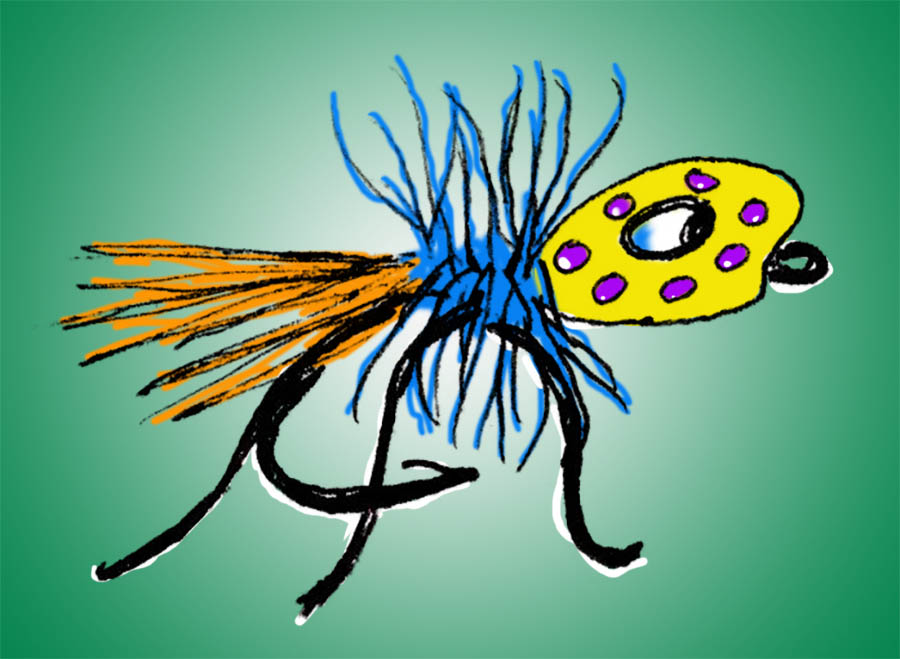
It’s never too early to get ready for summer with a few hoppers. This old pattern continues to be very effective and has an entirely different profile than foam patterns.
Hook: TMC 5262 or 5612, sizes 6 – 12 Thread: Tan 8/0 Post: White calf body Body: Golden brown Antron dubbing Wing: Mottled turkey quill feather Legs: Ringneck Pheasant tail feather Hackle: Grizzly, barbs 1 1/2 – 2 times hook gap Thorax: Same as body
Crimp barb.
Attach thread behind eye in touching wraps 1/3rd back.
Cut a small clump of calf body hair from hide. Clean and stack. Lay on shank with tips forward extending 1/2 shank length beyond tie in; securely tie in. Cut butts at an angle; wrap down. Holding upright make many wraps in front to hold upright.
Dub generous body to within 1/8” of post.
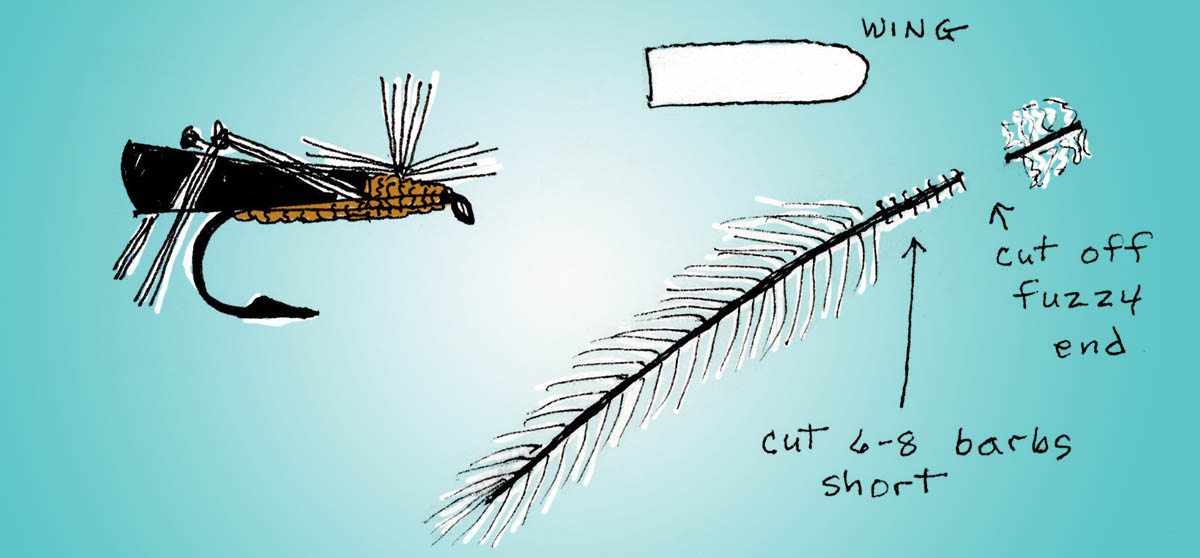
Treat windings with lacquer or Flexament. Separate section of quill 1/4” wide, cut according to diagram. Place round end to rear of fly, butt up against the post and tie in place.
Using 6 – 8 Pheasant feather barbs, tie knot in center (tricky, go to web for techniques). Apply Zap-A-Gap to keep fibers together. Tie in one leg on each side behind post according to diagram. Cut excess.
Prep hackle end with “crew-cut” (diagram). Tie in front of post. Hold upright and tie to base of post.
Dub generous thorax. Leave thread hanging on your side of shank.
Make 3 – 4 hackle wraps around base of post. While holding hackle downward, make 3 thread wraps around base of post.
Sometimes we forget how easy we have it. Amid our crazy life schedules, we tend to take for granted that purified bottle of water when thirsty, or the push of a button to light a fire. But it’s important to remember that in the blink of an eye, it can all be gone. The unexpected happens, you get in an accident or lose your way; now, it’s just you and the wilderness with no ties to civilization. Here are ten basic survival tips to get you prepared- just in case.
Communication is key:
Please, please, please tell someone where you are going before you set off for a trip. No matter where you go, even if you end up stranded unexpectedly, you started from somewhere in civilization. Tell close friends and family where you are going and if you have a specific route or amount of time you will be gone.
Keep your head on:Now is the time to be calm and think positive. It doesn’t sound like much, but optimism goes a long way, and in a survival situ-ation, it starts with you, your attitude and your will no matter how scared and alone you may feel. First, keep a realistic outlook and diligently plan to keep yourself in the best possible physical and mental state. If something isn’t working out, like building a fire or shelter, don’t rush, because that can lead to panic. Stop, breathe and think about what you need, observe your surround-ings and organize a new plan.
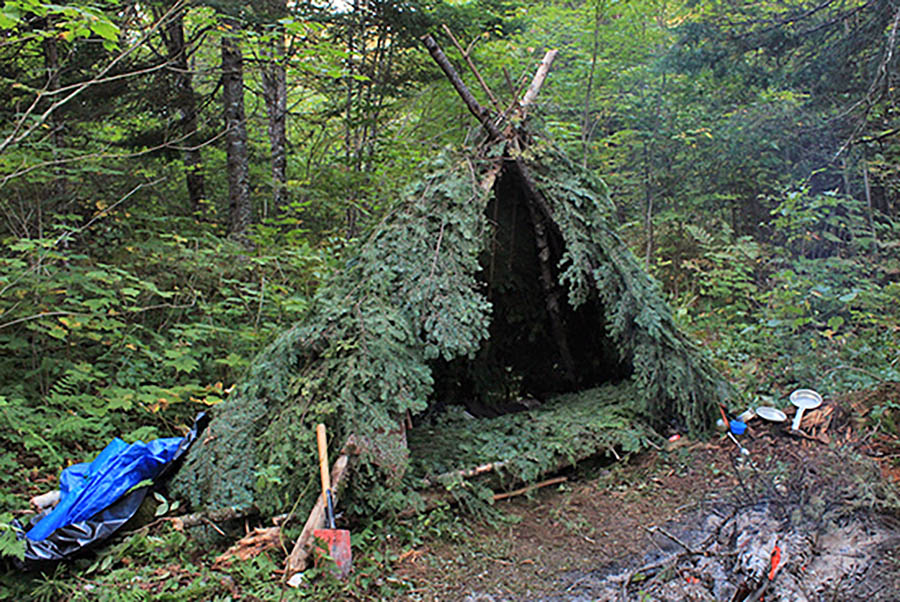
Take inventory:Keep everything you’ve got, because the second plans go south, these items will become your most prized possessions and could save your life. Don’t underestimate the worthiness of even the smallest knick knack-inn Gary Paulson’s classic, The Hatchet, Brian Robeson used his shoe lace to make a nifty bow and arrow for survival!It’s time to get creative. Familiarize yourself with how to build a lean-to; there are various types of shelters you can build and each has different pros and cons. Obviously you want overhead covering for warmth at night and protection from the elements. If you are in rocky, mountainous terrain, look for overhangs. Otherwise, use limbs and leaves or anything that can provide in-sulation. Pine needles usually blanket the ground in thick batches, excellent for bedding.
Agua por favor:
Your body will not last more than three days without water. If you are lucky enough to be near a body of freshwater – good for you, just make sure to boil before quenching your thirst. No water in sight? Continue your search and construct a rain catcher or water still.10 Tips for Wilderness SurvivalFrom https://blog.theclymb.com/tips/10-tips-for-wilderness-survival/Keep that belly happy: Things can get frustrating when it comes to finding adequate sources of food when you are in survival mode, especially since malnutrition will work you mentally and physically, making you feel weak, cranky and delirious. It’s a good idea to get familiar with edible wild berries and plants for future reference when out in the wild. Also, it’s time to grow up and ban-ish the word “picky” from your vo-cabulary. When it comes to survival, embrace anything and everything (carefully) including bugs, eggs, fruit, leaves. Learn to build some simple traps to catch small animals and don’t rely on just one single food source. Protein is important for strength; know what various nutrients your body needs for prime sustainability.
Light that fire:Those glowing red flames provide light, cooked food, warmth and protection from predators and pesky bugs. Here are a few tried and true techniques for conjuring that mighty blaze:
Fire Plow – http://www.hollowtop.com/spt_html/fireplow.htm
Bow and Drill – http://www.wildwoodsurvival.com/survival/fire/bowdrill/pmoc/basicbowdrill.html
Keep a pocket knife, or multi-tool with you at all times, because you never know when you will need it- and when you do need it, you will rejoice that you have something to cut, protect and prepare food- even if all you have is a crappy, little knife. Keep it sharpened.
H-E-L-P:Survival is your first priority, but don’t forget – you need to get rescued as well. Come up with an action plan in case a plane flies overhead or there are search parties nearby. You’ve seen it in the movies – prepare a giant, easily visible fire pit out in the open or lay out stones in the pattern of HELP or S.O.S. You can also use any shiny, metallic object for reflection purposes.
Navigation:
It’s a good idea to have a compass with you at all times, but if not then what? Get old school and use the stars- it’s a lot easier than you think. Also, keep note of rivers, paths or mountains – follow-ing these can lead to roads and civilization.
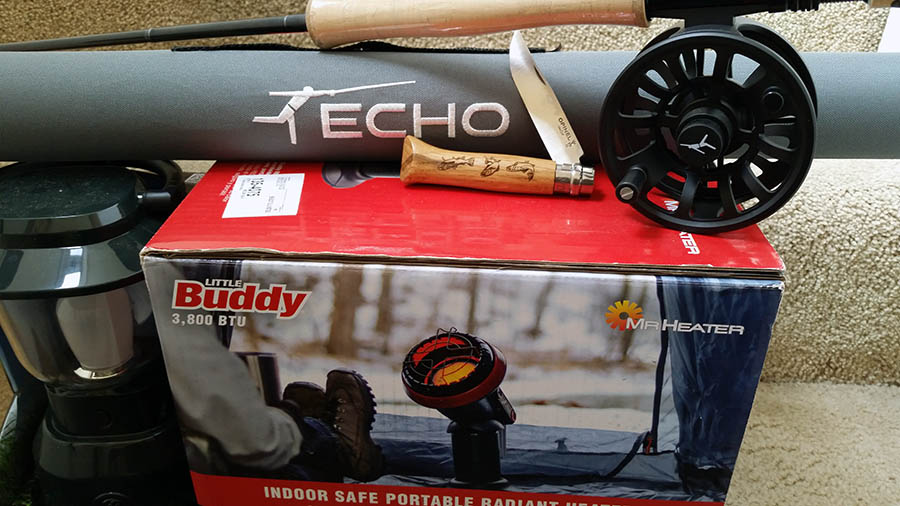
Just in time for your big trip to Pyramid Lake we have an Echo Ion XL 9 ft. 8 wt. Rod which features a twin ring locking reel seat, alignment dots on each of the four sections, and a nice little fighting butt. Paired with this rod is an Echo Ion large arbor Rulon disc reel. This package is perfect for the big fish and the big winds that Pyramid is known for. It also is a nice rig for the surf.
In case we have forgotten, it is still on the cool side of spring so it might be nice to have a little bit of heat on these cold mornings when we are outdoors. This Little Buddy heater runs off the small propane tanks putting out 3800 BTU’s of heat for in the tent, the back of the truck or in the shop. It will heat up to 95 square feet and will run for over 5 hours on single tank of gas. Also great for the bath at home when the power is out.
As long as we’re up early in the dark or possibly facing a power outage, a GE Enbrighten lantern can help light the way. It puts out 500 lu-mens of bright white light for 180 hours running on 4 D cell batteries. It features 3 light levels and a carabiner style hanger handle.
DOOR PRIZE! EVERYONE GETS A FREE TICKET! We have a really nice little pocket knife by Opinel of Savoie France. It has a twist lock ring and Trout image wooden handle. The company dates back to the late 1800’s. It is perfect for streamside picnic lunch preparation.
I was nervous tonight (2/5/2020), it was serious for me, I didn’t look up enough and Adam Schiff would shake his head a little but I did get applause which I never expected at all. I was sure it would be pretty silent and you know what? I don’t care, I have the floor. I explained to everyone that it was a historic week/day and all our hard work since my childhood, I saw the “Clean Water Act” signed as law and my home Hudson River slowly cleaned up to attract striped bass again and the “Love Canal” toxic site was exposed and the residents helped.
Rolling back laws on the books just because you can and it upsets conservationists is even more reason to sell out our precious Interior lands to mineral extraction and fracking for natural gas. Putting a label on what political party is better for the environment is a lopsided one and this current administration only caters to the corporate giants, Coal ash not okay to dump into waterways once forbidden under previous laws has been lifted and the die off of fish was as expected, fatal for aquatic life. This is not on any normal TV news show. There’s a lot of truth out there that most of us are unaware or don’t care.
As the Conservation chairman, I perhaps broke a rule, written or assumed, but I don’t care, I have the seat, impeach me. I have the votes, I heard the applause, If I want to present a show on the REAL cause of “global warming”, showing that CO2 is actually a very positive thing for the planet and all plants and trees. CO2 is GOOD but what the sky shows us daily is a haze when there should be the bluebird blue sky of our youth. The aerial aerosols cloud the sky as the jets lay down even patterns and grids, turning on and off the spraying, it’s quite a show, many think of it as normal and not at all questioning what we see is not normal at all.
My message was a hope that we will not let dirty corporations supported by a dirty government spoil our heritage and our children and grandchildren to avoid this new world order plan, Agenda 21 Agenda 2030. Not the rantings of a novice seeker, I have studied as much as I can stand but none of it is very positive for our future. No “Pollyanna” pie in the sky fixes, the UN Agenda is well under way to completely ionize our upper stratosphere with metallic dust that will remain there and aid the 5G coming to a telephone pole near you.
Please Impeach me, let me go.
This is the last Newsletter from our beloved Pat, my friend and co-conspirator and a sister to whom I always can speak my truth. It’s important to be able to find that person who does not judge but listens and learns and comments and shares their ideas on the subject. What I learned as jumping from Facilities board member to the President for three years and now Conservation is that having to report on only local issues that affect us here at home may not be what I am not most good at providing. There is so much more out there to study, I feel the club would be overwhelmed.
Since I heard applause, please send me your thoughts, I know members want the truth and it is important, the links I used for my reports I check out and will send to you if you ask. If my report was offensive to my more conservative friends I am not sorry at all, my job is to report on what I feel most passionate about and will affect the most of us no matter what political opinion exists.
This being the last chance to blog on the SCFF Newsletter I wanted to speak out and say thanks to those who supported my very nervous presentation which I wish I had practiced it first. I welcome any emails or calls and remain your Conservation Chair. Thank you, Pat, for all your hard work, and it was a pleasure working with you when I was president for three years. You rock, and have been a real sister to me. Much loud applause.
We are pleased to announce that the final conference agenda packet is posted for the 38th Annual Salmonid Restora-tion Conference taking place in Santa Cruz, CA from March 31 – April 3, 2020. The theme of the upcoming conference is 2020 Vision for California’s Salmonscape. Please see the SRF website for information on workshops,field tours, and concurrent sessions. Information regarding the Plenary Session and other special events is now posted as well.
Conference Registration
You may register for the 2020 Salmonid Restoration Con-ference via any of the following methods:
Register online and make a secure payment with PayPal.
Fill out the registration form and fax it with your payment infor-mation to (707) 923-3135
Mail your registration form and payment to the SRF office: 425 Snug Alley, Unit D, Eureka, CA 95501; make checks payable to SRF
E-mail your registration form and payment information to info@calsalmon.org
SRF Membership Soiree
SRF’s annual membership dinner will be a strolling soiree at NOAA’s Monterey Bay National Marine Sanctuary Exploration Center. Tis event will coincide with the launch of the Sanctuary’s interactive California Salmonscape exhibit and will feature a short presentation by the legendary artist Ray Troll, whose art is highlighted in the exhibit, and Sarah Mesnick who leads the science, art, and seafood campaign at NOAA Fisheries.
2020 SRF Conference Poster Session
The Poster Session will be 7-10 pm on Thursday, April 2 at the Cocoanut Grove. This annual event is open to all confer-ence attendees and is a great venue to network with your peers. There is no additional cost to attend or present a poster. We encourage posters, pamphlet distribution, software exhibits, and multimedia (video) presentations.Please visit the conference FAQ page for more informa-tion about the conference venues, hotel options, and more. Thank you and please contact us with any questions, Dana StolzmanExecutive Director – Salmonid Restoration Federation
Help with Google Groups before the March 4th meeting @ 6:40 pm
In less than two weeks, over half of the club membership has accepted the invitation to join santacruzflyfishermen Google Group and are getting email updates. To help get everyone on board, Scott Kitayama will be assisting and answering questions before the March meeting. Subjects to be covered:
What is Google Groups? What does it look like?
Did you get an email invitation from santacruzflyfisher-men around February 11th?
Are you receiving the emails from the group?
Do you have a Google Groups account?Come on by and let’s get everyone included in the group.
Come on by and let’s get everyone included in the group.
Publisher’s Note: This is important information to know, and will serve as a way for members to stay in touch, stay current, and pair up on last-minute local fishing trips in the interim between the old website going offline and the new one being launched. Please take advantage of Scott’s expertise!
Yawn! It’s 3:15 a.m. and I’m up getting ready to head to the airport. I like getting up early. Especially if I’m getting on a plane or into my truck to head out on an adventure. There’s just something about that special excitement that comes from discon-necting from the normal work flow of life, planning to get into the great outdoors and fish.
My favorite time to be driving is so early that even in the Bay Area, no one is on the road. Your only concern the potential of a deer, coyote, mountain lion, raccoon, or pos-sum crossing the road. Coffee! Always on the road long enough for that break from black to navy, to dark blue as the sun is long from the horizon, but letting us know that it will soon be first light.
When my brother and I first drove across the country more than 37 years ago, I still distinctly remember when that first light started to occur and where. The most stunning is when we were driving through Cheyenne, Wyoming. That one I’ll never forget. In Albu-querque when my dad and I drove across again and it had snowed on our way into Flagstaff, Arizona.I can’t really explain it, but maybe it’s this weird sense of being ahead of everyone else, being the first to see what no one else was seeing, and to see it all pure, quiet, no traffic, no one else. It’s kind of like those winter days in Ohio when it snowed a foot, was still snowing heavily, and the bunch of us ventured out to the Metro Parks in the hills, and how almost unnaturally, crazy quiet it was. Or the time Mona and I were at eleven thousand feet on the Bear Tooth Mountain pass in Mon-tana hiking a couple miles back into the wilderness to fish for Brookies. We stopped and just looked at each other, marveling at how we could hear nothing. Nothing at all but for a bird, a bug, or the sound of the breeze.
Last year, I was up early and passing through the foothills in Roseville, on my way to my first Pyramid fishout, when that first light occurred again. Could not have been a bet-ter morning, capped off by seeing my good friends of SCFF by First LightBy President Tom Hogye10:30 a.m., then landing my first Lahontan Cutthroat by 12:30. This would be where they do that “mic drop” thing – boom. One and done, baby!
Or there was that morning, freezing cold, ice on the guides, can’t really see the river you’re entering. How light makes you rub your early morning eyes as if they need help adjusting, then that grab hours later and you’re off and running with a steelhead on the other end.Even though this morning means sitting in the airport on a Sunday morning heading for a conference in Florida, where it’s all about “how much more can you bring in the door, Hogye”, I am looking forward to those other mornings, those mornings I might not have a chance to do if it weren’t for my work, family, friends and SCFF. Makes everything worth it.
Over the next couple of months, watch for the new SCFF website! Thanks to PatSteele, Bob Peterson, and your board, we willbe fast moving into the 21st century with some really exciting, intuitive and vibrant changesto the Santa Cruz Fly Fishing website. We’re really excited. And if you’d like to lend yourexpertise and be on the cutting edge of this work, helping us withour monthly newsletter, content, email lists, and other resources we are working on, please reach out and we’d love to have your help.
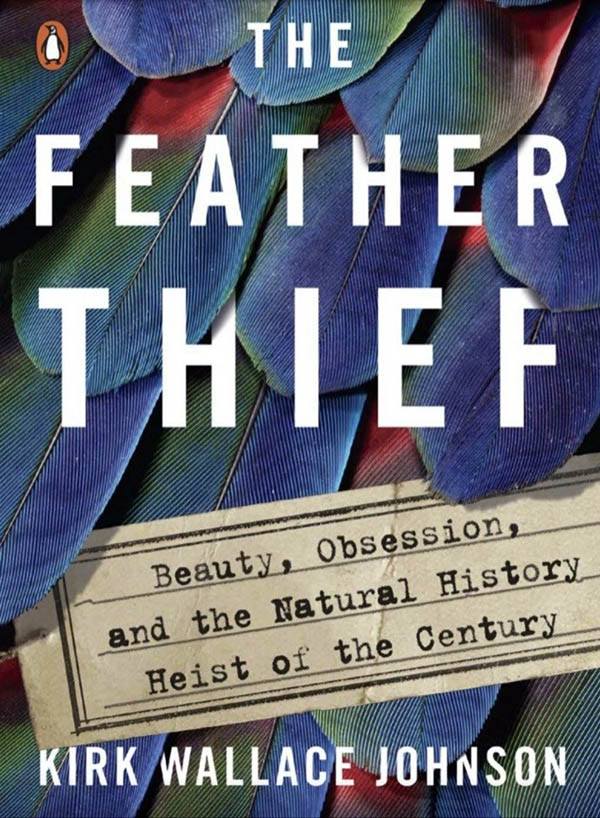
If you need a good book to read, look for “Feather Thief”. It’s a very interesting look at what happened to the fly-tying industry and one particular person. I’ve listened to the podcast twice and then met Bill Keogh from Keogh Hackles at this year’s Fly-Fishing Expo in Pleasanton, where so many of us met for what you could rightly call our second “Christmas.” It’s such an awesome place to meet so many people who love the out-doors, fly fishing, and all that it encompasses. Was another really great year.
At this moment, sitting on the plane for yet another work trip, I’m looking forward to trips with SCFF, my family and friends. See you soon!
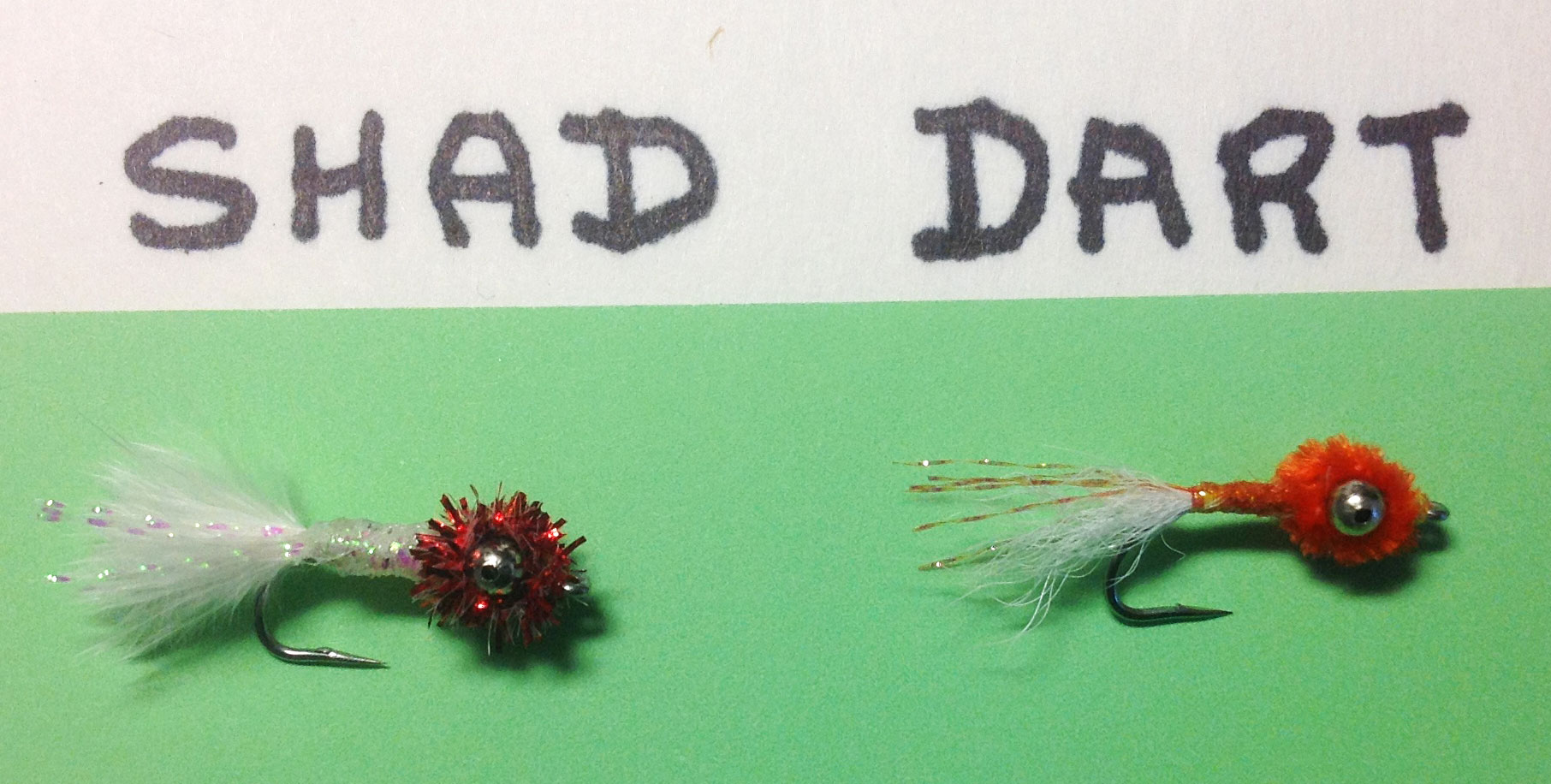
This, easy to tie, fly pattern has many material and color variations. Try using it for shad in rivers or perch in the surf. Shad fishing is right around the corner. And of course perch can be targeted usually in spring, summer and fall. Our surf fishouts will begin soon and may be an acceptable CDC outing due to the ability to practice social distancing of 6 feet or more.
Hook: Mustad 34007 or Eagle Claw 253SS , sizes 4-10
Thread: 6/0 , color to match head
Eyes: med size bead chain
Tail: marabou or calf tail, red, orange or white
Flash and Body: crystal flash, red, orange or pearl
Head: sm. chenille or crystal chenille, red or orange
Coating: Sally Hansen’s Hard as Nails nail polish
Glue: Supper Glue, Zap-A-Gap or similar
Crimp barb.
Attach thread behind hook eye. Touching wraps to mid shank then forward to 2 eye lengths behind eye.
Tie in bead chain eyes on top of shank with many crisis-cross wraps and circular wraps below balls but above shank. Apply glue. Position thread at rear of shank.
Use sm. amt. tail material. If calf tail,clean out underfur. Position material on top of shank. Tips, shank length to rear. Tie in place up to bead chain. Cut excess.
Using 3 strands of crystal flash, bend in half forming a loop. Tie to top of shank withloopextendingto tipof tail. Position thread behind bead chain. Wet strands. With touching wraps, wrap forward to bead chain, then back to tail, then forward again. Tie off, cut excess. Cut loop. Apply glue to body.
Remove some fibers from end of chenille. Tie in strings behind bead chain. Position thread in front of bead chain.wrap chenille around both beads forming a round head.tie off, cut excess. Multiple thread wraps behind hook eye. Tie off, cut thread. Apply glue.
Coat body and tie off thread wraps with Sally Hansen’s.
Over 150 members have submitted over $5,000 in dues and additional $1,300 in donations for scholarships and conservation. New 2020 rosters will go to the printers and be available at the April meeting. Please email/txt me and I will mail you a roster. Thank you Scott Kitayama for helping with Google Groups .
Spring is right around the corner. Time to get an arsenal of flies into your box for bass and bluegill. The class requires two days for the epoxy drying, and will be held over the week-end, not the usual second Wednesday of the month.
Signups are MANDATORY! Either sign up at the club meeting or call Elaine ((831) 688-1561). There is limited space. Beginners need to know how to use a vise and bob-bin. There is no charge for members, and all materials will be provided. Directions and what to bring will be provided when you sign up. The class will also include an hour of bass fishing instruction.
* As we go to print the class is full. A cancellation list is being maintained
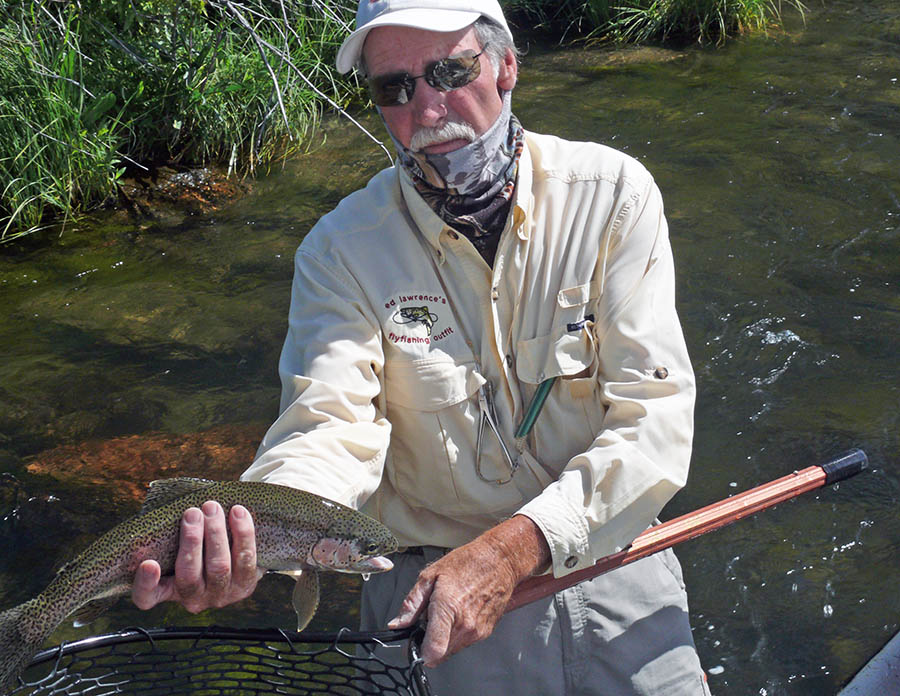
Our speaker this month will be Montana outfitter, Ed Lawrence. If you have ever thought you would like to plan a fishing trip into Montana, Ed Lawrence, should be your go-to planner. He will help you with your choice of rivers if you wish.
A number of SCFF members have planned fishing trips with Ed. I and a long-time friend of mine traveled to Montana last year with a goal of fishing four or five rivers in five or six days. We wanted to fish the Yellowstone, The Madison, the Jefferson and the Missouri before discussing our choices with Ed. Our final plan with Ed’s suggestions, was to fish the Missouri twice in different places, including a third day fishing The Land of Giants, and along with the Madison and the Yellowstone.
It was a great organized, efficient trip. We met our guides in the morning, fished all day, drove to the next river that night, had dinners on our own after fishing, then spent our nights in Holiday Express Hotels, all arranged by Ed. We then met our guides the next morning at our front lobby door and went fish-ing. So, after that, we flew into Bozeman on Sunday, started fishing Monday on the Madison and were able to fish five days in a row. We returned back to Bozeman in the evening of the last day and flew home the next day, actually seven days all together, making it a very enjoyable trip, which I plan to do this year and next and next and next.
I would be happy to discuss our Montana with anyone who is interested, and Ed’s program will entice you even more to find out what the five best reasons are to fly fish Montana!