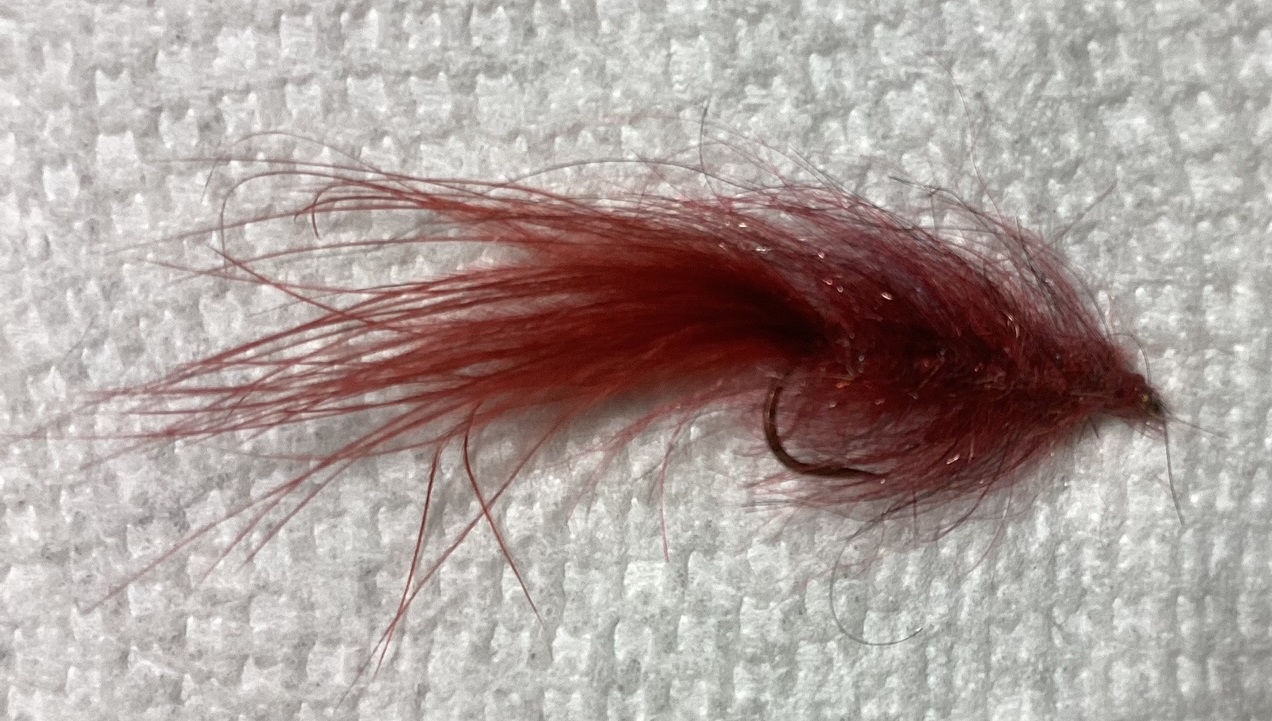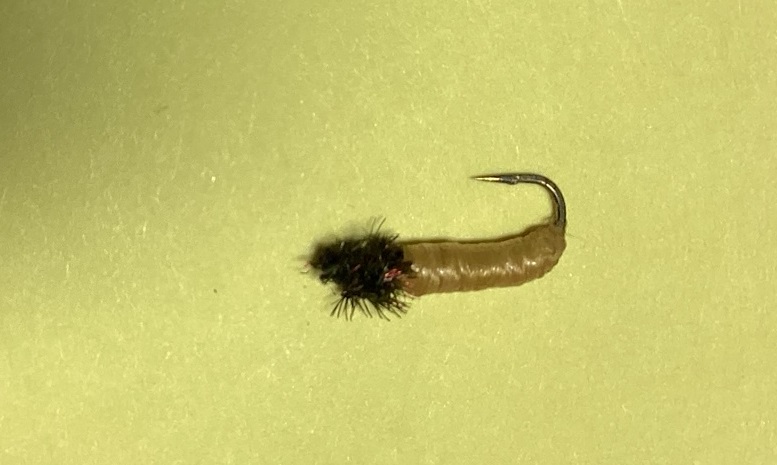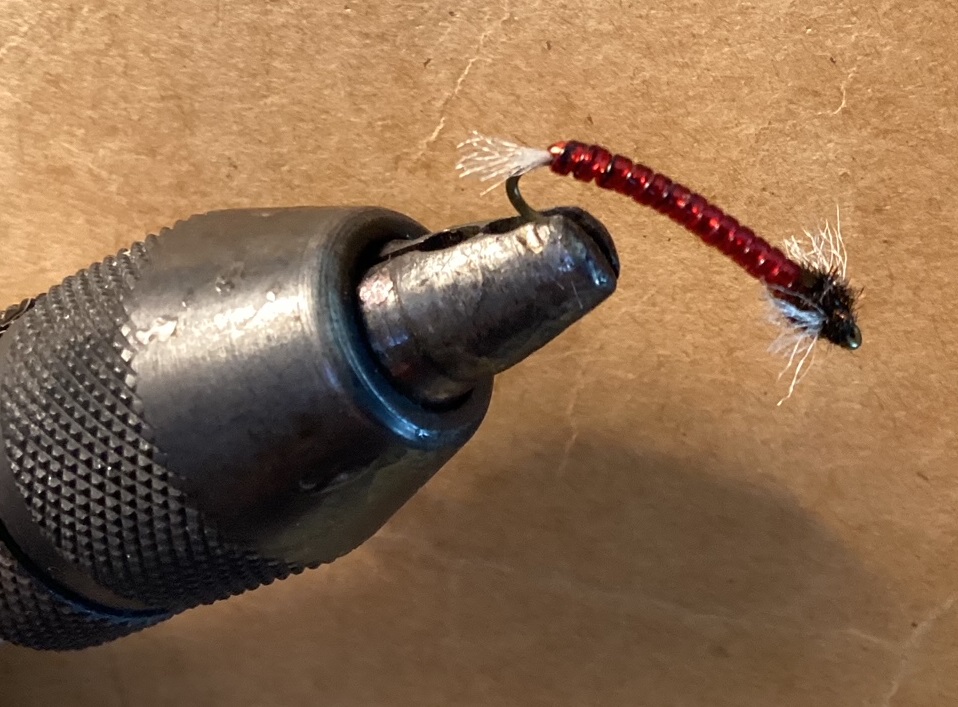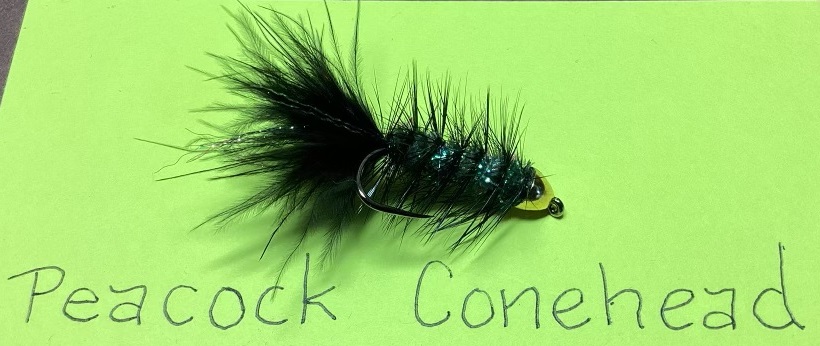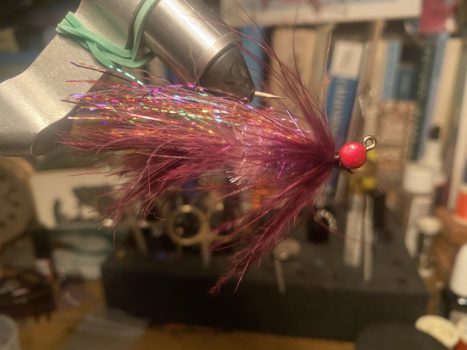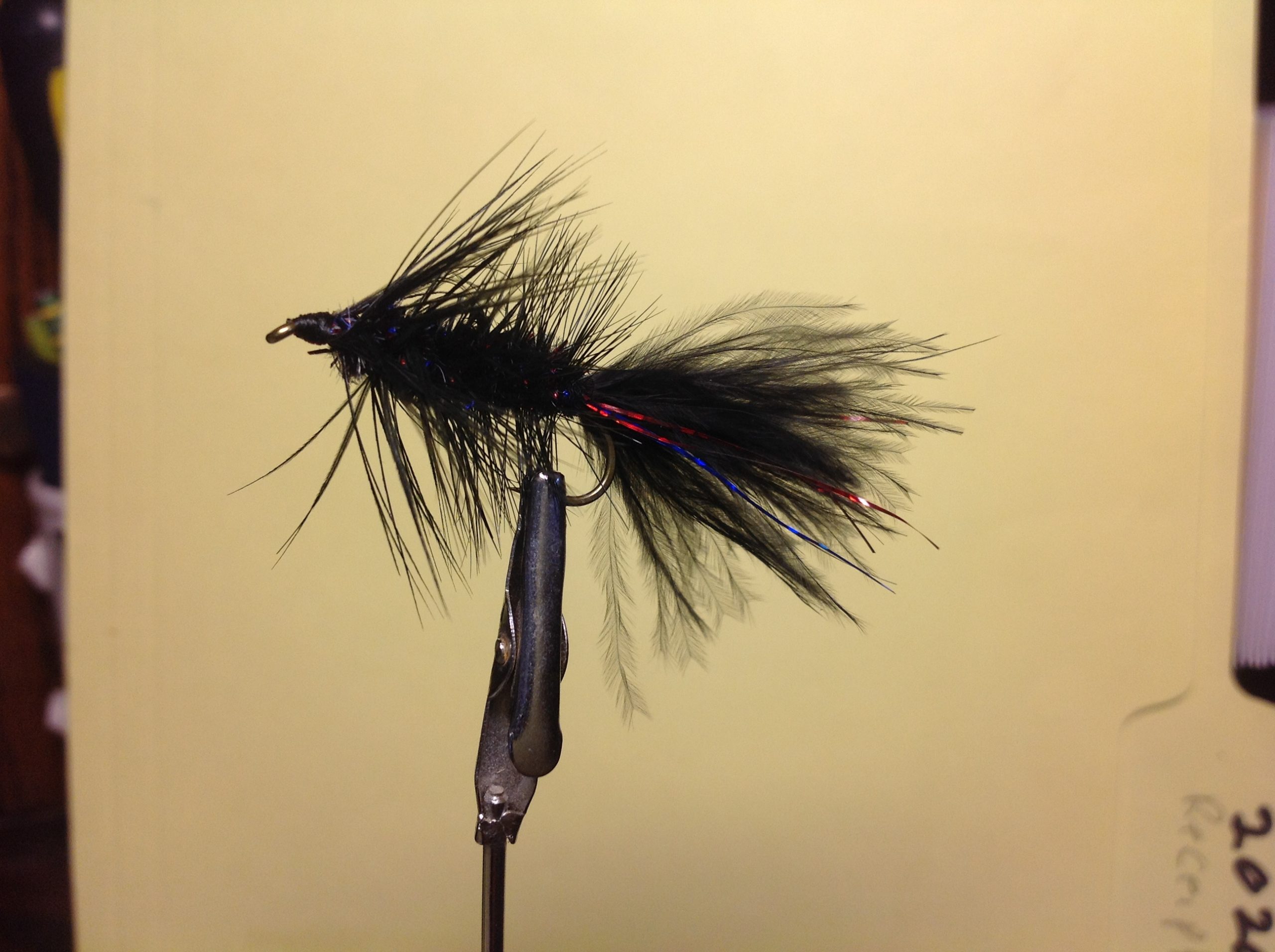
Hook: TMC 5263 or TMC 200R Sizes 6 (at Pyramid ) -12. Adjust materials for the smaller flies.
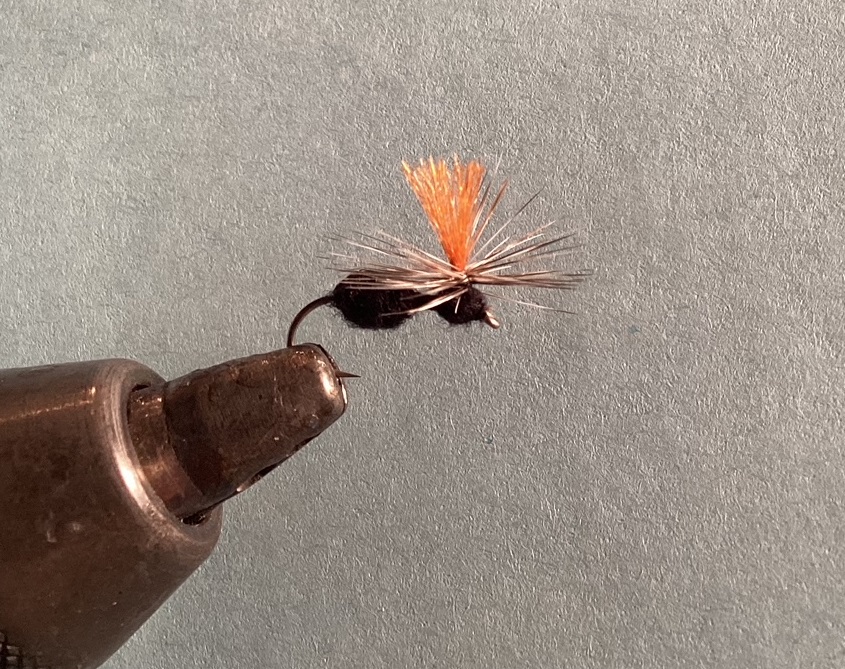
Thread: black 6/0
Tail: Black marabou with fluffy tips ( straight tips can be broken off )
Tail Flash: both red and blue Flashabou
Hackle: Black strung hackle, AKA India hen back.
Body: Speckled midnight fire chenille ( black chenille with short projections of both red and blue flash )
1. Crimp barb.
2. Attach thread behind eye. Wrap to above hook barb, then forward to mid shank.
3. Note: moisten marabou for easy handling. Cut moderately large clump from stem. If barbs are not at least 2 shank lengths long, tie in at rear of shank. Lay on top of shank, butt ends 2 eye lengths behind eye. Tie in place to top of entire shank. Advance thread 1/4 inch. Shorten length of tail, by pinching not cutting, to length of hook (some prefer a tail half that length).
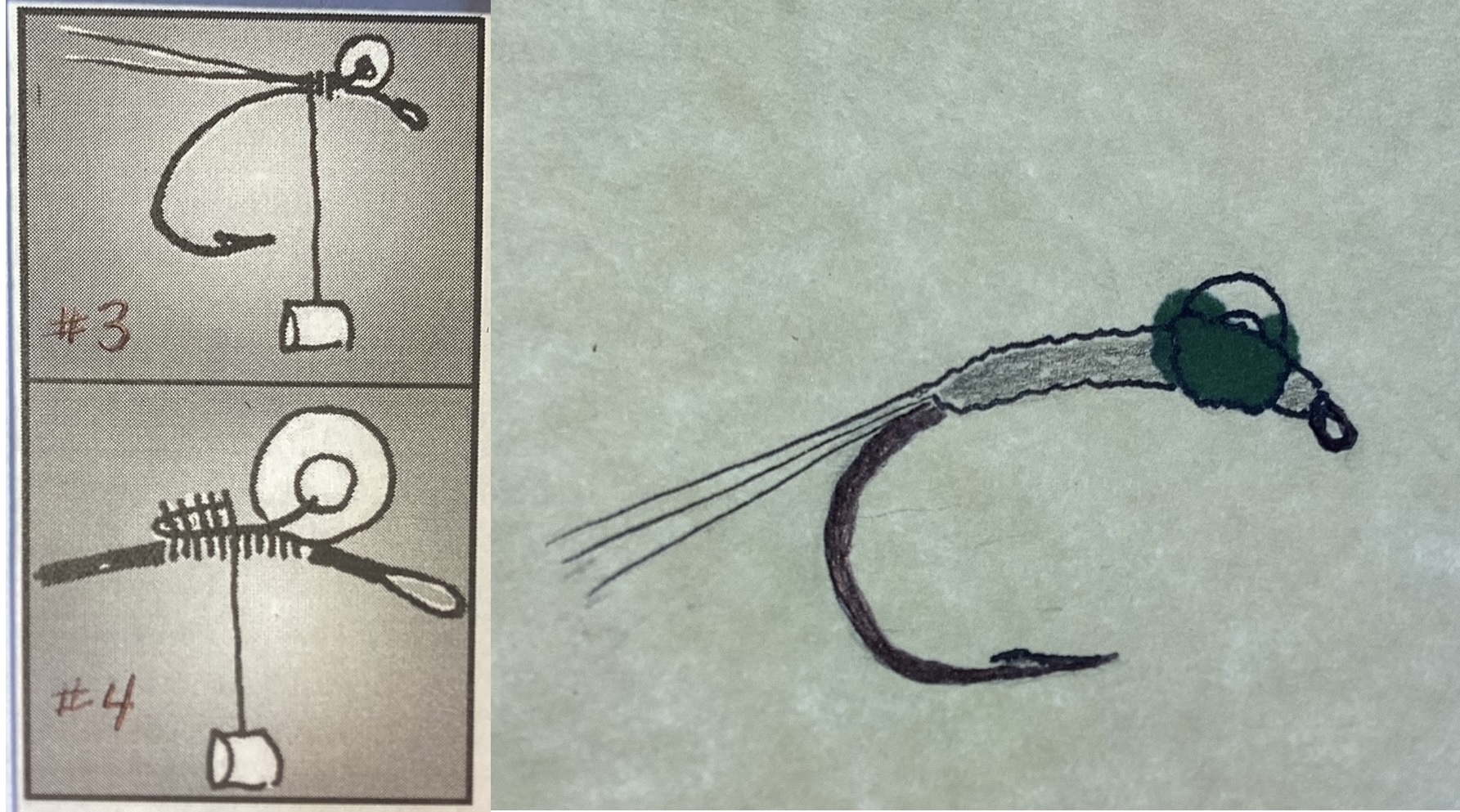
4. Holding one strand of both red and blue Flashabou together, moisten for easy handling, cut in half. Tie center of all strands to top of shank with a couple wraps. Holding half on far side of tail and half on near side, tie in place back to rear of shank. Cut to length of tail.
5. Holding tip of hackle, stroke all other barbs against the grain. Tie tip to rear of shank with shiny side facing you. Advance thread to 1-2 eye lengths behind eye.
6. Strip 1/4 ” chenille from center threads. Tie threads to shank. With touching wraps, wrap to rear of shank then forward to tie in. Tie of, cut excess.
7. Spiral (palmar) hackle forward in about 8 wraps, stroking barbs backward with each wrap. Tie off, cut excess.
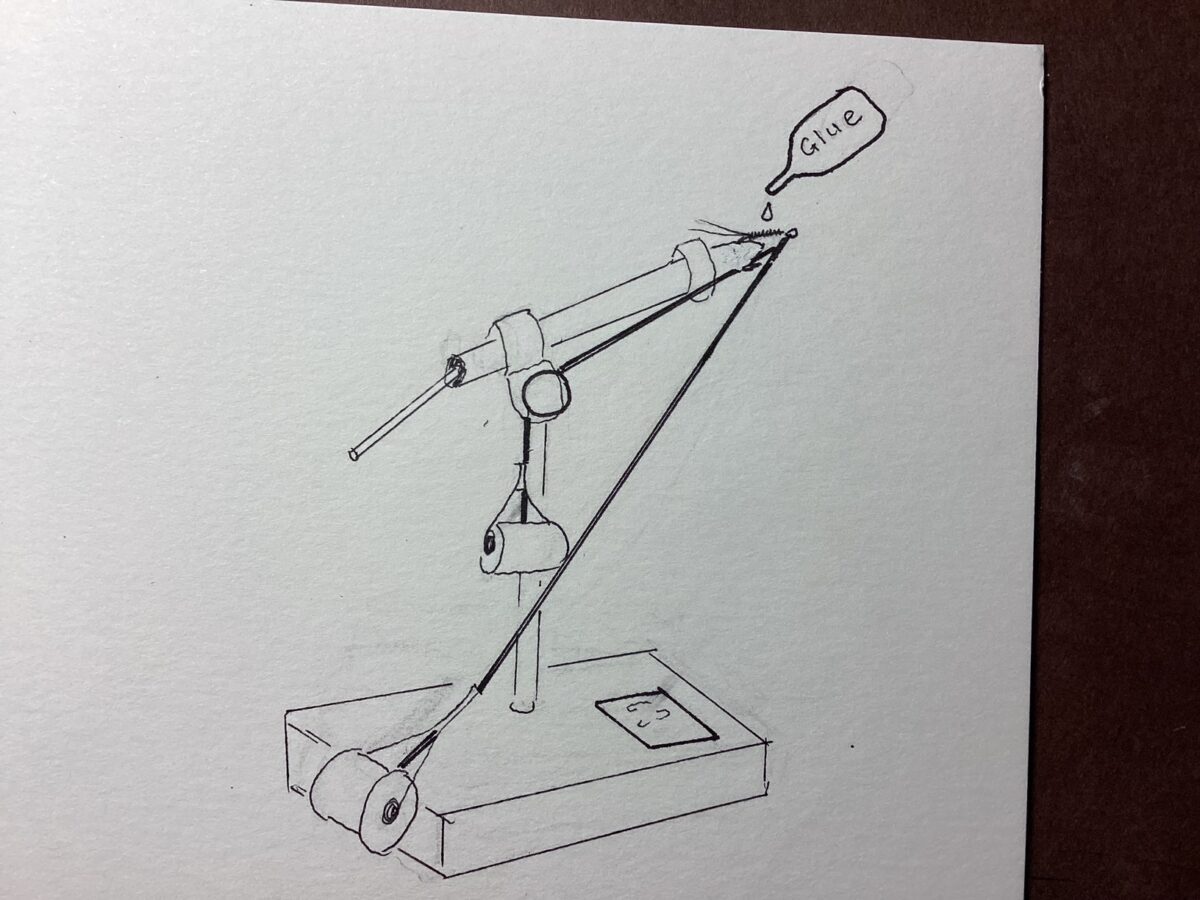
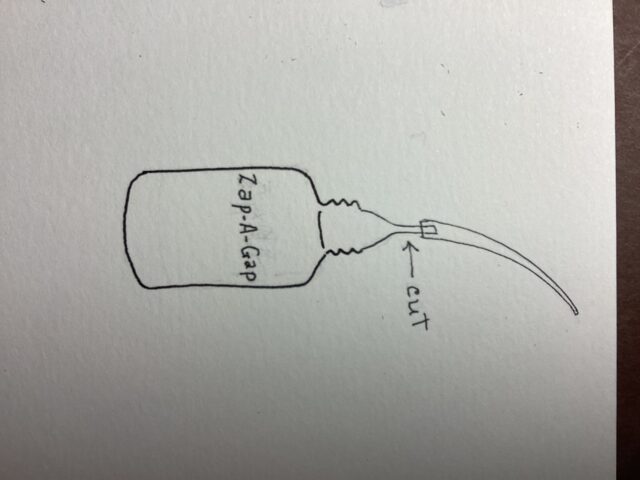
8. Holding barbs back, wrap thread head. Whip finish. Cut thread. Apply Zap-A-Gap glue or similar.
Posted on January 25th, 2024